**Bob Abrahamian** 00:00
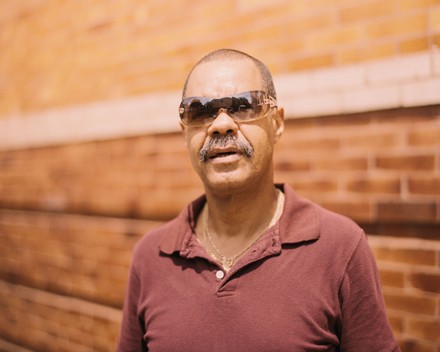
Okay, you're tuned to WHPK 88.5 FM in Chicago. You are now listening to the _Sitting in the Park_ show. I have a special show today because I’m going to be doing an interview with a singer named Tom Williams, who sang in a bunch of groups. He sang in a group called the Fascinators, a group called the Turks, and a group called the Four Shades. So, are you on the phone? Can you hear me, Tom?
**Tom Williams** 00:25
Yes, I can, Bob. How are you?
**Bob Abrahamian** 00:27
Okay, great. Well, thanks for being here. So first, can you start off by talking about—are you originally from Chicago?
**Tom Williams** 00:36
Well, actually, no. I was born in Florida. Then I moved to Chicago at a very early age. Spent all of my young years here, and all my adult years also. I’ve been here all my life.
**Bob Abrahamian** 00:46
Okay. How old were you when you moved to Chicago?
**Tom Williams** 00:48
Oh, about three years old.
**Bob Abrahamian** 00:50
And what part of Chicago did you live in?
**Tom Williams** 00:52
West Side, mainly. I lived on the West Side up until I was a teenager, and then I moved to the South Side.
**Bob Abrahamian** 00:58
So when you were singing in groups, were they West Side groups you were in?
**Tom Williams** 01:04
Ah, yeah, mostly West Side groups. I sang briefly with a South Side group. I was about 20 years old then. But yeah, most all the groups I sang with were from the West Side, around the Marshall High School area.
**Bob Abrahamian** 01:16
Okay. How old were you when you started singing?
**Tom Williams** 01:19
How old was I? About 11 to 12 years old when I first started.
**Bob Abrahamian** 01:24
How did you get involved? How did you get started singing?
**Tom Williams** 01:26
Well, actually, I started in church. You know, most all of our foundations started in church. I used to go to church quite often—Metropolitan Baptist Church on the West Side—with my parents, and I actually started in the junior choir there.
**Bob Abrahamian** 01:38
And when did you first start singing in a group?
**Tom Williams** 01:43
Well, that was actually around 12 or 13. I remember Frankie Lymon was like an inspiration. And when Frankie Lymon and the Teenagers came out, you know, everybody that thought they could sing was trying to sing.
**Bob Abrahamian** 01:53
So you actually started singing with other guys when you were 12 or 13?
**Tom Williams** 01:57
Right, right. Twelve, 13 years old.
**Bob Abrahamian** 01:59
Did you have a name for your group back then?
**Tom Williams** 02:03
No, we didn’t. You know, it was just a group of guys that might live across the street from each other. Once we realized we could do a little harmonizing, you might have five or six, seven people singing at one time. No, we really didn’t have a group. We were just doo-wopping back in those days. Yeah.
**Bob Abrahamian** 02:20
Okay. And then, did you go to Marshall High School?
**Tom Williams** 02:24
Yes, I went to Marshall High School in about 1955.
**Bob Abrahamian** 02:28
So, were there other groups at your school at the time when you were attending?
**Tom Williams** 02:32
Oh yes, we had quite a few groups at Marshall High School at the time. There was the [Kolos?]. Yeah, quite a few. I can’t think of—
**Bob Abrahamian** 02:44
Were the Majestics there at that time?
**Tom Williams** 02:48
Yeah, the Majestics. And let’s see, the Artistics—they were also going through there, but they weren’t named the Artistics at the time. Yeah, they were at Marshall. The Cool Gents had just left there. Some of the guys that later became the Cool Gents used to attend Marshall also.
**Bob Abrahamian** 03:05
Okay, so you started in ’55, you said.
**Tom Williams** 03:09
Yeah, I went to Marshall in ’55.
**Bob Abrahamian** 03:11
So did you have a group in high school?
**Tom Williams** 03:14
The group I sang with did not attend Marshall. I was the only one that went to Marshall. One of the guys went to Farragut. Another guy went to Wells, I believe.
**Bob Abrahamian** 03:22
What was the name of that group?
**Tom Williams** 03:24
That was the Fascinators. We were going by the Fascinators at the time. We stayed together about four or five years.
**Bob Abrahamian** 03:33
How did the Fascinators form?
**Tom Williams** 03:36
Well, let’s see. Myself, a fellow by the name of James Phillips, and his cousin Ralph Thornton. James Phillips used to play basketball, and he met a guy named Leroy Heath who went to Farragut. And I knew Teddy Long from the Cool Gents. So Teddy kind of joined. We just knew each other from the neighborhood and started singing. James Phillips used to play guitar and write a lot of tunes, so we just started from there.
**Bob Abrahamian** 04:04
So how many were there? Were there five members in the Fascinators?
**Tom Williams** 04:07
Five members of the Fascinators, right.
**Bob Abrahamian** 04:08
And Ted Long was in the Cool Gents. Did he leave the Cool Gents to be in your group, or—
**Tom Williams** 04:13
Yeah, by then the Cool Gents had dispersed. I think Doug Brown had moved to California, and Johnny McCall had left town. So yeah, that group kind of broke up. Teddy was looking for another group, and he heard us, and we were looking for a baritone singer. So he joined our group and became a Fascinator.
**Bob Abrahamian** 04:33
So your group—what types of things did you do? You were together for a while before you recorded, and I think your recording came out around ’63 or something like that. Is that right? ’64? ’63?
**Tom Williams** 04:45
Yeah, let’s see. Yeah, about ’63, right. I remember I was living on the West Side there in ’62. Right, it came out in ’63.
**Bob Abrahamian** 04:54
So the group formed around ’56, ’57, something like that?
**Tom Williams** 04:59
Let’s see. We started going strong around ’57, ’58.
**Bob Abrahamian** 05:03
Okay.
**Tom Williams** 05:04
Okay. We did a lot of talent shows around town. We did a lot of sock hops and talent shows for Herb Kent back in those days. He was on—I forget the radio station he was on—but we did a lot of talent shows, just trying to get established and get a little reputation for ourselves.
**Bob Abrahamian** 05:21
So even before you had a record out, you did record hops for Herb Kent?
**Tom Williams** 05:25
Oh yeah, definitely, definitely. We were just trying to get known. And see, Teddy Long was familiar with Herb Kent because he sponsored the Cool Gents.
**Bob Abrahamian** 05:34
Yeah.
**Tom Williams** 05:35
So he took us to Herb and told Herb, “I’ve got a new group. I want you to listen to these guys.” And this is how we got into the circuit out there with Herb Kent, through Teddy Long.
**Bob Abrahamian** 05:45
So what year did you graduate? The group was still together when you graduated, right?
**Tom Williams** 05:51
Yeah, I left there in ’59.
**Bob Abrahamian** 05:53
Okay. So the group was mainly doing talent shows and stuff around town?
**Tom Williams** 05:59
Yeah, around town. And I remember back in those days, we went downstate. I remember going to Sterling, Illinois. Back in those days, that was the first time we had been that far outside of Chicago in Illinois. We did quite a few shows around town and in some of the western suburbs, mainly.
**Bob Abrahamian** 06:16
And what did you do in the western suburbs? Were there high schools you played at there?
**Tom Williams** 06:22
No, we were doing little clubs, believe it or not. You know, as long as you were entertainers, you had no problem back in those days getting into a club that sold alcohol. We would come in, do our shows, and leave. We were doing a lot of little lounges. We also did union halls, dance halls, things like that.
**Bob Abrahamian** 06:41
Did you produce the shows yourselves, or were there other people putting on the shows?
**Tom Williams** 06:44
Oh no, no, no. We were usually working for social clubs that were giving events, or weddings and different parties, things like that.
**Bob Abrahamian** 06:54
And what types of songs did you do at the shows? Did you just do popular songs of the day, or did you have your own songs?
**Tom Williams** 07:00
Popular songs of the day. I know we used to sing a lot of the Moonglows’ things, a lot of the Dells’ things back in those days. Yes, popular songs of the day.
**Bob Abrahamian** 07:08
So you would do R&B material at the shows, pretty much?
**Tom Williams** 07:11
Oh, definitely. Yes, we had to.
**Bob Abrahamian** 07:13
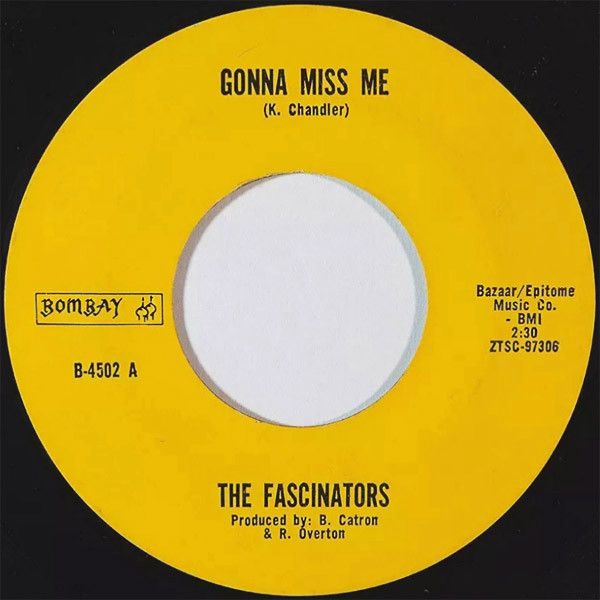
So around ’63, you ended up cutting a record called “In Other Words,” and the B-side was called “You’re Gonna Miss Me,” and it came out on a record label called Bombay Records. Is that right?
**Tom Williams** 07:26
Exactly. Bombay was from the South Side of Chicago. We were a runner-up with that particular tune. The Shepherds, if I’m correct, had also been given a copy by the owner of the label. He gave the Shepherds a copy and gave us a copy, told us to go home and work on it, and come back with the best version. And he chose ours, so we recorded it. He took us into the studio. We recorded that in the later part of ’62, early ’63.
**Bob Abrahamian** 07:50
Yeah, I noticed on the record it’s written by Kermit Chandler, the guitarist for the Shepherds. So did you know them? Were you friends with the Shepherds at the time?
**Tom Williams** 08:01
Yeah. Like I said, we all stayed up on the West Side. The Shepherds were a little bit older than we were, but yeah, we knew Kermit from doing different talent shows and all, because he was a very popular guitar player on the West Side. So yeah, we all rubbed elbows together, same circuit.
**Bob Abrahamian** 08:16
And do you remember who ran the Bombay label?
**Tom Williams** 08:21
Oh Lord. I know the guy was an attorney. I think his last name was Washington, I believe.
**Bob Abrahamian** 08:27
Was there a guy—I heard the label was affiliated with a guy named Bob Catron. Did he have anything to do with it, or you don’t remember that name?
**Tom Williams** 08:34
No, Bob Catron—that doesn’t ring a bell. But it’s been so long ago. Wow. No, I don’t really recall that name.
**Bob Abrahamian** 08:42
So you said he somehow knew you and knew the Shepherds. Do you know how you knew him?
**Tom Williams** 08:49
I’m really not sure how. Let’s see, Teddy—with Teddy being more experienced, you know, because he had been out there with the El Dorados and the Cool Gents—somehow or another Teddy got hooked up with this label, and he took us to this guy. That’s how that came about. He listened to us. He liked our style, liked our sound, so that’s how we got affiliated with that particular record company.
**Bob Abrahamian** 09:13
So you and the Shepherds both recorded versions, and they ended up using your version?
**Tom Williams** 09:18
Well, I don’t think they recorded the Shepherds. See, we came back to the studio there, and he listened to ours. And then I heard that on another particular night he listened to the Shepherds. Then he called us back in and said, “Well, you guys have been chosen. We’re going to give you an artist contract.”
**Bob Abrahamian** 09:34
So you’re saying you auditioned for him—you didn’t actually record for him at first—and then you signed a contract with him for this one record?
**Tom Williams** 09:41
Exactly right.
**Bob Abrahamian** 09:42
Okay, well, we’ve been talking for a while. Let me play the record, which is a really good, kind of Chicago-sounding record, and then we can talk some more.
**Tom Williams** 09:49
Beautiful.
**Bob Abrahamian** 09:50
This is the Fascinators with the record they released. It’s called “In Other Words.”
**[music playing — “In Other Words” by the Fascinators]** 09:56–12:28
**Bob Abrahamian** 12:28
Okay, that was the Fascinators with the one record they released called “In Other Words.” And if you’re just tuning in, I have Tom Williams, a member of the Fascinators, on the phone, and we’re talking about the different groups he sang in and the records they cut. So Tom, you’re there, right?
**Tom Williams** 12:47
Yes, I’m here. That brought back a lot of memories, Bob.
**Bob Abrahamian** 12:50
So that record got released—you said you recorded it around ’62, and it got released in ’63. Is that right? Sometime around that time?
**Tom Williams** 12:58
Yeah, it was released briefly. I don’t think the guy really put a lot of promotion behind it, but yeah, it was released around ’63, the middle part of ’63.
**Bob Abrahamian** 13:08
So it didn’t really get radio play or anything like that?
**Tom Williams** 13:12
No, no, no. It was kind of put on the shelf. I don’t know why the guy didn’t get behind it.
**Bob Abrahamian** 13:17
Okay, but definitely it was a nice cut. So your group had been together for about six years before you cut a record. Had you been trying to get record deals before then? How come that was the first deal you got?
**Tom Williams** 13:32
Oh, definitely. We had been trying. Back in those days, we had been to Record Row, up and down Michigan Boulevard. We had gone to [unclear] Studios. We had also been to [unclear] Records—they had a label at the time. I remember we auditioned for Vee-Jay, too. Oh yeah, we had definitely been trying different labels.
**Bob Abrahamian** 13:51
Okay. So on that record, who sings lead?
**Tom Williams** 13:54
Oh, that was me singing lead.
**Bob Abrahamian** 13:55
Oh, okay. You sing lead on “In Other Words.” And who—I know you mentioned this before—but who were the backup singers on it again? Can you go over who they were and what parts they sang?
**Tom Williams** 14:04
James Phillips sang second tenor. Ralph Thornton sang first tenor. Leroy Heath was the bass singer, and Teddy Long sang baritone on that record.
**Bob Abrahamian** 14:17
And you were all West Side guys, is that right?
**Tom Williams** 14:21
Definitely, yeah. They all lived close to each other except for Leroy. Leroy was the one who went to Farragut High School. He lived around, let’s see, 16th and Lawndale over there.
**Bob Abrahamian** 14:34
And what streets were you living around?
**Tom Williams** 14:35
Oh, we were around Francisco and Fulton. Matter of fact, James and Ralph—both those guys lived in a building they called the Terrace, and I lived across the street from them. Teddy lived a few blocks from us. Yeah, we were all close.
**Bob Abrahamian** 14:50
Okay. So that record came out in ’63. There were a bunch of other artists on the label. Did you know any of the other artists? I think Geraldine Hunt was on the label around that time.
**Tom Williams** 15:01
I remember her. We did a show with her out at one of the hotels near O’Hare back in those days. That’s when Mannheim Road was very popular for its supper clubs and hotels out there. Yeah, I remember her. She was more or less a jazz singer.
**Bob Abrahamian** 15:17
And there was a singer named Flash McKinley on the label. Did you know anything about him?
**Tom Williams** 15:22
No, I never did. I’ve heard of him, but we never had the opportunity to meet Flash.
**Bob Abrahamian** 15:26
Okay. So that record came out. Did you start doing more shows now that you had a record, or did it pretty much stay the same?
**Tom Williams** 15:33
It pretty much stayed the same because that record was never really promoted. We didn’t get any airplay. And at that time, I remember shortly after we recorded, we were so happy and everything, then James Phillips went to Vietnam. So the group kind of went into limbo. The group fell apart. James left, and Ralph Thornton was his cousin. He was kind of downhearted and all, so we kind of fell apart for a while.
**Bob Abrahamian** 16:00
Okay, so the group kind of broke up because one of the members went to Vietnam, and everybody drifted apart.
**Tom Williams** 16:06
Right, right, right.
**Bob Abrahamian** 16:08
So what groups did you sing with after that? You said you sang with a South Side group for a while.
**Tom Williams** 16:13
Ah, yeah. I had moved south then. I sang with the—oh gosh, I recorded with this group, too. I’m trying to think. I know one guy’s name was Jerry. I did a thing called “The Bird.” It was two fellows back in those days—
**Bob Abrahamian** 16:25
Was it the Du-Tones?
**Tom Williams** 16:27
Who?
**Bob Abrahamian** 16:27
The Du-Tones.
**Tom Williams** 16:29
No, it wasn’t the Du-Tones. It was another—have you heard “The Bird”? I recorded with two guys and a young lady. We were on Columbia at that time. I was living—
**Bob Abrahamian** 16:39
Yeah, it was the Du-Tones. “The Bird,” on Columbia.
**Tom Williams** 16:42
Oh, that could have been. You know, you’re absolutely right. It was the Du-Tones. Yeah, I was with them. I did background with them. The singer’s name was Richard. He wrote it. He was the writer there. Richard—
**Bob Abrahamian** 16:51
Parker, is that it?
**Tom Williams** 16:53
Yeah, that was Richard Parker. I forgot all about that, because Carl Davis was the man at the studio there. Yeah, I forgot about that. Anyway, I recorded with them. I was on one record, “The Bird.”
**Bob Abrahamian** 17:04
They had a few records on Columbia. Are you only on “The Bird”?
**Tom Williams** 17:08
I was only on “The Bird,” right.
**Bob Abrahamian** 17:11
And so, do you remember the members of the group who sang on “The Bird” with you?
**Tom Williams** 17:17
No. I remember Richard, and there was another young guy. I don’t know if that guy’s name was Jerry or something. Then there was a young lady. I don’t recall her name either. But yeah, that was the Du-Tones. I forgot all about that.
**Bob Abrahamian** 17:30
And that was after the Fascinators?
**Tom Williams** 17:33
Oh yeah. Yeah, yeah, yeah. That was after the Fascinators.
**Bob Abrahamian** 17:37
Okay. Yeah, that’s interesting. So you didn’t sing lead on “The Bird,” though, right?
**Tom Williams** 17:42
Oh no, no, no. I was just background with them.
**Bob Abrahamian** 17:45
Did you know there was another group—this is just kind of random—that Carl Davis had recorded on Columbia around that time called the Buttons? You don’t remember that group, do you?
**Tom Williams** 17:54
No, I don’t recall the Buttons. Let’s see, during that time Curtis Mayfield and Jerry Butler had broken up, and Carl was getting very interested in Curtis Mayfield. Major Lance was coming over to Columbia at the time also. That’s why Columbia was just getting into R&B music.
**Bob Abrahamian** 18:14
He cut a couple records on Walter Jackson when he was up with Columbia at the time.
**Tom Williams** 18:18
Right, right. He really pushed Walter. That was his main artist there.
**Bob Abrahamian** 18:24
So do you remember how you got with those South Side guys? Was that just because you lived there and knew them?
**Tom Williams** 18:30
Oh God, let’s see. I was living in the 69th Street area, around Parker High School—[unclear]—and my next-door neighbor... I heard them over there doo-wopping and singing one day, and I went over and started listening and got to talking to them. We got to talking about who we knew and what we had been doing, and that’s how I got connected with those guys.
**Bob Abrahamian** 18:54
Okay, so they just lived right next to you, and you just ran into them pretty much.
**Tom Williams** 18:58
Right, right, right. Back in those days, if you could sing, word would spread. You’d get out there, harmonize, doo-wop with everybody, you know.
**Bob Abrahamian** 19:05
And you just sang backup on that one record, pretty much?
**Tom Williams** 19:08
Just the one record with them, right.
**Bob Abrahamian** 19:10
Do you remember what year that was?
**Tom Williams** 19:17
Wait a minute. No, not exactly.
**Bob Abrahamian** 19:22
Okay, so what did you do after that? What was the next group that you formed or joined?
**Tom Williams** 19:27
The next group I joined was the Turks.
**Bob Abrahamian** 19:33
Okay, so—
**Tom Williams** 19:34
I had stopped singing for a while, and I was out one evening at the Apollo Theater, and I ran into a guy named Billy that I had grown up with, you know, and I hadn’t seen in a while.
**Bob Abrahamian** 19:45
The Apollo Theater in New York? What Apollo Theater?
**Tom Williams** 19:50
I’m sorry, the Regal.
**Bob Abrahamian** 19:52
Okay, okay. That’s why I was confused.
**Tom Williams** 19:54
The Regal on the South Side, around 47th at the time.
**Bob Abrahamian** 19:57
Okay.
**Tom Williams** 19:57
Okay, and I was going to see a show there and ran into him and his group, two other guys he was singing with called the Turks. And he asked me, “Tom, what are you doing?” And I told him, I said, “Well, you know, I haven’t been doing anything for a few years.” And he asked me to come by one of their rehearsals. I went by one of the rehearsals the following week, and they asked me to join them.
**Bob Abrahamian** 20:18
So what year was that? Like ’66, ’67, something like that?
**Tom Williams** 20:22
Ah, gosh, yeah, it had to be. I was back living on the West Side.
**Bob Abrahamian** 20:28
Okay.
**Tom Williams** 20:28
Yeah, about ’67, something like that. I would say, yeah, ’67.
**Bob Abrahamian** 20:32
So you just ran into a bunch of guys who had a group, and you ran into them at the Regal Theater?
**Tom Williams** 20:38
Yeah. Simply going to the show, and you know, you run across people that you know. “Hey, what are you doing?” “Nothing.” “Come by and check us out.” That’s what I did. We got started.
**Bob Abrahamian** 20:48
So the group eventually ended up cutting records. Also, one of them, which I think got some play in Chicago, was called “You Turn Me On.” Is that right?
**Tom Williams** 20:58
“You Turn Me On.” Okay, now let me explain how that went. I joined their group, the Turks. One of the guys went to jail, okay, so I replaced him with another guy. One other guy, Cisco—because, see, the original Turks were Billy Hoskins, Cisco—I don’t know Cisco’s last name—and Willie. I didn’t know his last name either; I forgot it. But anyway, those were the original Turks. I joined them.
**Bob Abrahamian** 21:27
Okay, so they hadn’t recorded before you joined, right?
**Tom Williams** 21:31
Oh, they hadn’t recorded.
**Bob Abrahamian** 21:32
Okay. And how long were you together before you ended up recording?
**Tom Williams** 21:36
Oh, I had a totally new group by the time I recorded. At least about four or five years before we recorded under the name of the Turks. I kept the Turks going, although the original Turks had all, you know, disappeared.
**Bob Abrahamian** 21:53
So were you just doing shows before you ended up recording? Were the Turks just doing shows?
**Tom Williams** 21:59
Another thing, like the Fascinators, we were out there on the circuit just doing shows under the name of the Turks, with the billboards and all. We had a nice little name. People knew us, but we had never recorded.
**Bob Abrahamian** 22:11
And I know that you had done some work with the Dontels, who were producing shows.
**Tom Williams** 22:16
Exactly. It was the Dontels: Nate Pendleton, Sam Dandridge, and Willie Weems from Maywood.
**Bob Abrahamian** 22:28
So were they the main people producing your shows? Were you doing shows for a while before you hooked up with them? How did you hook up with them?
**Tom Williams** 22:37
We were doing shows before we hooked up with them. I think one of the original Turks, Billy, met the guy Nate Pendleton because Nate Pendleton was a mailman at the time, and I think he was on Billy’s route. He met Billy and invited him over: “Bring your group over. Let me hear you.” Not knowing that Nate was with the Dontels and had their own labels. So that’s how we hooked up with the Dontels and their label.
**Bob Abrahamian** 23:05
Okay, so you were together for a while, and you said there were some lineup changes. A couple members went to prison or something like that?
**Tom Williams** 23:15
Exactly. One of the guys, Billy, he went to jail. Cisco went back to Memphis. But wait a minute—you know what? We did go in and record with that group, the Turks, because here again I had to replace the baritone singer. I called Teddy Long again, because Teddy came and took that guy Willie’s place. We went in and recorded, and the engineer said, “Your baritone is really not up to par. He keeps going flat here and there.” So we had to get Teddy Long. Teddy Long joined the Turks briefly. But other than that, I had myself, Billy, Cisco, and Teddy. We went in and recorded under the Turks.
**Bob Abrahamian** 23:58
So there were four.
**Tom Williams** 23:59
After that, that’s when we fell apart. Billy went to jail. Cisco went back South.
**Bob Abrahamian** 24:04
So when you said “we recorded,” you’re talking about the song “You Turn Me On,” or are you talking about some other song you recorded that wasn’t released?
**Tom Williams** 24:11
I’m talking about a song that wasn’t released. I was talking to Billy—Billy is in jail now. I still correspond with him. And I wrote him and told him about you and the interview, and he told me the name of the song. I’ve got it around here in a letter somewhere. “One More Day” was the name of the song, but it was never released.
**Bob Abrahamian** 24:28
Okay, yeah, that’d be cool. Do you know if it was ever pressed on a dub, like a studio acetate or anything like that, or was it pretty much just recorded to tape and never released?
**Tom Williams** 24:39
It was recorded. We did have a dub, and I remember because we were supposed to go back in. They were going to overdub it, put the strings on. It was never released; I know that. But we did record it, and we did have a dub of just a dry run—just a rhythm section and us.
**Bob Abrahamian** 24:56
It’d be cool if you found that somewhere. A lost recording.
**Tom Williams** 25:02
Right. It would be.
**Bob Abrahamian** 25:03
So were you on a label when that was recorded?
**Tom Williams** 25:10
Yeah, I can’t think of the name of the label. I know it was a guy that owned a drugstore. He called himself sponsoring us, and he took us down to some cheap studio down there and recorded us. We were just excited to get in there, as far as the Turks, because they had never been in a studio before. By this time, I had a little experience. And then Teddy—he was always my main man in my corner. Whenever I ran into a problem, I always reached back and got Teddy. So when I pulled Teddy in to help me with these Turks, he started singing baritone. So no, nothing really happened out of that. We just had a rhythm section and us in the studio, and bam, that was it.
**Bob Abrahamian** 25:46
Do you know why the guy never released the record?
**Tom Williams** 25:50
No, not really. Now, we never really signed contracts, so we were holding out. I don’t know why it was never released, because it was never finished either. We were supposed to have horns added and violins added. We never did finish the session.
**Bob Abrahamian** 26:06
Okay, so then the group was together for a little bit longer, and you ended up recording the song “You Turn Me On.” Is that right?
**Tom Williams** 26:16
Yeah, that’s correct. By then I had more personnel changes. I went and got another friend of mine, a guy named Little Willie Gladney, second tenor, and pulled him in. And I got another lead singer, Willie Crowley. So now it was Willie, Teddy, myself—and two Willies, Little Willie and Big Willie. So it was the four of us. We stayed together for a couple of years.
**Bob Abrahamian** 26:51
Well, let me play the record, and we can talk a little bit more. Is that okay?
**Tom Williams** 26:55
All right. Sounds good.
**Bob Abrahamian** 26:56
Okay. So this is the Turks with “You Turn Me On.”
**[music playing — “You Turn Me On” by the Turks]** 27:02–29:54
**Bob Abrahamian** 29:54
Okay, that was the Turks with their record called “You Turn Me On.” And if you’re just tuning in, I have on the phone right now Tom Williams, singer in the group the Turks, who is talking about his story. So Tom, do you remember what year that record came out?
**Tom Williams** 30:13
Oh gosh, no. Yeah, I really don’t recall exactly what year.
**Bob Abrahamian** 30:19
Late ’60s sometime, right?
**Tom Williams** 30:22
Well, why was I saying late—about ’72?
**Bob Abrahamian** 30:24
I think your last record came out around ’72, the Four Shades record.
**Tom Williams** 30:29
Oh, the Four Shades, right. The Four Shades around ’72. You’re right. That could have been like ’68, ’69. Oh, you know, ’69, because I remember we did the Black Expo in 1969. Right. And I remember that summer, Black Expo night. It was about ’69. We had Pick Hit of the Week on one of the radio stations.
**Bob Abrahamian** 30:47
So that record—first of all, who sings lead on the record?
**Tom Williams** 30:52
I started lead. I started off. Then Willie came in on the second part, but I started singing the first part of it.
**Bob Abrahamian** 31:01
Okay, so you sing at the beginning, and then Willie comes in. What’s Willie’s last name again?
**Tom Williams** 31:06
Willie Crowley.
**Bob Abrahamian** 31:07
And then what are the full names of everyone else who sings on the record?
**Tom Williams** 31:12
Obviously, Tom Williams, Willie Gladney, Willie Crowley, and the guy there, Andy. I can’t think of Andy’s last name.
**Bob Abrahamian** 31:20
So there are four members on “You Turn Me On.”
**Tom Williams** 31:23
Exactly, yeah.
**Bob Abrahamian** 31:25
That’s one of my favorite Chicago records. It’s got such a great—first of all, it’s really a well-written song. And it’s just got such a great Chicago sound. I really like that record.
**Tom Williams** 31:37
I would think that’s a very typical Chicago sound, wasn’t it?
**Bob Abrahamian** 31:41
So that record actually got some play in the city, is that right?
**Tom Williams** 31:46
Oh yeah, we got a lot of play off of that. Like I said, it was Pick Hit of the Week on—I think it was WVON back in those days, E. Rodney Jones’s radio station. Yeah, we got a lot of play there. We did a lot of shows, got a lot of work from that record.
**Bob Abrahamian** 32:02
And that record got released on Daran Records, which was James Shelton’s record label. Do you know the story behind that?
**Tom Williams** 32:12
The story behind Shelton? Let’s see. I know that Willie Weems from the Dontels—he was a guitarist—met Shelton, and he wrote that song there. And he took it over there. I know the Chi-Lites were on that Daran label briefly because I think this guy Shelton was related to Marshall of the Chi-Lites. But the story was Willie Weems met this guy, and he’s the one who took us to the label. He liked our sound and took us into the studio.
**Bob Abrahamian** 32:44
Okay. So you knew Willie through the Dontels, is that right?
**Tom Williams** 32:49
Right. Willie wrote that song. Matter of fact, he wrote the flip side also.
**Bob Abrahamian** 32:53
And does his band play on the record?
**Tom Williams** 32:57
Yeah, that was Willie’s band, because we rehearsed with that rhythm section at Willie’s house. Yeah, that was his rhythm section we went into the studio with.
**Bob Abrahamian** 33:05
Okay, and did you sign a contract with James Shelton?
**Tom Williams** 33:09
Yeah, we had a three-year contract with that particular label, Daran Records.
**Bob Abrahamian** 33:15
Okay, and so they released that record, and it got some play in Chicago. Did you get more work off of that? You said you did the Black Expo around that time.
**Tom Williams** 33:26
Yeah, that was a big promotion thing for us, the Black Expo. I think, matter of fact, that was the first year of the Black Expo in Chicago, at the International Amphitheatre, which is long gone now. So yeah, we got a lot of work and a lot of recognition from that record.
**Bob Abrahamian** 33:40
Okay, and did you ever tour outside the city, or did you just mainly play clubs in Chicago?
**Tom Williams** 33:47
Mostly clubs in Chicago, around Chicago. I mean, we went to South Chicago, Indiana, a few times, but we were still local. We didn’t go anywhere, you know, New York or nothing like that.
**Bob Abrahamian** 34:00
And Daran Records released a second record on you called “The Bad Brought Out the Good.” It’s a nice record, but it didn’t really get any play. Do you know what the story was with that?
**Tom Williams** 34:16
Well, to be truthful about it, I don’t even recall the record. Now, if they released another record on the Turks, I don’t know. Maybe they got another group to take the Turks’ place, but I don’t recall recording another record. I don’t recall recording “The Bad Brought Out the Good.” I never heard this record.
**Bob Abrahamian** 34:32
Yeah. Well, on “You Turn Me On,” the flip of that song is called “Generation Gap.” You remember that song, right?
**Tom Williams** 34:37
Ah, now that was supposed to have been the A-side, “Generation Gap.”
**Bob Abrahamian** 34:41
Was that the record that got played?
**Tom Williams** 34:43
No, they played “You Turn Me On.” That’s the one that got played.
**Bob Abrahamian** 34:46
Okay. And then the other record that was released by the Turks on the same label was called “Let It Flame” and “The Bad Brought Out the Good.” And you’re saying you don’t remember either of those tracks?
**Tom Williams** 34:56
No, no. Never heard them.
**Bob Abrahamian** 34:57
How about I play it now, and you can listen and see if you think it’s you?
**Tom Williams** 35:00
Yeah, let’s hear that.
**Bob Abrahamian** 35:02
Okay, so this is possibly a second record released by the Turks, and we’re going to find out now if it is the Turks. This track is called “The Bad Brought Out the Good.”
**[music playing — “The Bad Brought Out the Good,” credited to the Turks]** 35:12–37:37
**Bob Abrahamian** 37:37
Okay, that was the second record released as the Turks on the Daran record label. That was called “The Bad Brought Out the Good.” And if you’re just tuning in, I have Tom Williams of the Turks on the phone right now, and he is telling his story. So, did you recognize that song at all?
**Tom Williams** 37:59
Not at all, Bob. That definitely wasn’t us. I don’t ever remember recording it, and it sure wasn’t our sound there.
**Bob Abrahamian** 38:07
Okay, so you didn’t recognize any of the voices or the harmony or anything?
**Tom Williams** 38:11
No, no, no, no. But you know, back in those days, when you signed a contract with a label, they more or less owned your name.
**Bob Abrahamian** 38:18
Okay.
**Tom Williams** 38:19
So they may have brought in another group after we kind of faded away, because we kind of broke up after “You Turn Me On.” I forget what happened. We went through some more personnel changes again, you know. So they probably brought in another group, or Daran Records, or whoever got to own the company, just brought in another group. That’s all.
**Bob Abrahamian** 38:42
Okay. So the group broke up, you said, but then you had a similar group with a similar lineup in the early ’70s called the Four Shades. Is that right?
**Tom Williams** 38:56
Right, correct. I formed the Four Shades. There again, I had Teddy Long, Johnny McCall, and let’s see who was the other guy. I think Willie Gladney was still with me at the time.
**Bob Abrahamian** 39:12
Okay, so obviously there are four members in the Four Shades.
**Tom Williams** 39:17
Four members again, the Four Shades. That’s right.
**Bob Abrahamian** 39:19
So pretty much it was like a reformed version of the Turks, is that right?
**Tom Williams** 39:23
Basically, yeah. Because there again, Teddy Long was always there with me, and Johnny McCall had come back to town. He was an original member of the Cool Gents and the El Dorados. So he came back to town and joined us, and Willie Gladney was with the Four Shades. So there again, we went in and recorded under a different name this time.
**Bob Abrahamian** 39:43
So why did you drop the name the Turks? Just because the group had broken up and you wanted a new name?
**Tom Williams** 39:50
Yeah, it was time for something new. It was time for a change. And we more or less were producing ourselves this time. Teddy Long wrote the tunes. We produced it. And we had a guy who was a music teacher at Wendell Phillips High School. He worked with us on the arrangements, so we produced ourselves and recorded ourselves. Then Teddy and this guy went to Louisiana, and they got a contract. We got a producer’s contract plus an artist’s contract with the label down there.
**Bob Abrahamian** 40:27
So it came out on Ron Records, right?
**Tom Williams** 40:31
Right.
**Bob Abrahamian** 40:32
Ron Records out of Shreveport, Louisiana. And there were a bunch of Chicago artists that recorded on that label, actually. Cash McCall was one of the main artists.
**Tom Williams** 40:40
Uh-huh. Yes.
**Bob Abrahamian** 40:42
There was a West Side group called Essence that recorded on the label.
**Tom Williams** 40:45
Exactly right.
**Bob Abrahamian** 40:46
And there were a lot more artists. So did you have a connection with any of them that got you on the label, or did you just seek them out yourselves and go to Louisiana—to Shreveport—to get on the label?
**Tom Williams** 40:58
Well, the guy that was working with us, the one who was the music teacher at Wendell Phillips, he’s the one that had the connections there. So he and Teddy went to Shreveport and did the negotiations for us.
**Bob Abrahamian** 41:09
Do you remember who the music teacher was?
**Tom Williams** 41:12
I can’t think of his name right now. It’s been so long.
**Bob Abrahamian** 41:15
Okay. So you guys reformed the group, you formed the Four Shades, and decided to produce yourselves. Did you actually record the record in Chicago and place it on the label?
**Tom Williams** 41:30
Yeah, we recorded the record in Chicago, and they took the masters out there. Then, after we got our contracts, they put it on their label.
**Bob Abrahamian** 41:42
Do you remember where you recorded it?
**Tom Williams** 41:48
Ah, let’s see. Was it—I think that studio was called Streeterville. Yeah, it was. I think it was Streeterville.
**Bob Abrahamian** 41:57
Okay. So the record you recorded was called “Something Special” and “My World.”
**Tom Williams** 42:06
Exactly.
**Bob Abrahamian** 42:07
What was the intended A-side of the record?
**Tom Williams** 42:11
Well, “My World” should have been the A-side. But they liked “Something Special,” so they pushed “Something Special” more. “Something Special” went—that was one of our best records. It was my best record with the different groups, because that record was released in about 37 different states.
**Bob Abrahamian** 42:30
Okay. And did it get played in Chicago also?
**Tom Williams** 42:35
Never got played in Chicago.
**Bob Abrahamian** 42:38
Okay, but it got played in some other cities.
**Tom Williams** 42:41
Yes, quite a few others.
**Bob Abrahamian** 42:43
Okay, well, let me play that track, and we can talk a little bit more. This is the Four Shades. This came out around 1972, on the Ron label out of Shreveport, and this track is called “Something Special.”
**[music playing — “Something Special” by the Four Shades]** 42:58–46:00
**Bob Abrahamian** 46:00
Okay, that was the Four Shades with their track “Something Special,” which got released in 1972. And if you’re just tuning in, I have Tom Williams, member of the Four Shades, on the phone right now talking about his story. So, are you still there?
**Tom Williams** 46:41
I’m still here, Bob.
**Bob Abrahamian** 46:42
Okay. Actually, while I was playing it, I called my friend, who knows the guy who was the arranger. He said it was David Baldwin. Is that the guy you were talking about?
**Tom Williams** 46:51
Yeah, David Baldwin. That rings a bell, right.
**Bob Abrahamian** 46:53
So he’s the guy who was the music teacher who helped you hook up the deal with the record?
**Tom Williams** 46:58
Yes, yes, yes. I remember now.
**Bob Abrahamian** 47:02
Yeah, my friend met with him, actually. He lives in Beverly now, I think.
**Tom Williams** 47:05
Oh, is that right? Okay.
**Bob Abrahamian** 47:07
So that record came out around ’72, and who sings lead on that record?
**Tom Williams** 47:13
Well, there again, that was me that started off, and Johnny McCall, with the big voice, came in.
**Bob Abrahamian** 47:19
Okay. And you said that got played in cities that weren’t Chicago. It didn’t really get played in Chicago. And you said it was Ted Long, you, and who were the other two members singing backup?
**Tom Williams** 47:35
Ted Long, Willie Gladney, Johnny McCall, and myself.
**Bob Abrahamian** 47:40
Okay. And Johnny McCall—he was previously in the Cool Gents, right?
**Tom Williams** 47:46
Yeah, the Cool Gents and the El Dorados, exactly.
**Bob Abrahamian** 47:48
But he wasn’t in the Turks?
**Tom Williams** 47:51
No, no, no. He wasn’t even in town then. No.
**Bob Abrahamian** 47:54
So how did you—he just wanted to sing again, is that right?
**Tom Williams** 47:58
Yeah. Like I said, he had just come back to town. He had left Illinois for quite a few years, and when he came back to town, he got in touch with Teddy and asked Teddy what he was doing. So we just all hooked up and formed the Four Shades.
**Bob Abrahamian** 48:13
Okay. And the Four Shades—was it just a studio group, or did you also do shows with the Four Shades?
**Tom Williams** 48:19
Oh, we did quite a few shows with the Four Shades also. And yeah, we became a studio group almost. Let’s see, I know we backed up Junior Wells on one of his albums. We sang background behind Johnny Moore.
**Bob Abrahamian** 48:32
Okay. And do you remember what Johnny Moore record you sang on?
**Tom Williams** 48:37
Oh gosh, was—
**Bob Abrahamian** 48:39
Was it “Just My Way of Loving You”? Do you remember?
**Tom Williams** 48:41
That’s the one. That’s the one. “Just My Way.”
**Bob Abrahamian** 48:44
Okay. And so you sang behind other singers. How did you hook up those studio sessions? Who were you working with?
**Tom Williams** 48:53
Well, let’s see. We were working with a guy named Jack Daniels. I think that was his name, Jack Daniels.
**Bob Abrahamian** 49:00
Okay.
**Tom Williams** 49:01
He was like an A&R man for Mercury Records at the time, and he was Johnny Moore’s manager. This is how we got in there to background Johnny. Also, he was trying to get us on his label. I remember he took us into the studio and recorded a couple of demos on us, and he had to send the demos to New York to get approval from the main headquarters there to take us in for a full session. But that’s how we got connected with Johnny Moore.
**Bob Abrahamian** 49:30
So was he trying to get you on Blue Rock Records or some division of Mercury, something like that?
**Tom Williams** 49:35
It could have been Blue Rock. That was, I think, their subsidiary out of Chicago.
**Bob Abrahamian** 49:39
And was that before you cut “Something Special” that he was trying to sign you to his label, or after?
**Tom Williams** 49:44
Exactly. That was before then.
**Bob Abrahamian** 49:46
Okay, so you actually had the Four Shades together before you cut that record, and then you guys decided to produce your own record.
**Tom Williams** 49:53
Right. We had been just, you know, messing around for a while, trying to get a style, trying to get it together, until we finally got this here. Let’s see, I’m trying to remember. I think “Something Special”—I think Teddy Long wrote that.
**Bob Abrahamian** 50:07
Okay. Yeah, I think he and David Baldwin have writing credits on that, I think.
**Tom Williams** 50:12
Right, right, right, right.
**Bob Abrahamian** 50:13
So how long did the Four Shades stay together?
**Tom Williams** 50:18
Ah, again, not very long. Gosh, we fell apart. I don’t know why. Johnny, I know, became a Jehovah’s Witness. He had just gotten back into town, and his wife didn’t want him to get back into entertaining. And we went through another personnel change. After the Four Shades fell apart, I went on my own for a while. Never did record, but we lasted about two years, three years.
**Bob Abrahamian** 50:48
So into the mid-’70s, the Four Shades were together?
**Tom Williams** 50:51
Right, right, right.
**Bob Abrahamian** 50:52
And you said you went on your own. What did you do on your own?
**Tom Williams** 50:55
I never did record on my own. Never did go in the studio. I just did shows. But after all the groups fell apart, I just decided to try myself. And if I didn’t get a foothold on it, I’d just leave it alone.
**Bob Abrahamian** 51:09
Okay, so what do you mean by “go on your own”? You were just doing shows? Were you working with the Dontels still?
**Tom Williams** 51:16
I was working with a member of the Dontels, Sam Dandridge—Leroy—
**Bob Abrahamian** 51:21
Dandridge. Who was singing, Sam, right?
**Tom Williams** 51:23
Leroy, right? Leroy Dandridge, Sam Dandridge—[unclear].
**Bob Abrahamian** 51:26
Okay. And so you were just doing shows with him, or what was the story?
**Tom Williams** 51:30
Yeah, I was doing shows with him. He was an awesome arranger and writer. Oh, this guy had songs. I mean, he played several different instruments. He and the guy Willie Weems from the Dontels also. So Willie Weems and Sam Dandridge and myself and a few others, we were still rehearsing, still making music, but we just didn’t get into anything serious after that.
**Bob Abrahamian** 51:55
Okay. So how long were you doing that solo stuff?
**Tom Williams** 52:00
Oh, I must have did that for a couple of years, until I was in my middle 30s, about 36, 37 years old. But then that’s when I decided, yeah, I’d had enough. Went back to church, joined the choir.
**Bob Abrahamian** 52:12
Okay. So did you stop in the ’70s? Pretty much, you stopped doing that music stuff?
**Tom Williams** 52:20
’77, ’78, I stopped.
**Bob Abrahamian** 52:22
Okay. And then you said you went back to the church. Have you been singing in the choir ever since?
**Tom Williams** 52:30
Yeah, I’ve been singing in the choir ever since. I also recorded one tune about 10 years ago with the Holy Family Gospel Choir in Chicago, out of Holy Family Catholic Church, with a little gospel twist.
**Bob Abrahamian** 52:42
Okay. And recently, I think you did a show with the Cool Gents. Is that right?
**Tom Williams** 52:50
Yeah, I went out to New Jersey for an oldies reunion. John Carter, one of the original members of the Cool Gents, called me and asked me if I’d be interested in standing in for one of the fellas, you know, because most of the Cool Gents are deceased.
**Bob Abrahamian** 53:05
Okay. So what was the story behind that show? I heard it was like a big doo-wop revival show where they had a ton of doo-wop groups. Is that right?
**Tom Williams** 53:14
Yeah, it was a big, big doo-wop show. Old doo-wop groups from all over. One original member from Frankie Lymon’s Teenagers was there. They had the Flamingos. They had—oh, so many doo-wop groups from all over. Most of the guys were retired, flying in from Florida in their shorts and all. But it was really a great success.
**Bob Abrahamian** 53:35
And you just knew the Cool Gents because you knew Teddy Long and all those guys from back in the day?
**Tom Williams** 53:40
Exactly. I grew up around those guys. They were a little bit older. They were joking with me: “You’re the youngest thing here.” I was like 65, and most of them were 72 or whatever. But yeah, it was a beautiful reunion.
**Bob Abrahamian** 53:52
Okay. And so they approached you, pretty much. How long ago did that happen? Like a year ago?
**Tom Williams** 54:00
Yeah, John Carter had called me about a year prior and asked me, “Thomas, if this ever comes about, would you be interested?” I said, “Sure I would.” So when he did call me and said, “Thomas, it’s going to be a go for October,” I said, “Oh yeah, just let me know.” So we had a few rehearsals, and the producer of the show flew us out. We had two days of rehearsal before the show out there, and the show was at Trenton University [unclear].
**Bob Abrahamian** 54:32
Okay. Do you remember what you sang?
**Tom Williams** 54:36
Well, we did, you know, “The More You Hurt Me,” just some of their old standards that the Cool Gents did.
**Bob Abrahamian** 54:45
Okay. And that happened in October, you said?
**Tom Williams** 54:49
October 4th of just this year.
**Bob Abrahamian** 54:52
And so, do you have any more plans to sing secular music, I guess, or do any more shows with the Cool Gents?
**Tom Williams** 55:00
Definitely. If the opportunity arises, I am definitely willing to go.
**Bob Abrahamian** 55:08
Okay. Well, I hope you definitely get a chance to sing more of the classic Chicago material that you worked with in the ’50s, ’60s, and ’70s.
**Tom Williams** 55:20
Yeah, that was a good sound we had back in those days. Chicago was very distinguished in its own sound. Just like when a Motown song came out, you could tell it was Motown. Chicago definitely had its sound.
**Bob Abrahamian** 55:31
Yeah. Well, anyways, I want to say thanks so much for being on the phone and telling your story on this very cold Chicago day.
**Tom Williams** 55:43
Thank you for having me, Bob. I really appreciate it. I really enjoyed myself.
**Bob Abrahamian** 55:46
Do you have any last words for the audience?
**Tom Williams** 55:50
Well, I just thank the audience for, you know, enjoying our music. And like Chicago, we’ve had a hard struggle over the years trying to get recognition in the music world, but just thanks for enjoying it.
**Bob Abrahamian** 56:01
Okay, and so thanks again. And this last record I’m going to play is the Four Shades with their other record they cut. This is called “My World.”
**[music playing — “My World” by the Four Shades]**