**Bob Abrahamian** 00:00
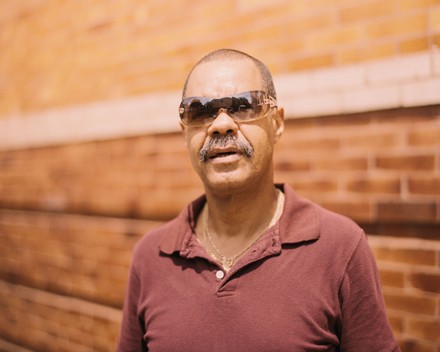
Okay, you're tuned to WHPK 88.5 FM in Chicago. You're listening to the _Sitting in the Park_ show with Bob. Right now, I have on the phone Ron Renfro, who was a member of the Chicago group the Deltas. Ron, are you out there?
**Ron Renfro** 00:13
Yes, I am. How you doing, Bob?
**Bob Abrahamian** 00:14
Okay, cool. Thanks a lot for being on the phone and doing this interview. Right now, we're going to be talking about your group, the Deltas, for a little bit and getting the story of your group. So you guys were from Marshall High School, right?
**Ron Renfro** 00:28
Absolutely.
**Bob Abrahamian** 00:28
So you were one of the many groups that we talk about here that were from Marshall.
**Ron Renfro** 00:33
Oh, yeah.
**Bob Abrahamian** 00:33
So what's the story? When were you in school, first of all?
**Ron Renfro** 00:38
Well, we first got together around maybe '66.
**Bob Abrahamian** 00:43
Okay.
**Ron Renfro** 00:44
Yeah, 1966. We graduated in, like, '69, and from there we hit the road.
**Bob Abrahamian** 00:50
So the group formed while you were in high school. Is that right?
**Ron Renfro** 00:55
Yes.
**Bob Abrahamian** 00:55
So it originally formed, and you weren't one of the original people in the group. Is that right?
**Ron Renfro** 01:00
Right.
**Bob Abrahamian** 01:00
But then you joined the group, and your group had strong connections to the Five Wagers, right?
**Ron Renfro** 01:03
Absolutely, yes.
**Bob Abrahamian** 01:04
So what was the story behind that? How did the group form the connection to the Five Wagers?
**Ron Renfro** 01:08
Well, the Five Wagers were the top group there at Marshall at the time.
**Bob Abrahamian** 01:13
Okay.
**Ron Renfro** 01:14
And the Deltas were together. We were mixed with both group family members, and so what they did was—some of the guys in the Wagers were Deltas.
**Bob Abrahamian** 01:24
Okay.
**Ron Renfro** 01:24
And they, you know, changed over and formed another group. Then they asked me to get in the group, the Deltas, and it was an honor to do that.
**Bob Abrahamian** 01:33
Okay.
**Ron Renfro** 01:33
Uh-huh.
**Bob Abrahamian** 01:34
Yeah, so I remember when we talked to James Westbrook up here.
**Ron Renfro** 01:36
Yeah.
**Bob Abrahamian** 01:37
He said he was originally a member of the Deltas before he became one of the Five Wagers. So what was the ultimate lineup of the Deltas that ended up recording initially?
**Ron Renfro** 01:46
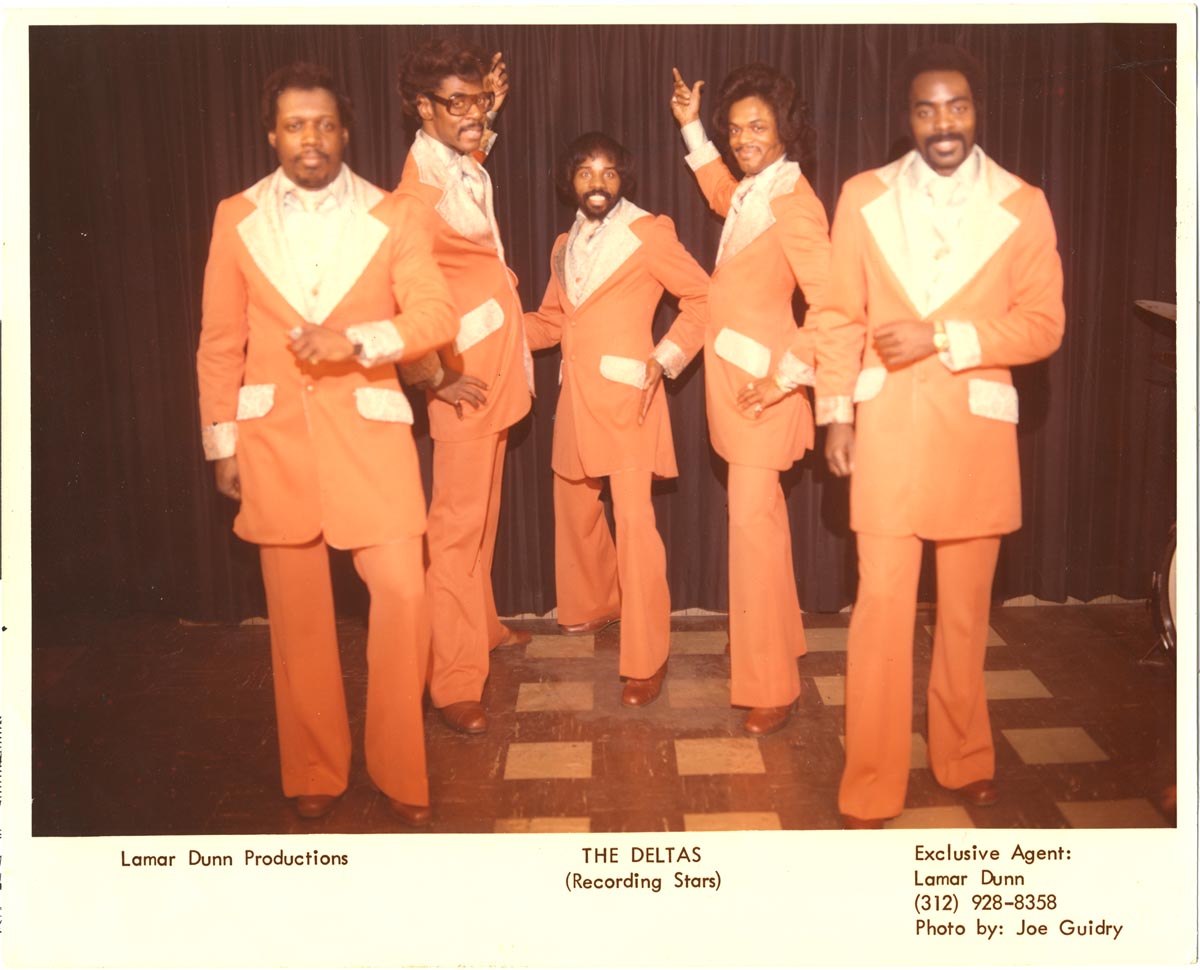
Okay, that was myself, Ron Renfro. There was Mack Miner, the bass singer.
**Bob Abrahamian** 01:51
Okay.
**Ron Renfro** 01:51
Carl Bradshaw.
**Bob Abrahamian** 01:53
Okay.
**Ron Renfro** 01:53
Larry King.
**Bob Abrahamian** 01:55
Okay.
**Ron Renfro** 01:56
Willie Brown, which was Lee Henry Brown. He was in the Five Wagers. [unclear]
**Bob Abrahamian** 02:02
So that was the initial lineup of the group. You guys formed in high school, and did you have any previous singing experience, or what happened?
**Ron Renfro** 02:10
Well, no. We all basically came from church and gospel, and we just finally got together. We had a lot of jamborees at Marshall, and that's when a lot of groups would get together and show their talents. That's basically where we started.
**Bob Abrahamian** 02:26
Okay, so you started singing just kind of in the lunchroom and at the jamborees, that type of stuff?
**Ron Renfro** 02:30
The jamborees every year at Marshall.
**Bob Abrahamian** 02:32
Okay, so then you eventually formed a group, and you decided to actually try to stick together and become a performing group, right?
**Ron Renfro** 02:40
Absolutely.
**Bob Abrahamian** 02:40
Because there were a lot of groups that were high school groups that just never did anything, right?
**Ron Renfro** 02:42
Right, right. They were good, but they just fell by the wayside.
**Bob Abrahamian** 02:46
Okay, so were you doing shows and stuff after you were in school, or what happened?
**Ron Renfro** 02:51
Well, after we graduated, we were with Donald Clark, and he had a revue where we used to do school shows. He'd have us do them at high schools and grammar schools. You know, have a show in the morning and a show in the afternoon for the kids. And basically, that's where it started with Donald Clark.
**Bob Abrahamian** 03:08
Okay, so he was a guy who put on shows that you were in a lot, right?
**Ron Renfro** 03:12
Mm-hmm.
**Bob Abrahamian** 03:13
But you hadn't actually had a record out yet, so you probably weren't, like, a big-time group. So then, you graduated around '69, you said?
**Ron Renfro** 03:23
Yeah.
**Bob Abrahamian** 03:23
And I think your first record came out around '70, '71?
**Ron Renfro** 03:27
'71. Uh-huh.
**Bob Abrahamian** 03:28
And it was on a label called New Chicago Sound.
**Ron Renfro** 03:31
Right, New Chicago Sound.
**Bob Abrahamian** 03:33
That's the same label that Barbara and the Uniques were on, right?
**Ron Renfro** 03:37
They were a great group.
**Bob Abrahamian** 03:38
So on this record, it's kind of like a funky Temptations-type sound. It's a record called "Do What Comes Easy."
**Ron Renfro** 03:45
Yeah.
**Bob Abrahamian** 03:46
And I see Gerald Sims actually produced the record.
**Ron Renfro** 03:49
Oh yeah, he's great.
**Bob Abrahamian** 03:50
Yeah. The publishing is Iceman Music. Actually, I don't know if that has anything to do with Jerry Butler or anything.
**Ron Renfro** 03:55
It did. It was in the studios.
**Bob Abrahamian** 03:56
Okay, so you recorded this in Jerry Butler's studios, and I see the writer of the song is Chuck Jackson.
**Ron Renfro** 04:04
Chuck Jackson.
**Bob Abrahamian** 04:05
Yeah, he was the famous Chicago songwriter with [unclear]. Yeah, yeah. And so I'm going to play this record, and we can talk a little bit more about what happened after the record came out and what the story was behind the record.
**Ron Renfro** 04:19
Great.
**Bob Abrahamian** 04:19
Okay, so this is your very first record. This is the Deltas with "Do What Comes Easy."
[music playing]
**Bob Abrahamian** 07:11
Okay, we're back on the phone with Ron Renfro, a member of the Deltas. You're still there, right, Ron?
**Ron Renfro** 07:17
Yes, I am.
**Bob Abrahamian** 07:18
Okay, cool. So that was your guys' first record.
**Ron Renfro** 07:22
Oh, yeah.
**Bob Abrahamian** 07:22
Called "Do What Comes Easy." Kind of a funky, Temptations-type sound on that record.
**Ron Renfro** 07:28
We loved it.
**Bob Abrahamian** 07:29
So first of all, what's the deal? How did you get signed up with that record label?
**Ron Renfro** 07:34
Well, we worked for a gentleman. He was a park manager. His name was Bill Parker.
**Bob Abrahamian** 07:39
Okay.
**Ron Renfro** 07:39
And him and another gentleman, Leo Westbrook, had the record company, and they formed it and called it New Chicago Sound.
**Bob Abrahamian** 07:47
So that label was owned by, you said, Bill Parker and Leo Westbrook?
**Ron Renfro** 07:52
Right. He was one of the main club owners that we used to work for all the time, with the Wagers and different other groups. And they formed the company with Barbara and the Uniques, Spencer McCullough, and the Deltas.
**Bob Abrahamian** 07:58
Okay. So you just knew him through performing at his clubs?
**Ron Renfro** 08:04
Yes.
**Bob Abrahamian** 08:04
So you didn't have, like, a manager at that time, or—
**Ron Renfro** 08:06
Well, we had a manager. His name was Mr. T.
**Bob Abrahamian** 08:09
Okay.
**Ron Renfro** 08:10
A friend of Bill Parker's.
**Bob Abrahamian** 08:11
Okay.
**Ron Renfro** 08:11
And we performed for him, and he loved it.
**Bob Abrahamian** 08:13
Okay. And you were telling me that guy also managed Ruby Andrews, is that right?
**Ron Renfro** 08:18
Ruby Andrews, right. Mr. T managed Ruby Andrews, yes.
**Bob Abrahamian** 08:22
Okay, so you guys recorded this record, and we never talked about who sang the different parts on the record.
**Ron Renfro** 08:29
Okay. Well, I did the lead.
**Bob Abrahamian** 08:31
Okay.
**Ron Renfro** 08:32
And with that particular tune, we had switched leads.
**Bob Abrahamian** 08:35
Okay.
**Ron Renfro** 08:35
So I was the lead singer, and Larry King was the first tenor.
**Bob Abrahamian** 08:39
Okay.
**Ron Renfro** 08:40
And Carl Bradshaw was second tenor. Willie Brown was the baritone.
**Bob Abrahamian** 08:45
Okay.
**Ron Renfro** 08:46
Mack Miner was the fantastic bass.
**Bob Abrahamian** 08:48
Okay, yeah, yeah. You could definitely hear the bass. Definitely a Temptations-type sound, especially with the bass on that record. So now that you had a record, first of all, did it get play in Chicago?
**Ron Renfro** 08:57
Oh yeah, yeah. Pretty good in Chicago.
**Bob Abrahamian** 09:00
But it was mainly, like, a local hit, right? You didn't get national distribution on that?
**Ron Renfro** 09:03
Right.
**Bob Abrahamian** 09:03
So after you finally had this record out, did you start doing a lot more shows?
**Ron Renfro** 09:08
Oh yes, absolutely. Guys and Gals, Bonanza Lounge, High Chaparral. Different places, yeah.
**Bob Abrahamian** 09:15
So those were, like, the main places that you played. Is that right? Do you remember playing with any other groups that you did shows with?
**Ron Renfro** 09:23
Oh yes, the Five Wagers.
**Bob Abrahamian** 09:25
Okay. Other than the Five Wagers?
**Ron Renfro** 09:27
Well, you know, other big acts that would come to town, we would be, like, the opening act for them, or what have you. You know, the Lost Generation, the Chi-Lites. We worked with Major Lance. You know, a lot of groups.
**Bob Abrahamian** 09:41
What about—you were labelmates with Barbara and the Uniques, right? Did you ever do shows with them?
**Ron Renfro** 09:47
[unclear]
**Bob Abrahamian** 09:49
Okay, so you were telling me something about Battle of the Bands.
**Ron Renfro** 09:53
Oh yeah, us and the Five Wagers. Yeah, we'd set up a big show for the Battle of the Groups.
**Bob Abrahamian** 09:56
Do you remember when that was?
**Ron Renfro** 09:58
In the late '70s.
**Bob Abrahamian** 10:01
Okay.
**Ron Renfro** 10:01
Yeah.
**Bob Abrahamian** 10:02
Okay, that was a—
**Ron Renfro** 10:03
A lot of fun doing, you know, battling each other.
**Bob Abrahamian** 10:05
Okay.
**Ron Renfro** 10:05
Uh-huh.
**Bob Abrahamian** 10:06
So where was that show?
**Ron Renfro** 10:09
Well, we had different places. Guys and Gals, Beale Street, you know, different places.
**Bob Abrahamian** 10:15
Okay. So this first record came out around '70, '71, and then you didn't have a second record until 1977. So what was happening in between that time?
**Ron Renfro** 10:28
Well, we were basically just traveling, you know, working with different people, Otis Clay, and, you know, through the South.
**Bob Abrahamian** 10:35
Okay, so you actually traveled South and did a lot of shows there?
**Ron Renfro** 10:37
Right.
**Bob Abrahamian** 10:38
Okay. And then your lineup changed for the second record, is that right? So what was the membership change that happened?
**Ron Renfro** 10:46
Well, the only one that we had to change was Larry King. We got Tony Perkins.
**Bob Abrahamian** 10:52
Okay.
**Ron Renfro** 10:52
And he did a great job.
**Bob Abrahamian** 10:54
So what part did he sing on the record?
**Ron Renfro** 10:57
He did second tenor.
**Bob Abrahamian** 10:58
Okay.
**Ron Renfro** 10:58
And Carl Bradshaw went up to first tenor. We could switch around when needed.
**Bob Abrahamian** 11:03
Okay. Uh-huh. So do you remember anything about how you got hooked up with this second—actually, maybe I'll play the second record, and then we'll talk more about it.
**Ron Renfro** 11:14
Okay.
**Bob Abrahamian** 11:15
So this second record came out in 1977, and it's a funk record called "Do the Spank," which I guess was obviously the big dance in '77. So this is the Deltas with "Do the Spank," and then we'll talk a little bit more about the record when we go back on the air.
**Ron Renfro** 11:27
Okay.
[music playing]
**Bob Abrahamian** 15:23
Okay, we're back on the air with Ron Renfro, member of the Chicago group the Deltas.
**Ron Renfro** 15:28
Oh, yeah.
**Bob Abrahamian** 15:29
That was the last record you guys released, from 1977. That was "Do the Spank."
**Ron Renfro** 15:35
Yeah.
**Bob Abrahamian** 15:36
I guess the Spank was the big dance at the time.
**Ron Renfro** 15:40
Yeah.
**Bob Abrahamian** 15:41
Like, the big hit, I guess, was by Le Pamplemousse, right?
**Ron Renfro** 15:45
Right.
**Bob Abrahamian** 15:46
So that record came out, and the label it came out on was a label called Magic Touch.
**Ron Renfro** 15:46
Right.
**Bob Abrahamian** 15:47
I don't know if you remember how you got hooked up with the label, but I think it was run by a guy named Lenny LaCour. It was originally actually a Milwaukee label, because Harvey Scales and the Seven Sounds were artists on the label. And then in the late '70s, I guess they started doing Chicago stuff. Like, the Brighter Side of Darkness's last record is on that label.
**Ron Renfro** 16:06
Right, right.
**Bob Abrahamian** 16:07
So I guess you were one of the Chicago groups that he had recorded on the label.
**Ron Renfro** 16:11
Yeah, we were lucky to get in there.
**Bob Abrahamian** 16:12
Yeah, especially because by the late '70s, the recording industry in Chicago was kind of dying off, right?
**Ron Renfro** 16:17
Yeah. Disco was coming in.
**Bob Abrahamian** 16:19
Yeah, and we've talked about this in a lot of the interviews—like how the Five Wagers actually moved to California for more opportunity because all the recording companies and clubs were shutting down in Chicago, right?
**Ron Renfro** 16:30
Yeah.
**Bob Abrahamian** 16:31
So what was happening with you guys? It was probably more difficult for you guys to find work too, right?
**Ron Renfro** 16:37
Well, it was, but we stayed together as much as we could, you know, doing little club events, New Year's Eve, special events, parties and stuff.
**Bob Abrahamian** 16:48
Okay. So I guess, how long did the group stay together?
**Ron Renfro** 16:52
Oh, we stayed together at least all the way up till the '80s, because a couple of the other guys in the group moved to California. The three of us stayed together and did shows.
**Bob Abrahamian** 17:03
Which three guys?
**Ron Renfro** 17:04
Me, Mack Miner, and Carl Bradshaw.
**Bob Abrahamian** 17:07
Okay.
**Ron Renfro** 17:08
Mm-hmm.
**Bob Abrahamian** 17:09
So, okay, cool. I guess that's sort of the end of the story about your group. So what are you doing today involving music?
**Ron Renfro** 17:20
Well, now I'm traveling with a group called the Motown Revue. I work with some of the guys from the Sound Stage and some of the guys from my group. And we do, like, the Temptations, and they have a group for the Four Tops—you know, different groups. And it's a nice revue. We work all over.
**Bob Abrahamian** 17:39
Okay, and you were telling me you do shows nationally, right?
**Ron Renfro** 17:42
Yeah. We did the Super Bowl party—not the actual halftime. We went to Florida and did the last Super Bowl, and it was nice. They had a big, grand party.
**Bob Abrahamian** 17:52
You were singing at a party for, like, the players and stuff?
**Ron Renfro** 17:54
Right, the players. Yeah.
**Bob Abrahamian** 17:56
Yeah, it's cool that you're still singing in a group, you know, keeping that sound alive.
**Ron Renfro** 18:00
Oh, it feels good too. It's something that you just don't want to let go, you know. I love it.
**Bob Abrahamian** 18:05
Yeah, I mean, that's what I try to do on the show. I try to play these group records because, definitely, the sound people are making right now—modern R&B—it doesn't sound like the groups. It isn't the same. It doesn't sound the same as it did.
**Ron Renfro** 18:15
They're talking now.
**Bob Abrahamian** 18:17
Okay, cool. Well, thanks so much for being on the phone and telling the story of your group.
**Ron Renfro** 18:24
Bob, thank you very much. And without you, I don't think we would have got this far. Really appreciate it.
**Bob Abrahamian** 18:31
Yeah, I mean, it's important to get these stories out, you know.
**Ron Renfro** 18:32
Absolutely.
**Bob Abrahamian** 18:33
So this last record I'm going to play is the B-side of your Magic Touch record that came out in '77. This track is called "Gonna Move On."