**Bob Abrahamian** 00:00
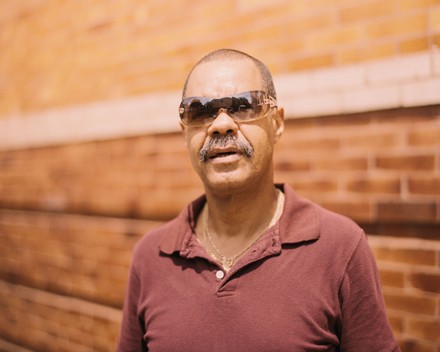
You’re tuned to WHPK 88.5 FM in Chicago. You are now listening to the _Sitting in the Park_ show. Today is a special show because I have up here Kevin Rowan, who was in a few groups. He was in a local group called the Mystiques, a group called Raw Umber, and then he was later in the Sons of Slum, so you should definitely plan to listen. We’ll be talking about his career and all the music that he was involved with today. So first of all, Kevin, thanks so much for coming up to the studio.
**Kevin Rowan** 00:30
Sure, no problem, Bob.
**Bob Abrahamian** 00:32
So first of all, what part of Chicago are you from?
**Kevin Rowan** 00:36
South Side. Originally, I lived on the West Side.
**Bob Abrahamian** 00:42
Okay. When did you move south?
**Kevin Rowan** 00:44
Oh, now you’ve got me thinking. At the age of 11.
**Bob Abrahamian** 00:50
Okay.
**Kevin Rowan** 00:50
Eleven. Yeah.
**Bob Abrahamian** 00:52
So what neighborhood did you move to?
**Kevin Rowan** 00:55
Maple Park, which was a community built from the ground up—115th to 119th, which I would say was from Sangamon to Justine.
**Bob Abrahamian** 01:09
So that was just east of Beverly, pretty much?
**Kevin Rowan** 01:13
Yeah.
**Bob Abrahamian** 01:14
Okay. And how did you get involved with music?
**Kevin Rowan** 01:16
Well, actually, my dad played before I did.
**Bob Abrahamian** 01:24
What did your dad do?
**Kevin Rowan** 01:25
Oh, he was a drummer. He was a jazz drummer.
**Bob Abrahamian** 01:28
Okay. Did he play in local jazz groups? Did he play on recordings?
**Kevin Rowan** 01:31
Yes. Actually, he played on like three recordings, two with the King Fleming Trio.
**Bob Abrahamian** 01:40
Okay. And what was your dad’s name?
**Kevin Rowan** 01:43
Royce—Royce [unclear].
**Bob Abrahamian** 01:45
Okay. Royce [unclear].
**Bob Abrahamian** 01:46
And is that how you got into music? Did you get into playing drums? Did you get into singing? What did you do?
**Kevin Rowan** 01:51
Well, actually, watching him. I can remember Dad working at night, and Mom would say—oh, I had an older brother who was two years older than I was—and Mom would say, “Okay, your dad’s gonna be on TV tonight.” I remember this one really well. So we sat up there and watched Dad on black-and-white TV. Don’t ask me what station it was.
**Bob Abrahamian** 02:14
What year was that?
**Kevin Rowan** 02:14
Goodness, now let’s see. I had to have been about seven—between seven and eight.
**Bob Abrahamian** 02:26
Then you saw your dad play drums on TV.
**Kevin Rowan** 02:28
Maybe about ’58.
**Bob Abrahamian** 02:34
Okay. So that was one of your first experiences seeing your dad involved with music?
**Kevin Rowan** 02:41
Yeah, seeing him on TV. And actually, when he had a trio and had the group come up—we lived on the second floor—we already had a piano, but the bass player would bring his bass up, and I was amazed at the size of this thing. And then my dad had his drums set up.
**Bob Abrahamian** 03:02
Okay.
**Kevin Rowan** 03:02
And then they played music right there in the dining room. My brother and I were sitting there watching them.
**Bob Abrahamian** 03:07
So you grew up sort of seeing your dad and his jazz group perform.
**Kevin Rowan** 03:11
And he’d take us different places where they performed, too.
**Bob Abrahamian** 03:14
So did you start singing first or playing drums first?
**Kevin Rowan** 03:18
Let’s see. I would have to say playing piano first, because in Catholic school we took piano lessons. And then after that I got into drums from watching my dad.
**Bob Abrahamian** 03:34
Okay. So do you remember how old you were when you started playing drums?
**Kevin Rowan** 03:39
Actually, probably since we had moved out that way—probably around 11 or 12.
**Bob Abrahamian** 03:47
Okay. So ultimately, this is the first musical thing that I know you recorded. You were in a high school group called the Mystics, right? So how did that happen?
**Kevin Rowan** 04:00
Well, actually, in the neighborhood there weren’t—I think we were like the first band. I used to practice all the time, and some guys said, “Well, you know, there are two brothers that live down the street, Greg McGee and Larry McGee. They play guitar and bass, and maybe you guys need to get together.”
So somehow I met them, and they said they played, and we got together. We were like the first group out there in the area.
**Bob Abrahamian** 04:31
So was that before high school or when you were in high school?
**Kevin Rowan** 04:34
This was actually maybe freshman year—either toward the end of eighth grade or freshman year.
**Bob Abrahamian** 04:43
Okay. So by your freshman year of high school, you had a band together. And then you got a fourth member of the group too, right?
**Kevin Rowan** 04:50
Yeah. Basil and I went to Catholic school, Holy Name of Mary, together. And he could sing.
**Bob Abrahamian** 05:00
Okay.
**Kevin Rowan** 05:00
So we included him, and that’s how we became the Four Mystics.
**Bob Abrahamian** 05:05
What was Basil’s last name?
**Kevin Rowan** 05:07
Hughes.
**Bob Abrahamian** 05:08
Basil Hughes. And how did you come up with the name the Mystics?
**Kevin Rowan** 05:12
I know we sat around after one rehearsal and tried to figure out a name. I don’t know if it was Greg or Basil, because usually those were the more technical guys—Basil and Greg—but we kind of came up with it.
**Bob Abrahamian** 05:26
Okay, well, I’m going to play the record. I’ll play one side of the record, and then we can talk some more so people know what we’re talking about. This record actually got released twice: first as the Mystics on a label called Oar, and then as the Mystiques on a bigger label called Twilight. So this is the Mystiques with “So Good to Have You Home Again.”
**[music playing]** 06:01
The Mystiques — “So Good to Have You Home Again.”
[Song lyrics largely unclear in the source transcription.]
**Bob Abrahamian** 08:00
Okay, that was the Mystiques with an excellent Chicago record called “So Good to Have You Home Again.” It got released on a couple of labels.
If you’re just tuning in, I have Kevin Rowan, a member of the Mystiques, up here talking about his records and the music that he made.
So we were just talking about how you were in that group in high school. You were originally just a band—three guys—and then you got Basil Hughes as the lead vocalist. So what’s the story? First of all, do you know how you ended up cutting a record?
**Kevin Rowan** 09:18
The keyboard player that my dad played with, King Fleming, was already on Chess. I guess he and my dad, and I think somebody else who was involved, got together and said, “Well, let’s go on and take them into the studio.”
**Bob Abrahamian** 09:34
So they pretty much produced your record—King Fleming and your dad?
**Kevin Rowan** 09:36
Right. Yeah, and my dad.
**Bob Abrahamian** 09:40
Okay. And so, we had talked about how you were a band and a vocal group. Did you actually play on the record?
**Kevin Rowan** 09:49
Yes. I’m playing drums back there.
**Bob Abrahamian** 09:52
Okay. And the McGee brothers are playing too. What did they play?
**Kevin Rowan** 09:57
Bass and guitar.
**Bob Abrahamian** 09:59
Okay.
**Kevin Rowan** 09:59
And King Fleming played keyboards on there—the piano.
**Bob Abrahamian** 10:04
Okay. And did you play while you were singing, or how did the recording work?
**Kevin Rowan** 10:09
No. Actually, for it to come out the best way possible, we laid down the music track first. Then we came back and stood around the mic and sang the harmonies. Basil had his own mic, and he sang the lead.
**Bob Abrahamian** 10:25
So all the harmonies were recorded on one mic, and Basil had a separate mic, right?
Do you remember where you recorded it? Was it in a real studio or in a basement? What was the setup?
**Kevin Rowan** 10:35
I believe it was at Chess.
**Bob Abrahamian** 10:38
Okay, at Chess.
One thing that’s interesting is that you started off as a band, but you had very nice harmony on that record. So how did you end up making that transition? First of all, did you sing when you were in the band?
**Kevin Rowan** 10:52
Yes, background most of the time. But then they would bring me out front, and I would do—well, let’s put it this way: the Five Stairsteps were going on then. Everybody kind of mimicked them, and I had a voice that could do some of the Stairsteps leads.
**Bob Abrahamian** 11:14
Okay. So you were inspired by the harmonies of the Five Stairsteps, right? But did you guys sing harmony before you got Basil in the group, or did he sort of inspire you to do that?
**Kevin Rowan** 11:25
It all kind of came together at once.
**Bob Abrahamian** 11:30
And do you remember who wrote those songs?
**Kevin Rowan** 11:32
“So Good to Have You Home Again”—that definitely was Greg and Basil. Basil wrote the words, and Greg wrote most of the music.
**Bob Abrahamian** 11:39
Okay. And then the other side is good too. It’s called “Put Out the Fire,” which I’ll play next.
**Kevin Rowan** 11:44
That’s the one I like too.
**Bob Abrahamian** 11:46
And who wrote that song?
**Kevin Rowan** 11:48
Both of those guys—Basil and Greg.
**Bob Abrahamian** 11:51
But Basil sings lead on both songs, right?
**Kevin Rowan** 11:53
Yes. We do the background.
**Bob Abrahamian** 11:55
Okay. Well, let me play the record, and then we can talk some more.
One thing I wanted to ask you about is this: I know you don’t remember the exact details, but the record originally got released as the Mystics on a label called Oar, and then it got released on the Twilight label as the Mystiques.
I know there were a bunch of groups called the Mystics, including one from Chicago. You don’t remember the details about either the name change or the record labels you were on?
**Kevin Rowan** 12:28
From what I can recall, during that time we had the record, and it was mentioned that somebody else had the same name. So we kind of changed the spelling of our name.
**Bob Abrahamian** 12:40
Okay.
**Kevin Rowan** 12:41
And from that point on, I guess it was released that way.
**Bob Abrahamian** 12:50
And I remember in your high school yearbook there’s a photo of you guys. It was in, I think, the 1970 yearbook.
**Kevin Rowan** 12:57
High school, yeah.
**Bob Abrahamian** 12:59
And you guys went to Fenger High School, right?
**Kevin Rowan** 13:03
Correct.
**Bob Abrahamian** 13:04
And in the yearbook it was spelled “the Mystics.” So all I know is that, as of 1970, you were still the Mystics.
**Kevin Rowan** 13:08
Yeah.
**Bob Abrahamian** 13:09
So let me play the other side, and then we can talk some more. This is the Mystiques with “Put Out the Fire.”
**[music playing]** 13:17
The Mystiques — “Put Out the Fire.”
[Song lyrics are substantially unclear in the source transcription.]
**Bob Abrahamian** 15:53
Okay, you are tuned to WHPK 88.5 FM in Chicago. That was the Mystiques with “Put Out the Fire,” the other side of their first record.
And if you’re just tuning in, I have Kevin Rowan, a member of the Mystiques, who not only sang but played drums on that record and the other record.
So on that record, you were just telling me that you actually had one other guy in the studio with you singing backup.
**Kevin Rowan** 16:20
Yeah. His name was Wayne. He wasn’t actually a member, but he hung around with us, and he kind of helped us with the harmony.
**Bob Abrahamian** 16:30
Okay. Do you remember how long you were together before that record came out?
**Kevin Rowan** 16:34
Oh, not really. It was pretty much through high school. I don’t even remember the actual date when the record came out. What do you have? Do you have any dates?
**Bob Abrahamian** 16:47
I’m guessing around 1970, ’71, something like that—probably toward the end of high school.
**Kevin Rowan** 16:52
Yeah.
**Bob Abrahamian** 16:53
So you were probably together for three or four years before that came out.
**Kevin Rowan** 16:56
Well, actually, considering sixth grade, I’d say from about sixth grade on.
**Bob Abrahamian** 17:04
Okay. But you didn’t get Basil until—
**Kevin Rowan** 17:07
No, Basil was there when I came in. So, yeah, we were all together.
**Bob Abrahamian** 17:12
So you were together for a long time. What did the group do? Did you do talent shows? Can you talk about what the group did before you made the record?
**Kevin Rowan** 17:20
Okay. Like I said, King Fleming was a piano player, and he and my dad were still playing. So they would take us around to different clubs.
I remember one—the Starlight Bowling Alley on 71st. There were a lot of places they would take us, and we would play.
**Bob Abrahamian** 17:40
So you were just kids, and they would take you around as a band—kind of show you off?
**Kevin Rowan** 17:44
Yeah. Oh, but I almost forgot—how can I leave this out? We also had a couple of girl singers at different times while all this was going on.
One I’ll never forget—she was a pretty girl—Marcella Buchanan.
**Bob Abrahamian** 18:00
Okay.
**Kevin Rowan** 18:01
That was back in high school. She eventually moved away. And then there was Latisha Donaldson. She went to Fenger too.
They didn’t sing on these records, but we used them when we were playing.
**Bob Abrahamian** 18:14
So was your band still called the Mystics? It was the Mystics playing, with the girls singing?
**Kevin Rowan** 18:21
We would have one girl at a time. So when we went out, sometimes there would be five of us. But mainly, the girls didn’t stick around too long.
**Bob Abrahamian** 18:31
And what kind of stuff did you do when you played your shows?
**Kevin Rowan** 18:34
“Funky Broadway,” Wilson Pickett. “The Tracks of My Tears” by Smokey. A lot of Smokey, a lot of Temptations.
What’s this one? Well, I can’t think of it. But the things that were happening then. James Brown—“There Was a Time,” “Cold Sweat.”
**Bob Abrahamian** 19:01
Okay. And you talked about playing in a bowling alley. Did you actually play in nightclubs, or were they more like bowling-alley-type places?
**Kevin Rowan** 19:09
Yeah, yeah. And then—I don’t know if we can get away with this on the air. There’s no cursing involved.
But we would play at these affairs where, I guess, they’d have a dancer. And you’d have your setups. I remember those really well. Those old enough will know about those setups, where you bring your own liquor. I think the club would furnish the ice and cups, but you would bring in your own liquor.
I remember playing in clubs like that as a little boy.
**Bob Abrahamian** 19:43
What do you mean, a dancer? Like a stripper?
**Kevin Rowan** 19:45
Yeah. See, you said it. I wasn’t going to.
**Bob Abrahamian** 19:48
Okay. But it’s pretty funny—you were really young, playing at these private clubs. Was it just you guys playing, or were you playing with your parents, like the King Fleming Trio, and some other groups too?
**Kevin Rowan** 20:01
Usually, it would basically just be us playing. They would use us as kind of a showpiece. It was fun. We got maybe, what, ten dollars a man sometimes.
**Bob Abrahamian** 20:14
That’s exciting, though, to be a kid and see all this stuff. So then, when your record finally came out, you must have been excited that you had a record out.
**Kevin Rowan** 20:22
Yeah. Actually, we distributed it ourselves around the neighborhood. King Fleming and some of his people had taken it around.
You know, we knew we wanted the Chess label, but basically I think it was sold in the neighborhoods.
**Bob Abrahamian** 20:41
Okay. So it was mainly just a local high school record. You don’t remember it ever getting played on the radio?
**Kevin Rowan** 20:48
No, not that I remember.
**Bob Abrahamian** 20:50
And you don’t remember ever signing a contract with either record label, like Twilight Records? Because Twilight had some hits. They had Syl Johnson as their big artist, and the Notations and the Dynamic Tints were on it.
**Kevin Rowan** 21:01
I think we may have signed something when we were young.
**Bob Abrahamian** 21:04
Okay.
**Kevin Rowan** 21:05
Yeah, I think we may have signed something.
**Bob Abrahamian** 21:08
But pretty much they didn’t really distribute it or get it airplay.
**Kevin Rowan** 21:11
No big airplay.
**Bob Abrahamian** 21:13
So when did you graduate from high school? Around 1970, ’71?
**Kevin Rowan** 21:16
’70.
**Bob Abrahamian** 21:17
Okay. So did the group stay together long after that?
**Kevin Rowan** 21:21
I’m trying to think. No, I think we split during that time.
**Bob Abrahamian** 21:27
So you split up soon after high school?
**Kevin Rowan** 21:28
Right.
**Bob Abrahamian** 21:29
And you had told me before that your group had done backing for some other people too.
**Kevin Rowan** 21:34
Oh, yeah. During that time, Drake and the En-Solids—they were a neighborhood group.
**Bob Abrahamian** 21:41
So they were also from Morgan Park?
**Kevin Rowan** 21:42
Right.
**Bob Abrahamian** 21:44
And do you remember how you met Drake and the En-Solids?
**Kevin Rowan** 21:46
From what I can recall, we were going to practice in Greg’s basement—we would alternate between my basement and his basement—and I think Drake and the guys were there one day.
They were about three years older than us.
**Bob Abrahamian** 22:01
Okay.
**Kevin Rowan** 22:02
And they asked, “Hey, little guys, you want to do backup with us? I mean, play backup?”
Sure, why not?
And I remember one of the guys, as time went by—maybe a year or so—was crying the blues because he’d been drafted into the Army and had to go to Vietnam.
**Bob Abrahamian** 22:20
Okay.
**Kevin Rowan** 22:21
Yeah.
**Bob Abrahamian** 22:22
So you’re saying one of Drake and the En-Solids was drafted?
**Kevin Rowan** 22:27
Yeah.
**Bob Abrahamian** 22:28
I’d be very interested in knowing any of their names, I guess.
**Kevin Rowan** 22:30
Well, you ask me—I’d have to really think about it now.
**Bob Abrahamian** 22:34
So what types of shows did you do with them? Talent shows? I’m just wondering what the venues were like down there. Was there a talent show at your high school?
**Kevin Rowan** 22:42
At my high school, there was. And actually, anyone who has the old Fenger yearbook—you’ll see us in there with some other groups.
They’ve got—I was surprised—a shot of me carrying a drum down the aisle. That was just kind of a show thing. I was playing the drum as I was walking.
And then Drake and the En-Solids—I think we did, yes, we did a Morgan Park talent show with them.
**Bob Abrahamian** 23:10
Okay.
**Kevin Rowan** 23:11
Ada Park.
**Bob Abrahamian** 23:12
So there were lots of local talent shows at the time. What types of places did they hold the talent shows?
**Kevin Rowan** 23:18
Ada Park was one of the parks we would go to. It’s still there, on about 112th.
**Bob Abrahamian** 23:23
So it was just a Chicago Park District park. Okay.
And you had talked about how the group broke up around 1970, pretty much right after you left school.
**Kevin Rowan** 23:34
Somewhere around there.
**Bob Abrahamian** 23:36
So what happened? Did you guys just decide to move on to other things?
**Kevin Rowan** 23:41
I’m trying to remember during that time. I’m trying to remember which one came first. Was it Orange?
**Bob Abrahamian** 23:54
And then there was Raw Umber also, right?
**Kevin Rowan** 23:56
Right. I’m trying to think which one of those groups came first—Orange or Raw Umber.
**Bob Abrahamian** 24:02
But those were both groups you were involved with, right? So what was Orange?
**Kevin Rowan** 24:06
Orange was a group—I met those guys in college.
**Bob Abrahamian** 24:10
Where were you going to school?
**Kevin Rowan** 24:11
Central YMCA, which is no longer there. It was over, I think, on Lake.
And I believe Larry—Greg’s brother, the bass player—knew two guys: a keyboard player named Brian, whose last name I can’t remember, and Paul Betrytis [unclear spelling]. Paul played guitar.
**Bob Abrahamian** 24:39
Okay.
**Kevin Rowan** 24:39
And I think that group came first.
**Bob Abrahamian** 24:43
You met them in college. Where were you going to school?
**Kevin Rowan** 24:46
Central YMCA.
**Bob Abrahamian** 24:47
Oh, that was the school. I’m sorry, I didn’t understand.
And you guys were a mixed-race group, right? There were two white guys and—
**Kevin Rowan** 24:56
Two white guys and two Black guys.
**Bob Abrahamian** 24:58
And what kind of music did you play? Funk-rock? What kind of music?
**Kevin Rowan** 25:01
Things that were out in the ’60s. I remember Sly and the Family Stone. We did some originals that Paul had written and that the keyboard player had written.
I remember one tune—was it “Layla”? Well, one of those.
**Bob Abrahamian** 25:24
So you played kind of classic rock?
**Kevin Rowan** 25:27
Yeah, it was a mixture. But it was our technique that did it. It was totally different.
When we went around playing these colleges, they loved us because they had never heard that mixture of sound before. It was kind of like ’60s rock and funk together.
**Bob Abrahamian** 25:46
At the same time, Chicago had a lot of white groups doing horn-rock and funky rock. Were you part of that whole scene? There was Chicago, and then there were a bunch of groups that had that kind of sound.
**Kevin Rowan** 26:02
We were more or less closer to Santana.
**Bob Abrahamian** 26:05
Okay.
**Kevin Rowan** 26:06
Because we didn’t use horns during that time.
**Bob Abrahamian** 26:08
Okay.
**Kevin Rowan** 26:08
No horns. And our sound was tight. It was really good.
**Bob Abrahamian** 26:12
But you guys never recorded anything?
**Kevin Rowan** 26:14
No. No recordings. I think Paul is still playing somewhere today.
**Bob Abrahamian** 26:19
Okay. Maybe he was in other bands later.
And then you became part of a group called Raw Umber.
**Kevin Rowan** 26:26
Right.
**Bob Abrahamian** 26:26
What’s the story with that?
**Kevin Rowan** 26:28
Okay. How did we get with Raw Umber?
Greg and I were still playing, and I think Larry—that’s his brother, the bass player—got kind of lazy. It was hard keeping up with him practicing.
I don’t know whose idea it was. It comes back to me as I’m talking. During high school there were these brothers, Al Massey and Vince Massey. Al played guitar, and his brother played drums. I think Al wasn’t doing anything during that period, so it was more or less word of mouth.
Greg and I were together, and we knew of this other group. Mario Hayes—Mario played like Jimi Hendrix.
**Bob Abrahamian** 27:27
Okay.
**Kevin Rowan** 27:27
Their drummer’s name was Bill, and the bass player’s name was Herschel. See, all of this is coming back as I’m talking now.
**Bob Abrahamian** 27:36
Okay.
**Kevin Rowan** 27:37
I know they had a group. They lived around Altgeld Gardens, close to Golden Gate.
**Bob Abrahamian** 27:44
What was the name of their group?
**Kevin Rowan** 27:45
I can’t even recall the name of their group, but they sounded almost identical to Hendrix. Mario sounded exactly like Hendrix.
They were hot over in the Golden Gate area, and we were hot over in Maple Park.
I remember somebody saying, “Well, you know, there’s this bad guy who plays drums named Bill Ratliff.” He said, “Kevin, I know you play.”
So I think that’s how we finally got together, because we had heard of each other. Now you’re talking about two drummers who both had reputations for playing.
We finally got together and had a drummer-on-drummer standoff in the basement while the guys were playing music. I think that’s how we met Bill.
We already knew Mario from high school. He went to Fenger also.
As time went by and our groups started folding, somebody had the idea—I think it was Bill, the drummer. He said, “Let’s get together and have two drummers.”
So we had two drummers.
During that time, a lot of the guys lived in the South Shore area.
**Bob Abrahamian** 29:08
Okay.
**Kevin Rowan** 29:09
And I think Bill and his wife had a baby. Herschel and his wife had a house around 113th—I want to say Bishop or Loomis, one of those streets.
And this is where Chaka Khan came in, because she lived there too.
**Bob Abrahamian** 29:26
Okay.
**Kevin Rowan** 29:26
We all used to hang around at the house.
**Bob Abrahamian** 29:31
I know she had a group around then, the Shades of Black. Did you know about that?
**Kevin Rowan** 29:36
The name sounds familiar.
But we all used to hang around, and that’s how we got involved. Anyway, during this period I think Bill again mentioned having a group with two drummers, and that’s how Raw Umber got its start.
But actually, before Raw Umber, we were called Rated X.
**Bob Abrahamian** 29:53
Okay. So originally you formed a group called Rated X.
**Kevin Rowan** 29:56
Rated X.
**Bob Abrahamian** 29:57
That was sometime in the early ’70s, and then you became Raw Umber after that.
**Kevin Rowan** 30:02
Yeah.
**Bob Abrahamian** 30:03
And Raw Umber was a band, and there were vocalists?
**Kevin Rowan** 30:07
Yes.
**Bob Abrahamian** 30:08
And singing lead was Greg McGee of the Mystics, right?
How long was Raw Umber together?
**Kevin Rowan** 30:17
I guess about three years or so, maybe.
**Bob Abrahamian** 30:21
Did you actually do shows with them?
**Kevin Rowan** 30:23
Oh, yeah. It was unique. It was fun while it lasted.
You hear tunes like “Soul Sacrifice” by Santana—I should have told you that at first. That was a lot like the sound we produced.
**Bob Abrahamian** 30:47
So you were also a local band that played different things.
Raw Umber actually ended up cutting a record, but it was after you left the group. It was called “Love One Another,” right? And it was actually put out on Greg McGee’s father’s record label, Virginia Records.
But you don’t sing on that record?
**Kevin Rowan** 31:08
No, no.
**Bob Abrahamian** 31:09
And I think there are some girls singing on the record too. Do you remember anything about women being in the group?
**Kevin Rowan** 31:12
No. I know there were some girls around during the time when we were all hanging out who had groups.
I remember these two sisters. One was named Sherry. I can’t recall the other one, but they were singing. So I’m thinking it was most likely them.
**Bob Abrahamian** 31:30
Okay. At that time, had you joined the Sons of Slum yet?
**Kevin Rowan** 31:35
No. Actually, this is one that’s very unique. Raw Umber—we kind of fell out.
**Bob Abrahamian** 31:46
Okay. So you had an argument.
**Kevin Rowan** 31:49
Yeah. You don’t want to go into that.
**Bob Abrahamian** 31:52
That’s fine. I’m sure every band has arguments.
**Kevin Rowan** 31:54
Right.
Actually, I always say they did me more of a favor. The two drummers, Bill and myself, were getting in each other’s way playing drums. So they actually did me a favor when I left the group.
**Bob Abrahamian** 32:11
So you had an argument and you left the group.
**Kevin Rowan** 32:14
Actually, they put me out. Let’s put it that way.
**Bob Abrahamian** 32:17
Okay. So how did you end up joining the Sons of Slum?
**Kevin Rowan** 32:20
During that time, I think I was with a group led by this guy named Chuck Bernard. I was playing with him.
**Bob Abrahamian** 32:29
The Chicago singer Chuck Bernard?
**Kevin Rowan** 32:31
Bernard, yeah.
**Bob Abrahamian** 32:32
Okay.
**Kevin Rowan** 32:32
I didn’t tell you about that, huh?
**Bob Abrahamian** 32:34
Chuck Bernard was a solo singer, and you were in his band?
**Kevin Rowan** 32:37
Yes, yes.
**Bob Abrahamian** 32:41
And the Sons of Slum were already a group that was together, right?
**Kevin Rowan** 32:46
Yes.
These stories are interesting. You want to hear how I first heard of them?
**Bob Abrahamian** 32:52
Sure.
**Kevin Rowan** 32:53
Okay. During this period I was also going to college at the YMCA, and I was working at the post office.
A lot of the girls I worked next to—we were on what was called the assembly belt, putting mail on the belt—they would go on and on: “Oh, Sons of Slum! We saw them last night. Ooh, girl, they tore it up!”
They kept ranting and raving about them. That was the first time I heard of the Sons of Slum.
**Bob Abrahamian** 33:28
Okay.
**Kevin Rowan** 33:29
And during that time, like I said, I was playing. I remember telling them, “As much as you guys are talking, nobody’s as bad as Sly and the Family Stone.”
**Kevin Rowan** 33:44
And they said, “I don’t know about that, but you really have to see them.”
So I had it in my mind that I was going to see them.
Back then they had those cardboard posters they would put up on the lampposts.
**Bob Abrahamian** 33:58
Like posters for them.
**Kevin Rowan** 34:00
Posters—Sons of Slum and Weapons of Peace. Sons of Slum and Weapons of Peace.
I kept trying to see them at the High Chaparral and different places, but it was always sold out. I couldn’t get in.
Then there was one Easter show—I’ll never forget this—at the Arie Crown Theater. The O’Jays were headlining, and the Sons of Slum opened the show.
**Bob Abrahamian** 34:32
Okay.
**Kevin Rowan** 34:33
My girlfriend and I had seats all the way in the back, way up at the top.
At the time, “Shaft” was really hot, and the Sons of Slum opened their show with “Shaft.”
I don’t know if it was [unclear name] or somebody who was emceeing. He said, “Ladies and gentlemen, are you ready? Give it up!”
By the time he said, “Give it up,” the girls yelled and screamed, jumped out of their seats, ran all the way down to the front and surrounded the stage.
I have to give the listeners an idea of what this looked like. You had this backdrop like a movie-theater screen.
**Bob Abrahamian** 35:21
Okay.
**Kevin Rowan** 35:21
The lights were dim and the strobe light was going.
When they started “Shaft,” the band was down in the pit. By the time they hit that first note, they rose up from the pit.
Before that, all you could see were what looked like silhouettes of giants. Then they hit that note, the lights came on, the girls were screaming—and what did I see?
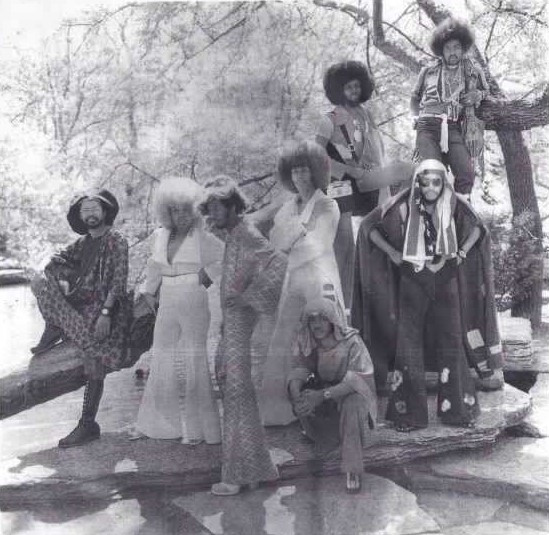
Multicolored wigs, chains, mirror outfits, boots.
**Bob Abrahamian** 36:04
Okay.
**Kevin Rowan** 36:05
By the time they went through their set, I said, “Now I see what they’re talking about.”
And I remember this—you have to hear this.
The girlfriend I went with at the time was Sandra Edwards. I looked at her and said—I was just talking—I said, “You know, the only thing they’re missing is a drummer like me.”
I’ll never forget that. That’s how I first saw them.
Then I think maybe two or three years passed, and somebody mentioned that they were looking for a drummer.
**Bob Abrahamian** 36:39
Okay.
**Kevin Rowan** 36:39
The Sons of Slum.
**Bob Abrahamian** 36:40
Do you know what year that was?
**Kevin Rowan** 36:42
’77. Yeah, because I remember I was 25 when I got with them. What was that? Don’t have me do the math now.
**Bob Abrahamian** 36:54
Well, mid-’70s, something like that.
So they had already cut their records for Stax and Gamma before you were in the group?
**Kevin Rowan** 37:02
Right.
**Bob Abrahamian** 37:02
And sorry, I forgot to ask you before: you said you were with Chuck Bernard right before you joined. How did you get to be part of his band?
**Kevin Rowan** 37:10
It had to have been word of mouth, because Chuck Bernard lived around 111th—somewhere around Loomis, Bishop, one of those streets. We didn’t live too far from each other.
**Bob Abrahamian** 37:24
Okay.
**Kevin Rowan** 37:25
So I don’t remember exactly how I got with Chuck, but we stayed together quite a bit.
**Bob Abrahamian** 37:32
Okay.
**Kevin Rowan** 37:33
We did a lot of songs together.
**Bob Abrahamian** 37:34
So then how did you end up joining the Sons of Slum?
**Kevin Rowan** 37:37
Okay, going back. Someone mentioned that they were looking for a drummer.
I was still playing, and every now and then in the neighborhood you would see the Sons of Slum truck.
**Bob Abrahamian** 37:54
Okay.
**Kevin Rowan** 37:55
You’d hear about them, and of course they were hot in Chicago. Oh, they were hot.
Somebody said, “Well, you can find them at this club called the Punkin’ Room [unclear spelling], on 71st and Jeffrey.”
It was in a bowling alley. On Thursday nights, all the musicians would hang out there and you could sit in for free sessions. I had seen Chuck in there and quite a few others. Everybody basically hung out there and got a chance to play.
Someone told me I could find the Sons of Slum there that night.
My first encounter was with James Bennett, the lead singer. Someone said, “Well, there’s James over there.”
He was in front of the stage watching the group perform. I walked up, tapped him on the back and said, “Hey, how you doing? My name is Kevin Rowan. I understand you guys are looking for a drummer.”
He turned around, looked at me, turned back around and kept watching the show.
I said, “Okay.”
So that was the first encounter.
**Bob Abrahamian** 39:07
Okay.
**Kevin Rowan** 39:08
Then somebody mentioned that they hung out at the High Chaparral.
I wasn’t going to chase anybody around, but I knew they were looking for a drummer.
The second time, at the High Chaparral, I saw some of the members come in after their shows and hang out. Of course, they were celebrities.
I remember going up to the bass player, Frank. I said, “Hey, I understand you guys are looking for a bass player—a bass player? A drummer. My name is Kevin.”
He said, “Oh, yeah. Here’s my number. We rehearse at such-and-such.”
That’s how I got the number.
I remember going to rehearsal for the first time. Rehearsal was supposed to be at 12 o’clock. I set up my drums, and I don’t think the band members got there until about three hours later.
They finally came in and said, “Well, let’s see what you’ve got.”
They called off a few tunes. I hit them. They called off some more, and then they said, “Hey, you got it.”
**Bob Abrahamian** 40:19
Okay.
**Kevin Rowan** 40:19
“You got the job.”
I said, “Okay. Thanks.”
But I was determined to go back and speak to James about my first encounter with him.
After I had joined the group, during rehearsal, I said, “Hey, James.” He was saying, “Oh, man, we’re glad to have you. You fit the bill.”
I said, “Remember that time at the—”
**Bob Abrahamian** 40:45
Was that at the bowling alley?
**Kevin Rowan** 40:46
The bowling alley.
I said, “That was me.”
He said, “Oh! I’m so sorry, man. I was kind of high. I didn’t understand.”
We were cool after that. And that’s how I became a member.
**Bob Abrahamian** 41:00
That’s cool. It’s interesting—you saw the group, you were blown away by them, and then you became a member.
**Kevin Rowan** 41:10
Actually, when I saw them, I had no idea I would end up being their drummer.
When I told you about the Arie Crown, I left this out too: after the Sons of Slum finished their first set, the DJ said, “Now for the O’Jays.”
Do you know the crowd said, “No! Sons of Slum!”
So they let them play another number. They did not want to hear the O’Jays. That’s how hot the Sons of Slum were during that period.
**Bob Abrahamian** 41:39
Okay.
**Kevin Rowan** 41:40
Yeah.
**Bob Abrahamian** 41:41
Well, let me play what I think was their biggest hit, “The Man,” and then we can talk more about your career with them.
So this is the Sons of Slum with “The Man.”
**[music playing]** 41:50
The Sons of Slum — “The Man.”
[Song lyrics are substantially unclear in the source transcription.]
**Bob Abrahamian** 44:30
Okay, that was the Sons of Slum with what I think was their biggest hit in Chicago, called “The Man.”
It’s interesting that we were just talking about how they started their show with “Shaft,” because it’s a very _Shaft_-inspired record.
If you’re just tuning in, Kevin Rowan, who was a drummer for the Sons of Slum, is in the studio talking about his career.
Kevin, you’re not actually on that record, right?
**Kevin Rowan** 45:15
No, no.
**Bob Abrahamian** 45:16
But you joined pretty much after the Stax material had been released?
**Kevin Rowan** 45:20
Correct.
**Bob Abrahamian** 45:21
When you joined the group, I know their original manager was Purvis Staples. Was he still the manager?
**Kevin Rowan** 45:22
He was, but they were just phasing each other out.
I knew a guy named Ken Freeman who lived on the North Side. I had dealt with him with some other groups too, because I played with various groups.
I mentioned to him and to the group that this guy could do the managing.
**Bob Abrahamian** 45:49
Okay.
**Kevin Rowan** 45:49
So after Purv, we had Ken Freeman.
**Bob Abrahamian** 45:52
And with Purv, I believe there was a whole bunch of unreleased material that was cut but never released. You said it was probably recorded at [unclear studio name]?
**Kevin Rowan** 46:02
Right.
**Bob Abrahamian** 46:02
Then when you joined the group, you ended up getting a record deal with Capitol Records.
**Kevin Rowan** 46:09
Correct.
**Bob Abrahamian** 46:10
What’s the story with that?
**Kevin Rowan** 46:12
Okay. There were three groups that had signed. Tavares was first, we were second, and there was an all-girl group—don’t ask me the name, because I don’t remember.
That was the order. Tavares’s record was supposed to come out first, and then ours would follow.
They sent Larkin Arnold. Larkin Arnold had worked with Curtis Mayfield around the _Super Fly_ album.
I remember Capitol Records sent him, and they gave him $8,000 for two weeks to do our songs.
We basically did it in two weeks.
**Bob Abrahamian** 47:07
So you went into the studio and recorded a whole album’s worth of material?
**Kevin Rowan** 47:12
Right, because all it needed was to be recorded. We already knew the material.
By this time we had already signed.
I left this out: when we talked to the guys who signed us, they said, “Okay, Capitol Records is very serious. We don’t mess around. We have people like Sammy Davis Jr. and Nancy Wilson. If we pick you guys up, we expect this, that and the other.”
And we were saying to ourselves, “Yes! This is it. We’re on a top label.”
They told us the order would be Tavares, us, and then the all-girl group.
At any rate, Tavares’s first record came out and they were doing really well. Really hot.
Within about a year we were saying, “Well, it’s about our time.”
Our manager kept in contact with them and asked, “What’s going on with our record?”
They said, “Since Tavares is doing so well, we decided to shelve you guys’ record and put all our eggs behind them.”
And we were hot then. We were hot.
So we told them, “Fine, just let us go.”
They said, “No. We have you for a year. You can’t do anything for a year.”
That was a heartbreaker right there.
**Bob Abrahamian** 48:42
So they kept you locked into the contract but didn’t release the record.
**Kevin Rowan** 48:45
That’s right. And they kept the album.
That’s the album I did play on.
**Bob Abrahamian** 48:50
But you actually have the unreleased album on tape.
**Kevin Rowan** 48:53
Yes.
**Bob Abrahamian** 48:59
It would be good if someday it got legitimately released.
One question I had: Capitol Records wasn’t based in Chicago. Do you know how you got hooked up with them at all?
**Kevin Rowan** 49:11
I don’t know if it was through our manager, but—
**Bob Abrahamian** 49:18
They did put out a bunch of Chicago material. The biggest Chicago artist they dealt with was probably Patti Drew.
**Kevin Rowan** 49:22
Okay.
**Bob Abrahamian** 49:22
Patti Drew was on Capitol Records. But you don’t know exactly how you got hooked up with them?
**Kevin Rowan** 49:28
No. I think it was through our manager, word of mouth.
We had a lot of great opportunities. Remember the group Chase?
**Bob Abrahamian** 49:35
Yeah, the horn-rock group.
**Kevin Rowan** 49:39
Their manager—we cut, I think, two or four sides. I didn’t tell you that.
That fell through too, because he was going to put us where he claimed Chase had been.
**Bob Abrahamian** 49:49
You’re saying the manager of Chase was going to put out the Sons of Slum?
**Kevin Rowan** 49:52
Yes.
**Bob Abrahamian** 49:53
That was after the Capitol stuff?
**Kevin Rowan** 49:55
After the Capitol stuff.
They had gone down in the plane. The crash had basically finished the group—all the members involved were killed.
I think through our manager they were going to have some kind of partnership.
Anyway, he came to us and said, “You know I lost my group. You saw us on TV, _Johnny Carson_. I’ll put you exactly where they were, but you have to be serious.”
So we said to ourselves, “Oh, here’s another shot.”
We went into the studio, and I think we cut at least four sides.
The story is kind of embarrassing, but here it goes.
We got into the studio, and later he called our manager and said the record deal was off.
We said, “Why? What’s going on?”
He said, “One of your members tried to take a guitar out of the studio, and I’m finished with you.”
I remember speaking to him—I don’t remember his name now—and saying, “Look, whoever took the guitar, we’ll fire him and we can continue.”
He said, “No. That’s it.”
So that was the end of that deal.
**Bob Abrahamian** 51:13
Okay. So you pretty much had a lot of bad luck with recording deals and contracts.
**Kevin Rowan** 51:20
You want to hear some more of these? I mean, they’re stories.
**Bob Abrahamian** 51:26
One thing I wanted to ask about also: you guys were very psychedelic and flamboyant at the time, especially the lead singer, James Bennett.
**Kevin Rowan** 51:34
Yes.
**Bob Abrahamian** 51:36
He had something like underwear on his head?
**Kevin Rowan** 51:39
An American flag. He had a warrant out on him for burning the flag in Texas.
That was during the hippie movement, when you couldn’t do those kinds of things.
**Bob Abrahamian** 51:52
So when you joined the group, did you have to become all psychedelic-looking too?
**Kevin Rowan** 51:58
Actually, with Rated X, we were already that way.
**Bob Abrahamian** 52:01
So you already dressed in crazy psychedelic clothing.
**Kevin Rowan** 52:04
Yes. And when I got with them, I remember the members saying, “Hey, you fit right in.”
I had been watching Sly and the Family Stone.
**Bob Abrahamian** 52:15
But I bet you didn’t have an American flag on your head.
**Kevin Rowan** 52:18
Oh, no, no, no!
I did have a green wig and a yellow wig to match my outfits. That was something back then.
**Bob Abrahamian** 52:28
So the group stayed together through a bunch of failed record contracts and record deals. How long did the group stay together?
**Kevin Rowan** 52:36
Are you talking about the time I was with them, or prior?
**Bob Abrahamian** 52:41
When you were with them. How long did the group stay together?
**Kevin Rowan** 52:45
We finally disbanded in ’78.
**Bob Abrahamian** 52:51
Okay.
**Kevin Rowan** 52:52
Everything was just falling through. Nothing was going right.
I remember one of the saxophone players, Herman Waterford, said, “Look, one of the ex-Impressions has some jobs down in New Orleans.”
We told the group, “Hey, let’s go down to New Orleans and try to do something.”
Most of the members—through failed marriages, the ups and downs of getting kicked out of apartments and that kind of thing—didn’t want to go.
So Herman and I decided to go.
**Bob Abrahamian** 53:30
Okay. Do you remember which member of the Impressions?
**Kevin Rowan** 53:34
Nate, I think.
**Bob Abrahamian** 53:35
Nate Evans?
**Kevin Rowan** 53:36
I think that’s his last name. And now Nate is singing with the Temptations, I think.
**Bob Abrahamian** 53:42
Yeah. Plus, he had a record on Twilight Records. He had one of the last records on Twilight Records.
**Kevin Rowan** 53:47
Okay.
So we went to New Orleans with him. We borrowed our PA system from the group and brought it down there to use.
I guess some of the members felt we weren’t coming back, so they started selling the other portions of the equipment.
The whole thing just fell apart.
I remember saying, “Okay, tell them to get this back. We’ll send this equipment back, since nobody is breaking up the group.”
But that’s how we finally broke up.
**Bob Abrahamian** 54:25
So you had a lot of bad luck.
Were there any other big major labels you were almost released on?
**Kevin Rowan** 54:32
Okay, going back to after the Capitol deal—these are interesting stories, so I’ll share them with the listeners.
At one point, after the Capitol deal, the Sons of Slum had a meeting. We said, “Hey, we’ve got to do something.”
Somebody suggested, “Let’s go to L.A. Take our material, since we already have it, and see if we can find a record deal.”
We said, “Okay, fine.”
Everybody couldn’t go, so we saved our money. Maurice was the leader, and I was kind of the business person in the group.
So Maurice and I went.
**Bob Abrahamian** 55:23
Okay.
**Kevin Rowan** 55:24
We went to L.A. with the material.
I’ll never forget it. We were there for about a week or two, staying with a friend of ours named Beverly Reed. She had an apartment there.
Beverly worked at an office where a lot of stars were around. Maurice and I went to where she was working, and we met Jayne Kennedy, Joe Jackson—the Jackson 5’s father—and some of the other stars from that period. Ron O’Neal from _Super Fly_.
Anyway, Maurice and I were sitting in Beverly’s office, and I saw somebody who looked like Joe Jackson walk past the door.
I said, “Hey, Beverly, isn’t that Joe Jackson?”
She said, “Oh, yeah. His office is right down from mine. You can go down there.”
I said, “Maurice, come on. Let’s take the record.”
**Bob Abrahamian** 56:20
Was it at Motown Studios at the time, or Epic Records?
**Kevin Rowan** 56:24
No, it was just some—
**Bob Abrahamian** 56:27
Office?
**Kevin Rowan** 56:28
It was an office where the stars were. I can say it was somewhere around Capitol, around the Capitol recording industry.
Anyway, Maurice was scared. I picked up the album and went to Joe Jackson.
I said, “Hey, I’m Kevin Rowan with the Sons of Slum.”
He said, “Yeah, I’ve heard of you guys from Chicago.”
I said, “Is there anything you think you can do for us?”
He said, “I’d really like to help you guys, but Jermaine just left the group, so I’m really tied up with him. The best I can do is pass your number on or something.”
Nothing really came of that.
But that same day, Maurice and I went to RCA with the album.
A guy there listened to it and said he liked what he heard. I’m making a long story short, but he said, “Come back tomorrow and we’ll sign a contract.”
We said, “Okay, Maurice, here we go again. We’ve got another deal.”
So we went back to where we were staying with Beverly.
We said, “Beverly, guess what? We finally got another deal.”
She said, “Oh, that’s good. You all want to go to a party tonight?”
We said, “A party? No, we can’t go to a party. Tomorrow morning we have to get up and sign this record deal.”
Then we asked, “Well, whose party is it?”
She said, “Aretha Franklin and Glynn Turman. They want you guys to come out to their ranch and party with them.”
Maurice and I looked at each other.
It seemed like a no-brainer which one we should do, but we felt that if we went to Aretha’s party, we’d be drinking and everything else, and when it was time to get up in the morning to sign the contract, we wouldn’t be able to.
**Bob Abrahamian** 58:32
Okay.
**Kevin Rowan** 58:32
So we decided no. We said, “We got what we came down here for. We’ve got to sign papers tomorrow.”
Of course, we weren’t using a lawyer during that time.
We woke up the next morning, went down to the office ready to sign, and the guy changed his mind.
He said, “I’m sorry, you guys. I had a change of mind.”
Maurice and I looked at each other and said, “We should have gone to that party.”
Because if we had gone to the party, we would have met everybody and anybody.
**Bob Abrahamian** 59:05
Okay.
**Kevin Rowan** 59:06
Knowing Aretha Franklin, our spectrum of people we knew could have been even bigger.
So that was another deal that fell through.
**Bob Abrahamian** 59:13
So basically, throughout the ’70s you had bad luck with record labels.
I know that James Bennett, after the group broke up, released a record as the Chi-Town Hustlers.
**Kevin Rowan** 59:26
Yeah, I remember that.
**Bob Abrahamian** 59:28
Did you continue doing music during that time?
**Kevin Rowan** 59:30
What year are we talking about now?
**Bob Abrahamian** 59:32
Like ’79.
**Kevin Rowan** 59:33
During that period, I think for me it was just about through.
After the New Orleans deal, coming back from that and nothing happening—nothing was going right.
In fact, all that area—what was the tornado that hit down there? Well, not a tornado.
We had played all around that area: Opelousas, Baton Rouge, St. Charles.
I look back at that and say, “Man.” I had actually thought about moving down there and staying for about five months, and I’m glad I didn’t, because that area was later hit by Katrina.
**Bob Abrahamian** 1:00:15
Yeah.
**Kevin Rowan** 1:00:16
So during that period, I came back and life had to change.
Now, for the brighter side—do you want to ask this, or do you want me to tell it?
**Bob Abrahamian** 1:00:27
Go ahead.
**Kevin Rowan** 1:00:28
During this time, I had a lot of questions that weren’t answered, and I started praying heavily.
I wasn’t a druggie, but I got high like the average person and drank, and I needed some answers.
I was asking God, “What do you want me to do with my life? Nothing’s going right. You gave me this talent, and I just don’t know. Let me know.”
I remember praying those prayers.
The change in my life came when I was living with someone, and she asked me, “Do you want Jehovah’s Witnesses to come by?”
I said, “Yeah, I’d like to talk to them.”
The moment I talked to them, I understood what was happening.
Life changed. I’m a Jehovah’s Witness now. I have my two kids, and life just turned around completely.
So I look at music totally differently now. I still play every now and then, but I’m not trying to make it to the top and be that big, successful player.
**Bob Abrahamian** 1:01:35
Do you play gospel music, or what kind of music?
**Kevin Rowan** 1:01:38
No, no, no. I don’t play gospel.
I still play. The type of stuff I do now is like the early WNUA sound. I’d say I’m closer to George Duke-type music. I like that kind of funk and smooth jazz.
**Bob Abrahamian** 1:01:57
Are you going to play professionally again, or is it something you just do on your own?
**Kevin Rowan** 1:02:03
Well, I would like to get a CD out. Actually, I’m working on my own material at this time.
I don’t just play drums. I play guitar and keyboards, a little bass, and I sing lead.
Over the course of this time I’ve been working on my own material. I’d like to open for some of the acts they have in the city.
I have members I can pull in whenever I get ready to do a show or something, so I still have a band I can put together.
**Bob Abrahamian** 1:02:34
So you have a band together that can do shows now?
**Kevin Rowan** 1:02:37
Right. And the lead singer, her name is Topez [unclear spelling].
**Bob Abrahamian** 1:02:42
Okay. If anyone is looking for a band or wants to get in contact with you, do you have an email address or some way to contact you?
**Kevin Rowan** 1:02:50
Not an email, no. Just phone numbers right now.
**Bob Abrahamian** 1:02:52
Okay. Well, they can call the station and get in contact with me, and I can pass it on.
And if you release any material, I’ll definitely let people know about it.
**Kevin Rowan** 1:03:00
I’d appreciate that.
**Bob Abrahamian** 1:03:02
Okay. Thanks so much for coming down and sharing your stories. It’s an interesting story.
Do you have any last words for the listening audience?
**Kevin Rowan** 1:03:09
Okay. For those who are listening, let’s start with UP—Union Pacific Railroad, where I work. If you guys are listening on break, hello to everybody out there from Union Pacific, Pat and the rest.
And some of my Jehovah’s Witness friends—I can’t call everybody’s name.
And some of you skaters who are listening. Oh, I skate too. I still skate at my age. We have fun at the rink.
**Bob Abrahamian** 1:03:39
That’s huge on the South Side—the roller-skating rink, right?
**Kevin Rowan** 1:03:41
Right. And I’ve seen some of the old people I used to hang out with.
So to you rink people, thank you for listening. I hope you enjoyed what you heard.
And Bob, I guess he’ll give us a copy of this.
**Bob Abrahamian** 1:03:59
Okay, well, thanks so much for coming down.
**Kevin Rowan** 1:04:02
Okay, Bob.
**Bob Abrahamian** 1:04:03
So this last record I’m going to play is the Sons of Slum. This track is called “The Push and Pull.”
**[music playing]** 1:04:10
The Sons of Slum — “The Push and Pull.”