**Bob Abrahamian** 00:00
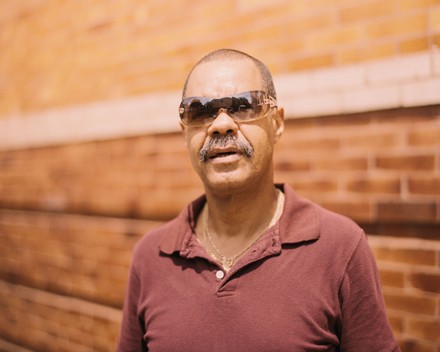
Okay, you're tuned to WHPK 88.5 FM in Chicago. You're listening to another edition of the _Sitting in the Park_ show. Today, I'm going to start off the show with an interview with a member of the Chicago group The New Concepts. So I have Frank Clark up here in the studio right now. You want to say hi?
**Frank Clark** 00:18
Hi. How you doing, everyone?
**Bob Abrahamian** 00:20
Okay, cool. So, I guess at least for the first part of the show, we'll be discussing sort of the history of your group and the members of the group, and playing some of your records.
**Frank Clark** 00:32
Okay, that sounds good to me.
**Bob Abrahamian** 00:33
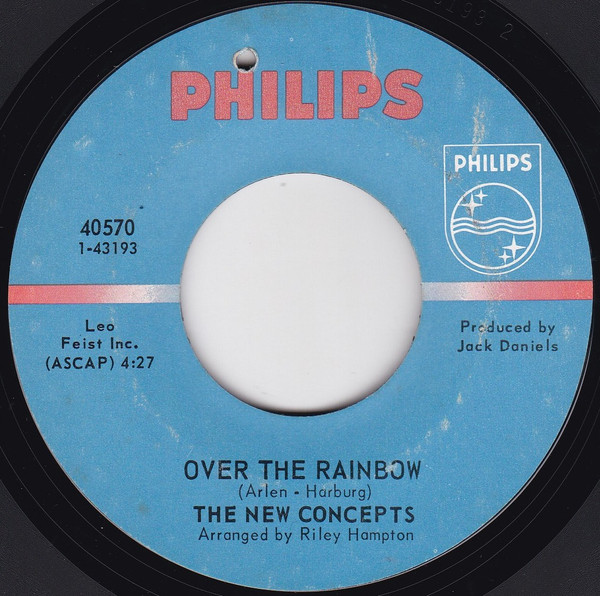
Yeah, and if anyone has any questions or comments, you can call up here at 773-702-8424. So, the big record that you had in Chicago was a cover of "Somewhere Over the Rainbow," and the flip was a pretty good song too. It was called "Give Me Another Chance."
**Frank Clark** 00:49
Correct.
**Bob Abrahamian** 00:50
So let's first talk about when you formed the group. Well, actually, let's start off even before the group. I guess we could start off with your history as a singer. The New Concepts is one of the first groups that I'm interviewing here where you weren't a high school group.
**Frank Clark** 01:07
No, we weren't. We all met when we were all, I'd say, in our early twenties.
**Bob Abrahamian** 01:11
Okay. But did you sing when you were in high school?
**Frank Clark** 01:14
Oh, definitely. I mean, to tell you the truth, I started singing way back in 1955, really.
**Bob Abrahamian** 01:21
Okay, so that's a long time ago.
**Frank Clark** 01:25
Right. It's when—what's his name? I'm trying to think—Frankie Lymon and the Teenagers, the Moonglows, all those groups. They inspired me to start singing.
**Bob Abrahamian** 01:32
Okay, so when were you in high school? Like, what years were you in high school?
**Frank Clark** 01:36
I was in high school—'60? No, take that back. I graduated in '61, and I graduated from grammar school in '57.
**Bob Abrahamian** 01:43
Okay. So, in high school, what high school did you go to, actually?
**Frank Clark** 01:47
St. Elizabeth, and then I transferred to Chicago Vocational.
**Bob Abrahamian** 01:50
Okay. And you were saying that's in Chatham? Is that in Chatham, or you were from the Chatham area?
**Frank Clark** 01:54
Yes, I was in the Chatham area in high school.
**Bob Abrahamian** 01:56
Okay. And you told me—I was asking before—if you knew of any other groups that came from St. Elizabeth?
**Frank Clark** 02:02
At one time, when I was in grammar school, I remember this guy used to always be singing at a place on 41st and Wabash called the Shield House.
**Bob Abrahamian** 02:12
Okay.
**Frank Clark** 02:12
And later on, he became Eugene Record.
**Bob Abrahamian** 02:15
Okay.
**Frank Clark** 02:16
And I remember him vaguely, singing at the Shield House, doing different shows. People used to always look at him and say, "Ah, this guy can't sing." Now you see what happened. He wound up being the one that really, truly did what he had to do.
**Bob Abrahamian** 02:27
Yeah. I mean, his voice defined the sound of the Chi-Lites, pretty much—that falsetto, the high voice. So, yeah, actually, I know somebody. His name is Burt, and he was in a doo-wop group as kids with Eugene. He's got a really funny picture of them as, like, 12-year-olds. It's a real nice photo. Maybe I'll interview Burt here sometime. But anyway, so he was older than you, right?
**Frank Clark** 02:50
Yes.
**Bob Abrahamian** 02:50
Okay. So anyway, you were in some groups in high school, right? Do you remember what any of the groups were called?
**Frank Clark** 02:58
Vaguely, no. We're going way back. Most of the groups I can remember being in were when I was an adult, basically.
**Bob Abrahamian** 03:07
Okay. So when you were in high school, you weren't in any groups that ever recorded anything?
**Frank Clark** 03:11
No, none at all.
**Bob Abrahamian** 03:12
Okay. And you were telling me that after high school, you were in a group with Sy Richardson.
**Frank Clark** 03:19
Sy Richardson, right.
**Bob Abrahamian** 03:20
And—
**Frank Clark** 03:21
Willie Caser. Willie Caser, and another guy named Charles. I can't remember Charles's last name right now.
**Bob Abrahamian** 03:27
Okay. But Sy Richardson was in the doo-wop group Little June and the Januarys, and he's kind of a famous actor right now.
**Frank Clark** 03:35
Oh, yes. He's doing his thing out in California.
**Bob Abrahamian** 03:37
So then, ultimately, you formed The New Concepts somewhere in the late '60s, right?
**Frank Clark** 03:43
Right.
**Bob Abrahamian** 03:44
So you had been out of high school—I know your record came out around '69, I think—and if you graduated in '61, you'd been out of high school for like eight years already.
**Frank Clark** 03:55
Correct.
**Bob Abrahamian** 03:56
So you were like 26, 27 when you formed the group. Is that right?
**Frank Clark** 03:57
Right.
**Bob Abrahamian** 03:58
So you had been in some other groups in the '60s, but none of them had ever recorded anything.
**Frank Clark** 04:02
None whatsoever.
**Bob Abrahamian** 04:03
And then, so how did you end up forming The New Concepts?
**Frank Clark** 04:07
Oh, this goes way back. Like you said before, I grew up in Chatham as a teenager. And I met a young fellow, and I can't remember his name now because we're going so far back. You know, we all had nicknames. And he told me about a young guy who was not from Chicago—excuse me—he was from New York. His name was George Purnell.
**Bob Abrahamian** 04:28
Okay.
**Frank Clark** 04:28
And he was a DJ at this club on 75th and—trying to think of it—I think it was Eberhart, or maybe Rhodes, called the Zombie. [unclear]
**Bob Abrahamian** 04:40
Okay.
**Frank Clark** 04:40
And I met him, and he introduced me to another guy named Frank Williams, who was from New York City. And I knew another guy who grew up with me in Chatham called Paul Barnes.
**Bob Abrahamian** 04:51
Okay.
**Frank Clark** 04:51
So we would get together. George was a DJ—
**Bob Abrahamian** 04:54
Okay.
**Frank Clark** 04:54
—at the Zombie Club, so we had access to the club when no one was there, and we'd go in and start rehearsing. George came up with this idea of doing old classic tunes, and "Over the Rainbow" came out.
**Bob Abrahamian** 05:08
Okay. So your group had actually formed to cover old, kind of show tunes. Is that—
**Frank Clark** 05:12
Exactly.
**Bob Abrahamian** 05:13
Okay. So, I mean, was the idea that you were going to record them, or you were going to do shows with them, or what?
**Frank Clark** 05:20
We were going to do both.
**Bob Abrahamian** 05:20
Okay. So you actually explicitly formed just to record these old show tunes.
**Frank Clark** 05:25
Exactly.
**Bob Abrahamian** 05:26
So you formed, and you guys had just all met each other. You said you knew George, and someone introduced you to Frank—
**Frank Clark** 05:35
Frank Williams. And I knew Paul Barnes. So us four got together, and it was just a blend. We got together, and it really worked out.
**Bob Abrahamian** 05:41
Okay. So this first record that you did was "Somewhere Over the Rainbow," and it was released on Philips Records, which, you know, was in Chicago and released a bunch of stuff in Chicago at the time.
**Frank Clark** 05:51
Exactly.
**Bob Abrahamian** 05:52
So, do you remember how you got hooked up with Philips Records?
**Frank Clark** 05:55
Well, George, with his bright ideas as usual—he's a go-getter—said, "Let's go into the studio, make a demonstration tape, and take it to the different recording companies here in Chicago." So we went to Chess, we went to all those companies here, and Philips—or I should say Mercury—Johnny Moore and Dan Daniels heard it and they liked it. They told us, "Come on in," and that's how it started right then and there.
**Bob Abrahamian** 06:20
Okay. So you had actually already recorded the record, and you took it as a demo to all these companies.
**Frank Clark** 06:25
Exactly.
**Bob Abrahamian** 06:27
So is the version that got released the version that you had already recorded?
**Frank Clark** 06:34
Yes, it was.
**Bob Abrahamian** 06:35
Okay. Well, I'm going to play the record, and then we can talk some more. So this is The New Concepts with "Somewhere Over the Rainbow."
**Music** 06:40
["Somewhere Over the Rainbow" by The New Concepts playing]
**Bob Abrahamian** 10:59
Okay, you're tuned to WHPK 88.5 FM in Chicago. You're listening to the _Sitting in the Park_ show. We're in the middle of an interview with Frank Clark, who was a member of the Chicago group The New Concepts, who did that record that we just played. So that was your guys' version of "Somewhere Over the Rainbow."
First of all, who sang lead on that record?
**Frank Clark** 11:24
Frank Williams is his name.
**Bob Abrahamian** 11:25
Okay. And who sang all the other parts on the record?
**Frank Clark** 11:28
I, Frank Clark, was singing first tenor. George sang second tenor, and Paul Barnes sang baritone and bass.
**Bob Abrahamian** 11:37
Okay. So we were talking before we played the record about how you guys explicitly formed with the intention of doing show tunes.
**Frank Clark** 11:47
Exactly.
**Bob Abrahamian** 11:48
So why was your goal to do show tunes instead of soul songs or something?
**Frank Clark** 11:50
Well, we had a guy named Paul Barnes who could do all of it—bass, first tenor, second tenor, baritone. He was a guy who could sing all the funky tunes.
And Frank Williams was more of a balladeer, so we would put him out front. Any time he was out front, we'd sing the show tunes and all the stuff that was really melancholy—crossover groups, you know, to the white side also.
**Bob Abrahamian** 12:13
So the intention was to put out records that could cross over to a white audience.
**Frank Clark** 12:17
Yes, and eventually try to make it to Vegas also.
**Bob Abrahamian** 12:19
Okay. Yeah, it's interesting. That was the goal of so many groups, you know, to go to Vegas.
Actually, you were telling me—who was the DJ again? Was Frank the DJ, or who was the guy who was the DJ at the club?
**Frank Clark** 12:32
Oh, that was George Purnell.
**Bob Abrahamian** 12:34
George. And Frank was the guy—the balladeer—you were saying was singing leads.
**Frank Clark** 12:38
Exactly.
**Bob Abrahamian** 12:39
Okay. So the B-side of this record was actually a song written by Johnny Moore and Jack Daniels called "Give Me Another Chance." And I was playing it for you earlier.
Actually, they reused a record that they had done on another group called The Classmates. They originally recorded it with a group called The Classmates and titled it "You Can Do Me Some Good," and then they reused the song as "Give Me Another Chance."
**Frank Clark** 13:05
Correct.
**Bob Abrahamian** 13:06
But you didn't know anything about that?
**Frank Clark** 13:09
No.
**Bob Abrahamian** 13:10
So I'll play your version. It's kind of like an updated version of the song.
Did "Somewhere Over the Rainbow" get much play?
**Frank Clark** 13:16
It got played in Chicago. The East Coast got quite a bit of play also. We heard it got played in some parts of Florida.
**Bob Abrahamian** 13:22
Okay. Yeah, definitely. I see the record turns up in Chicago, so it probably got play.
**Frank Clark** 13:27
Definitely got some play in Chicago.
**Bob Abrahamian** 13:29
Okay. Well, I'm going to play the B-side now, "Give Me Another Chance," and then we'll talk some more.
**Frank Clark** 13:37
Okay.
**Music** 13:42
["Give Me Another Chance" by The New Concepts playing]
**Bob Abrahamian** 15:47
Okay, we're back in the studio here with Frank Clark, member of The New Concepts. That was just the B-side of your first record. That was "Give Me Another Chance."
And you were telling me that mainly the A-side of the record, "Over the Rainbow," got played. So then, did you guys ever do shows?
**Frank Clark** 16:03
We did some shows in Chicago, but most of the shows were out of town.
**Bob Abrahamian** 16:06
Okay.
**Frank Clark** 16:07
It wasn't too many. Basically, we went to the East Coast. Not too many shows. I think we went once. We went down to Florida and had a show there.
**Bob Abrahamian** 16:14
Okay.
**Frank Clark** 16:15
So basically, we didn't have as many shows as we should have.
**Bob Abrahamian** 16:18
Okay. And then you released one more record on the Philips label. It's another kind of show tune, an Irving Berlin song, "How Deep Is the Ocean?"
**Frank Clark** 16:27
Right.
**Bob Abrahamian** 16:28
And that didn't get that much play either?
**Frank Clark** 16:31
Didn't get too much play at all, really. I think I heard it a couple of times, maybe for a couple weeks, maybe a month or so, and that was it.
**Bob Abrahamian** 16:39
Okay. And then—I don't know if I should play it now, or maybe we should play it at the end of the interview.
But then after that, you formed another group, right? First of all, The New Concepts eventually broke up.
**Frank Clark** 16:53
Yeah, we had a falling-out, so we went our separate ways.
**Bob Abrahamian** 16:56
Was it just that the records weren't successful, so you kind of broke up? Is that what happened?
**Frank Clark** 16:59
Exactly.
**Bob Abrahamian** 17:00
Okay. And that was in the late '60s or early '70s?
**Frank Clark** 17:05
Sometime in the late '60s.
**Bob Abrahamian** 17:07
Okay. And then you were telling me you formed another group after The New Concepts called The Second Foundation. Is that right?
**Frank Clark** 17:13
Exactly.
**Bob Abrahamian** 17:14
Was that the group you formed directly after The New Concepts?
**Frank Clark** 17:17
Yes, it was.
**Bob Abrahamian** 17:17
Okay. And we actually talked about—we didn't give the name of the group—but we had talked about the group a little bit in the Vows interview, because your group had Lawrence and Burl of The Vows in it, right?
**Frank Clark** 17:26
Right. We had two of the guys from the West Side, from The Vows. Another guy in the group with me was Wayne Reedus.
**Bob Abrahamian** 17:33
And Wayne, we were talking about before, was in the group The Original Breed and The People's Choice.
**Frank Clark** 17:40
Exactly.
**Bob Abrahamian** 17:41
So your new group, The Second Foundation, had members who had pretty much all been in other groups.
**Frank Clark** 17:44
Right.
**Bob Abrahamian** 17:45
But you guys never explicitly recorded anything.
**Frank Clark** 17:48
No, we never really got into the studio, as you might say. We did some studio stuff, but it never did come out. We had our manager, Ruth Moore.
**Bob Abrahamian** 17:58
Okay. And she was a famous manager—managed all these Chicago groups.
**Frank Clark** 18:04
Yeah.
**Bob Abrahamian** 18:05
But then, I guess what happened was you ended up doing some background work for Clarence Johnson on The Brighter Side of Darkness, right?
**Frank Clark** 18:11
I hate to say it, but yes, we did do it.
**Bob Abrahamian** 18:14
Okay. So you were telling me a story about when you heard the record on the radio?
**Frank Clark** 18:19
Yeah. I was listening to Herb Kent, believe it or not. Now we're going way back.
Herb Kent was saying that he noticed the background had really improved. He said, "These boys have really come a long way since they first recorded."
And, you know, I had to laugh. I was in the car and I said, "I guess so, because it's us, really—some other guys."
**Bob Abrahamian** 18:37
Okay. And you were telling me that, I guess, they had some problems getting their harmony, or they were fighting?
**Frank Clark** 18:42
No, it wasn't fighting. They really couldn't get the harmony like they should have.
So Clarence called our manager, Ruth Moore, and asked if we would do the background because he was under the gun and they had to get this out.
So we went into the studio, and I guess it was about four tunes on the LP. We got it together in about half an hour.
**Bob Abrahamian** 19:02
Okay. So they just brought you in to sort of fill in the harmony on the record.
**Frank Clark** 19:06
Exactly.
**Bob Abrahamian** 19:07
So I'm going to play—I played, in another interview I did, one of the songs that you did background on, which is "Oh Baby." You can really tell in that song. It sounds like older people.
**Frank Clark** 19:15
That's what Herb said.
**Bob Abrahamian** 19:17
Herb noticed it right away too.
**Frank Clark** 19:18
Right.
**Bob Abrahamian** 19:18
It sounds like older people in the background. But I'll play one of the other records you sang on. This is actually one of their hits, "Just a Little Bit."
**Frank Clark** 19:27
Yeah.
**Bob Abrahamian** 19:27
So I'll play this. This is The Brighter Side of Darkness, but the backing singers are actually The Second Foundation, which is Frank Clark, Wayne Reedus, Lawrence Bibbs, and Burl Bynum.
So I'll play this record, and then we can talk some more. And if anyone has any questions, you can call up 773-702-8424.
**Music** 20:00
["Just a Little Bit" by The Brighter Side of Darkness playing]
**Bob Abrahamian** 24:16
Okay, we're back on WHPK 88.5 FM Chicago, talking to Frank Clark, member of the Chicago group The New Concepts.
So the track we just played was The Brighter Side of Darkness with "Just a Little Bit." That was actually a big hit for them. And as we were talking about, you guys actually did some of the background harmonies—not The New Concepts, but your second group called The Second Foundation.
So after The Second Foundation, I guess you guys broke up. You recorded some stuff, but it was never released for Clarence. And then you formed another group, right?
**Frank Clark** 24:53
After that, Wayne and I went to another group with George Purnell from The New Concepts and his wife. We called ourselves Sweet Mood.
**Bob Abrahamian** 25:02
What was his wife's name?
**Frank Clark** 25:04
Norma Purnell.
**Bob Abrahamian** 25:05
Okay. So you formed a group called Sweet Mood, and you never recorded anything. This was like '74, around that time, probably?
**Frank Clark** 25:12
Actually, it was before then, around '70, '71.
**Bob Abrahamian** 25:18
Well, this Brighter Side of Darkness record actually came out in '72, so it was—
**Frank Clark** 25:22
'73 then. Okay, I had to get it straight, right, because I was singing with The Second Foundation. After that, I went with George and them, and I stopped singing in '75.
**Bob Abrahamian** 25:32
Okay. So that group you formed was Sweet Mood, and you did a bunch of shows in Chicago, right?
**Frank Clark** 25:37
Shows in Chicago. We'd been to Buchanan, Michigan. We went to the East Coast. We had a nice following.
**Bob Abrahamian** 25:43
Okay. But you ended up never recording anything.
**Frank Clark** 25:46
Never recorded. Had a chance to record, but—
**Bob Abrahamian** 25:48
You told me you did work with Eddie Sullivan.
**Frank Clark** 25:50
Eddie Sullivan too, right.
**Bob Abrahamian** 25:51
So he helped write some of your songs, or—
**Frank Clark** 25:54
Right. Had some beautiful tunes, but they never did get out.
**Bob Abrahamian** 25:56
Okay. But did you record them?
**Frank Clark** 25:58
No, we didn't record either.
**Bob Abrahamian** 25:59
Okay, okay. So I guess that's pretty much the story of your group.
This last song I'm going to play—I wanted to play the original version of "You Can Do Me Some Good" by The Classmates. This is a real nice version of the record. It's a sort of younger, kind of Chicago teen sound. Your version was an updated version of this song.
**Frank Clark** 26:22
Okay, right.
**Bob Abrahamian** 26:23
And actually, before we end the interview, I guess—so you stopped singing in '75?
**Frank Clark** 26:31
'75.
**Bob Abrahamian** 26:32
So pretty much you were done. You just retired from the music industry, or—
**Frank Clark** 26:33
I really got fed up with the music industry. We were like spinning our wheels and weren't going anywhere.
So I just got to the point where I told George and them to find a replacement for me, and they did. After that, we all remained friends, even Burl and Bibbs. All of us—I stayed friends with them. But I just stopped singing myself.
**Bob Abrahamian** 26:50
Okay, cool. Well, yeah, I mean, I guess by '75, the music industry in Chicago was kind of dying anyway. There were fewer opportunities to record.
**Frank Clark** 26:58
Exactly.
**Bob Abrahamian** 26:59
So, anyway, at least you have some recorded history. You know, those records—no one can erase that.
**Frank Clark** 27:07
Can't erase it at all.
**Bob Abrahamian** 27:08
These documents show that you did something.
So anyway, this last record I'm going to play, like I said, is the original version of "You Can Do Me Some Good" by an earlier group called The Classmates.
**Music** 27:18
["You Can Do Me Some Good" by The Classmates playing]
**Music continues** 28:00
[record continues]