**Bob Abrahamian** 00:00
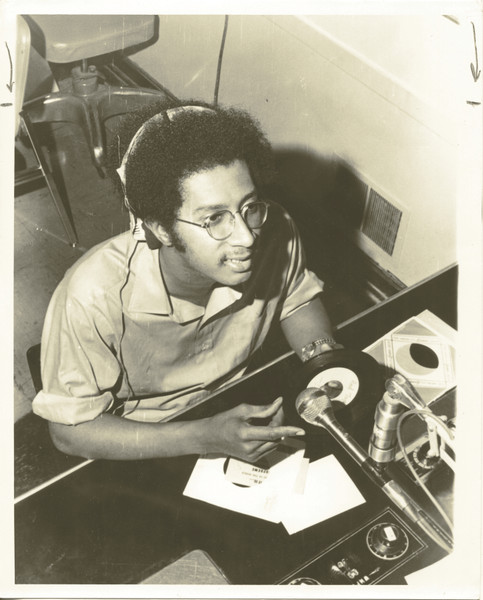
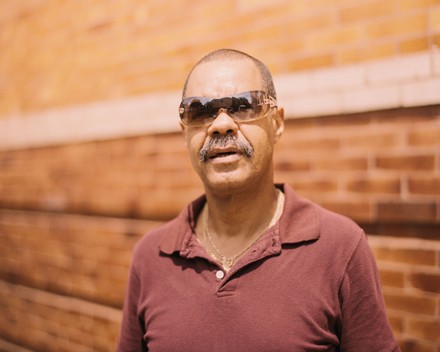
Okay, you're now tuned to WHPK 88.5 FM in Chicago. You're tuned to a very special edition of the _Sitting in the Park_ show. Today I have a very special guest, famous Chicago DJ and record producer Richard Pegue, up here in the studio.
They had to wait till the check cleared before the—[laughs]. He always has a big introduction like that.
Today we'll be talking about his career, his record label, and records he produced and wrote, so you should definitely keep tuned. Maybe pop a tape in, because it's definitely going to be an interesting show.
So I thought today we would talk, I guess, about the different groups that you produced and put out, and about your career, and play the records associated with those things.
Okay. Well, the first thing, I guess, starting chronologically, is your own group, the Norvells. So I guess the story is you guys formed at Hirsch High School. Is that right?
**Richard Pegue** 01:13
Yeah, in the lunchroom, to be specific.
**Bob Abrahamian** 01:16
Yeah. So, sort of, I guess, the story of a lot of groups, right? Other groups came out of Hirsch, didn't they?
**Richard Pegue** 01:22
You know, a few. There were not too many groups. There were three or four, and of, say, four groups—less than five—three of us recorded. We actually got into the business.
**Bob Abrahamian** 01:38
Yeah, I guess that's the story of a lot of—you know, there are tons of groups, but not a lot of them got to record.
But you definitely set out to have a career in the business, so you were destined to record at least sometime. And you got to record pretty early in your career, all the way back in high school.
**Richard Pegue**
Yeah, yeah.
**Bob Abrahamian** 01:58
So this track was actually put out by Chess Records in 1963, right?
**Richard Pegue**
Yeah—'62, I think it was.
**Bob Abrahamian**
Oh, okay. So this is the Norvells, and this track is called “As I Walk Alone.”
**[Music playing — The Norvells, “As I Walk Alone”]** 02:17–04:00
**Bob Abrahamian** 04:00
Okay, that was Richard's first group, the Norvells, with “As I Walk Alone.”
Next I'm going to play, I guess, a later version of the same group. I don't know how many similar members were in it. This second record is called “Without You.”
I think this came out on your own label, which was called Penny, and you had two versions of the label. There was Penny and Nickel. I guess after a few more records we'll talk about the story of the label.
But this one came out, I guess, in '67 or '68. Is that right?
Okay, so this is the Norvells again. This track is called “Without You.”
**[Music playing — The Norvells, “Without You”]** 05:15–07:55
**Bob Abrahamian** 07:55
Okay, if you're just tuning in, this is a special _Sitting in the Park_ show, and I have Richard Pegue up here talking about his career and the records that he was associated with.
Those last two records were by the Norvells, which was the first group that he was actually in, formed at Hirsch High School in the early '60s.
This next group that I'm going to play—actually, before I talk about the group, we should talk about your record label that you started.
**Richard Pegue** 08:25
Actually, the—excuse me—the record label was started as Penny Records, and the owner was Maury Alpert.
Maury was the owner of the Met Record Shop at 328 East 58th Street, which I was proud to work at because I never took a paycheck. I took records.
I know, I know—because I didn't steal them; they were paid for. I had another job at the time, and I managed a Dell Farm store at 63rd and South Park.
But by agreement with Maury—and what a wonderful guy he was—I worked for records. And I did.
**Bob Abrahamian** 09:14
And you did that right out of high school, is that right?
**Richard Pegue** 09:17
No, I was going to Wilson Junior College in 1961, '62 at the time, and some friends said, “Well, we've got time between classes. Let's go to the record shop.”
I had never been there. Well, once I was in, that was it.
**Bob Abrahamian** 09:36
So the first day you went in the shop, you got a job there?
**Richard Pegue** 09:41
No, no. It was about a month later, and I asked him, “Do you need some help?” And he said, “Yeah.” And I said, “Yeah,” and that was it.
**Bob Abrahamian** 09:51
It was a pretty good connection. I bet you got a lot of nice stuff out of that store.
**Richard Pegue** 09:55
Absolutely. You see, I volunteered to clean up the basement. You know, stuff was stacked and falling over.
“Well, I'll clean it up. I'll save you—” you know.
So dutifully, Richard went and started stacking and arranging, and of course I came across a lot of very rare doo-wops.
**Bob Abrahamian** 10:16
Yeah, yeah. I know other people have done that. All those basements are gone now.
**Richard Pegue**
That's right.
**Bob Abrahamian**
No more basements. Otherwise I'd be there right now in some basement.
But you actually found a box of records that was his original label, Penny?
**Richard Pegue** 10:31
They were Penny, and they were jazz-based records done by Johnny Pate—Johnny Pate, who later became arranger for a lot of the Chicago soul things.
I looked at the record and it said “Penny,” and then it said “328 East 58th Street,” and I said, “Well, that's this place.”
So I asked Maury about it. He told me they had started it a couple of years before and hadn't had much success.
I said, “Well, I've got a group.” And I did.
That conversation led to Little Ben and the Cheers, and that particular session we did some sides, and they later became records.
**Bob Abrahamian** 11:14
Okay, so we'll talk a little bit more about the group, but first I'll play this record.
This is the first record you released on your version of the Penny label. This is Little Ben and the Cheers, which I think is one of the all-time classic Chicago cuts from 1967.
This track is “I'm Not Ready to Settle Down.”
**[Music playing — Little Ben and the Cheers, “I'm Not Ready to Settle Down”]** 11:36–14:30
**Bob Abrahamian** 14:30
Okay, we're back here with Richard Pegue. That was the first group he ever released, Little Ben and the Cheers, with “I'm Not Ready to Settle Down.”
So how did you meet up with those guys? Those guys were related to the Norfleet Brothers, the big gospel group, right?
**Richard Pegue** 14:45
The Cheers, who came out of Altgeld Gardens, were related to the Norfleet Brothers—as sons and nephews, you know, that kind of connection.
The young lady who sings the opening on “Settle Down” was one of the sisters to the brothers—hence the Brothers and Sisters, right?
And we went to Wilson Junior College together. That's where I met her, and she told me about her brothers' group.
**Bob Abrahamian** 15:18
Okay.
**Richard Pegue** 15:19
And I said, “Well, hey, do they sound like anything?”
And they did strictly church. I mean, it was Baptist church for real, you know.
And I said, “I can use that.”
So we got together, and they rehearsed, and I came up with the song, and we went into the studio—again, thanks to Maury Alpert, who backed the whole project.
And we had a record shop to sell it in, that's for sure. All we had to do was get it played, and eventually it got played.
Although the other side was the A-side.
**Bob Abrahamian** 15:58
Oh, okay.
**Richard Pegue** 15:59
“I'm Not Ready to Settle Down” was the B-side.
Well, I made those decisions because the harmony on “I'm Not Ready to Settle Down” is a little off—just a little flat in certain places.
And the drummer, Marshall Thompson—I wonder who he was—the drummer on that session was a little off. He kind of staggered a little bit right there, and I said, “So that's the B-side.”
The A-side was “Mighty Lover.”
And of course I was going after Motown, but the group was very gospel-sounding, and I didn't really achieve that.
And it was on the radio, but nobody bought it.
Then somebody at WVON turned the record over and played the other side.
I got a phone call one morning: “Hey, they're playing your record.”
“What record?”
“‘I'm Not Ready to Settle Down.’”
And they had turned it over, and that was the start of it. And it hit.
Now, I will say—the name of your show is what?
**Bob Abrahamian** 17:02
_Sitting in the Park._
**Richard Pegue** 17:03
Okay. And the other record by Billy Stewart was along those same lines: “I Do Love You,” “Sitting in the Park.”
Well, if you listen to “I'm Not Ready to Settle Down,” I admit it sounds a little like—you know—the same basic changes.
But those were the changes during that time period.
And “Settle Down” was written on a brown paper bag between 58th Street and 63rd Street, walking from the Met Record Shop to the Dell Farm store where I worked.
And it was a true story, because at the time I wasn't ready to settle down.
**Bob Abrahamian** 17:40
Well, this next record I'm going to play is probably the other biggest act you dealt with.
This is Renaldo Domino, and this record also has a very similar sound to that song.
This is Renaldo Domino with “Nevermore.”
So I'll play this record, then we can talk more about him.
**Richard Pegue** 17:58
One second. And I want to point this out: this was the follow-up to “I'm Not Ready to Settle Down.”
**Bob Abrahamian** 18:07
Yeah, but I have the Cheers version too.
**Richard Pegue**
Oh, okay.
**Bob Abrahamian**
Sounds good.
**Richard Pegue** 18:09
Okay, excuse me.
**Bob Abrahamian** 18:11
Yeah, I was going to—but this was a bigger hit for Renaldo Domino, right?
**Richard Pegue**
Yeah.
**Bob Abrahamian**
Yeah. And it works really well with his voice too.
And you actually had a third—Jerry Townes was another performer you put out, which I have also.
But this is probably the definitive version, I think, of the song.
This is Renaldo Domino with “Nevermore.”
**[Music playing — Renaldo Domino, “Nevermore”]** 18:44–21:04
**Bob Abrahamian** 21:04
Okay, that was Renaldo Domino with his hit “Nevermore,” and we're here in the studio today with Richard Pegue, who wrote and produced that record and many other records, as we're talking about today.
The next track I'm going to play is by Bull and the Matadors. This track is called “If You Decide.”
They had two other records besides this, but those were more like harder soul-type records. They had a record called “The Funky Judge,” and this is the main sort of sweet soul record that they did that you produced.
And I was wondering if you could talk, actually, first of all, about how you met these guys. Was it through the Leaners, like the Toddlin' Town people, or—?
**Richard Pegue** 21:45
Yeah. Bull and the Matadors—first time in public: I never met them.
**Bob Abrahamian** 21:54
Okay.
**Richard Pegue** 21:56
I have no idea what these people look like.
**Bob Abrahamian** 21:59
Okay, that's pretty funny.
**Richard Pegue** 22:00
What happened was, the Leaners, who had Wonderful Records and United Distributors, brought the master to me, and they said, “We want to sweeten it up.”
So, in other words, they wanted to do some stuff on it. It was kind of raw.
And so I called my string section—all one of him—and we went into the studio at CBS, down on McClurg Court, and recorded the string part four times.
Then we added all the little percussion things along the top.
So I never actually met them, but the arrangement was by them and me.
**Bob Abrahamian** 22:44
That's pretty funny.
And I was wondering if you could talk about what you did as a producer, because the record industry is much different now.
I know what a hip-hop producer does. They might sample a record, program some drums, put them on there.
But what you did as a producer back then, working with real instruments, was much different.
So I was wondering if you could talk about that. And it's different from the arranger, and different from the songwriter, right?
**Richard Pegue** 23:12
Well, the producer is the person that handles—they have to watch the clock as well as watch the money, because ultimately you have to answer for that, no matter what the source.
But again, it was a decision-making position, deciding the direction that the sound was going to take.
Also, who would arrange it—all of the business aspects.
And in most cases, this was all done by one person anyway.
But with this stuff, Maury said—I said, “I need some money. We need another session.”
He said, “Okay.”
I said, “Thank you,” and I was gone.
So then to the kitchen table to be the arranger.
**Bob Abrahamian** 23:55
Okay. And then to the studio to be the producer.
So for a song like this, where the song was already written and then you were asked to produce it, what was already there?
**Richard Pegue** 24:08
Actually, the finished master was done. The two-track tape was already complete.
**Bob Abrahamian** 24:14
So it had all the vocals?
**Richard Pegue** 24:16
It had all the vocals. It had the bass. It had the drums and whatever guitar there was.
We added the strings to it and the percussion.
**Bob Abrahamian** 24:26
Okay.
**Richard Pegue** 24:26
And we tweaked what they had, because it was kind of on the dull side.
So we added some stuff to it, and it became a sensible record.
**Bob Abrahamian** 24:37
Okay. We'll talk a little bit more about it after I play the record.
This is Bull and the Matadors with “If You Decide.”
**[Music playing — Bull and the Matadors, “If You Decide”]** 25:06–27:26
**Bob Abrahamian** 27:26
Okay, that was Bull and the Matadors with their hit “If You Decide,” produced by Richard Pegue.
And going back to the discussion about production, did you have formal music training at all, or—?
**Richard Pegue** 27:39
Thanks to Wilson Junior College.
**Bob Abrahamian** 27:41
Okay, so you were actually studying music?
**Richard Pegue** 27:43
Yeah, and about two years' worth of piano lessons, and a Sears Silvertone guitar.
**Bob Abrahamian** 27:50
Okay. So when you said you had a guy who did your strings—
**Richard Pegue** 27:55
Yeah.
**Bob Abrahamian** 27:56
Was this one guy?
**Richard Pegue** 27:57
Yeah.
**Bob Abrahamian** 27:58
So did he record all the different tracks himself?
**Richard Pegue** 28:02
Yes, he did. He was wonderful at overdubbing.
**Bob Abrahamian** 28:05
So what was his name?
**Richard Pegue** 28:06
Ed Green. And he lived out on 90th and 95th and [unclear] Drive.
**Bob Abrahamian** 28:12
That's pretty nice, how he made a whole string section.
**Richard Pegue** 28:15
He was good.
We did do a jazz album where he actually pulled in a string section, and that was a wonderful thing.
I lost track of it one day. I [unclear] it.
**Bob Abrahamian** 28:26
Okay. I actually don't know about that, so that's interesting.
So when you did the arrangements, did you actually write out the orchestrations, or did you just talk it through?
**Richard Pegue** 28:37
No, no. You wrote it all out.
**Bob Abrahamian**
Yeah? Okay.
**Richard Pegue**
So between Wilson Junior College, doing some reading, and watching Johnny Pate in the studio—and stealing his music—
**Bob Abrahamian** 28:50
Okay.
**Richard Pegue** 28:50
That's what you do. You wait till the record comes out, and you look at the music and you go, “Oh, that's how they did that,” you know.
**Bob Abrahamian** 28:58
So that definitely fills in a lot of information about what you actually did as a producer.
And this next record I'm going to play is Renaldo Domino again.
This is the flip of “Nevermore,” and this one's also really nice. This is called “Not Too Cool to Cry.”
**[Music playing — Renaldo Domino, “Not Too Cool to Cry”]** 29:39–32:36
**Bob Abrahamian** 32:36
Okay, that was Renaldo Domino with “Not Too Cool to Cry.”
And if you're just tuning in, we're here today with Richard Pegue, who wrote and produced that song, as well as many other songs that we're talking about.
With the Renaldo Domino stuff, half of it came out on the Twilight label. That was Phil Wright's label, right?
**Richard Pegue** 32:57
Phil Wright and Howard Bedno.
**Bob Abrahamian** 32:59
And some of it came out on the Smash label too.
And with that stuff, you worked with William “Sandy” Johnson on a lot of the records too, right?
**Richard Pegue**
Yeah.
**Bob Abrahamian**
And they worked on those same labels too. Do you know how you got hooked up with them, or with either of the labels?
**Richard Pegue** 33:18
The label deals were done by Sandy Johnson.
**Bob Abrahamian** 33:22
Okay.
**Richard Pegue** 33:23
We used to live out at 81st and Morgan.
**Bob Abrahamian** 33:26
Okay.
**Richard Pegue** 33:26
And they came to me for the arrangements.
And he's a good guy, and Renaldo had a good voice. He could have been Chicago's Smokey Robinson, you know, because he had that kind of voice.
And I haven't seen him in a long time. So if anybody knows him or sees him, tell him to get in touch with me. I'd really like to sit down and talk to him.
**Bob Abrahamian** 33:51
Yeah, I'd definitely be interested in talking to him too, or getting him on the show.
I heard—someone told me—he was maybe a schoolteacher. I don't know, somewhere on the South Side.
**Richard Pegue** 34:00
I had heard that he worked for the Chicago cable organization at one point. I don't know by now.
But if anybody knows Renaldo Jones—I think that's his actual name—have him get in touch with me. I'd like to talk to him.
**Bob Abrahamian** 34:16
Yeah, I know someone who went to high school with him, actually, and I don't remember what school.
**Richard Pegue**
Oh, okay.
**Bob Abrahamian**
How did you get hooked up with him? They just asked you to produce his records?
**Richard Pegue** 34:26
Sandy Johnson met me, and we talked about doing the arrangements, and that's how I got involved.
**Bob Abrahamian** 34:34
Yeah, I heard for one of his records—I'm not sure which one—there's a really rare early pressing, before it got on Twilight.
Someone was telling me about it. It's very rare, but I don't know anything about it.
You don't know anything about that either, do you?
**Richard Pegue** 34:48
What was the title?
**Bob Abrahamian** 34:50
I'm not sure. It might have been “Nevermore,” but it was one of the early records.
Someone told me there's a really rare early pressing of one of the records, with a different mix or something. But I don't know anything about that.
**Richard Pegue** 35:02
I'll have to check my basement and see if I can sell it.
**Bob Abrahamian**
Yeah, I'd buy it off you.
Anyways, if anyone knows anything about Renaldo Domino—his whereabouts or what happened to him—the number here you can call with any questions or comments is 773-702-8424.
This next record I'm going to play is one of his biggest hits, I guess, recorded in the session where the Smash records like “I'm Getting Nearer to Your Love” were recorded.
This is Renaldo Domino with “I'm Hip to Your Game.”
**[Music playing — Renaldo Domino, “I'm Hip to Your Game”]** 35:46–38:13
**[Music continues — Renaldo Domino, “I'm Getting Nearer to Your Love”]** 38:13–40:34
**Bob Abrahamian** 40:34
Okay, that was two tracks by Renaldo Domino.
First was one of his biggest hits, “I'm Hip to Your Game,” and the last one was, I guess, written and produced by Richard Pegue. That was “I'm Getting Nearer to Your Love.”
And they were both recorded in the same session and released on Smash Records.
I guess later in the show I'll be playing more Renaldo Domino if I have time, but I want to get through, I guess, the majority of the groups that you were affiliated with.
This next group I'm going to play is the Extensions, and I guess you were talking about how they were pretty much the same group as the Brothers and Sisters, or—?
**Richard Pegue** 41:14
You needed different names for different records.
So the Extensions were the Brothers and Sisters, maybe plus one or minus one. You know, we used different names depending on what the situation was, and we weren't the only ones doing this. All the companies did it.
**Bob Abrahamian** 41:34
There were also different kinds of records you released. Like, the Brothers and Sisters ones were more like the sort of chorus, uptempo-type things.
**Richard Pegue**
Yeah.
**Bob Abrahamian**
And these were more like the harmony records, the Extensions records.
And they were all from Altgeld Gardens?
**Richard Pegue** 41:48
No, from Chicago, basically.
**Bob Abrahamian** 41:52
Okay, because someone called up once and told me the Extensions were from Altgeld Gardens.
**Richard Pegue** 41:55
The Extensions are an extension of my imagination.
Most of us were all offshoots of the Hirsch group—the Norvells.
**Bob Abrahamian** 42:04
Okay. Yeah.
And this one is actually a cover of the Supremes song, right? “Your Heart Belongs to Me.”
**Richard Pegue**
Yes.
**Bob Abrahamian** 42:10
This was the Norfleet Brothers' daughter?
**Richard Pegue** 42:14
It's Margaret Norfleet who sang the lead on this.
**Bob Abrahamian** 42:18
Okay. Yeah.
And do you know why you decided to cover that?
I collect Vietnam records too, so that's a really good record to cover. And the Supremes record is actually hard to find in Chicago, so maybe it didn't get a lot of play here.
**Richard Pegue** 42:34
But it was a great song.
**Bob Abrahamian** 42:37
Yeah, it's a really great song.
**Richard Pegue** 42:39
And we just did a different treatment for it.
**Bob Abrahamian** 42:42
Yeah, this is like a slower version, and it's definitely got your sort of signature production with the kind of psychedelic strings.
Anyways, we'll talk more afterwards.
This is the Extensions with “Your Heart Belongs to Me.”
**[Music playing — The Extensions, “Your Heart Belongs to Me”]** 43:07–46:00
**Bob Abrahamian** 46:00
Okay, we're back here with Richard Pegue.
That was the Extensions with their version of the Supremes song “Your Heart Belongs to Me.”
And I guess I want to talk a little bit more about your label and what was involved with getting distribution for it.
Because a lot of these records, you know, you were able to get sold in Chicago because you had connections to record stores, but it was very hard to get them played in other cities, right?
**Richard Pegue** 46:42
Yeah. And in most instances, we didn't even make an effort.
We would ship records to other cities in hopes, you know, as a small investment—send a box of records to W-whatever-it-was.
But mostly Chicago.
And we were a small record company, and there were a lot of small companies.
If you got the connection to pass a record on to Atlantic or some of the other labels, which we did, it was a blessing.
But, I mean, if you sold 20,000 or 30,000 records here in Chicago, you had a big hit.
“I'm Not Ready to Settle Down” did real well, and I was very pleased with the results of that.
**Bob Abrahamian** 47:28
Yeah, yeah. Robert Pruter talks about that in his book, about how it's sort of evidence of how records were a local thing—in that it was a big hit in Chicago, but in other cities people hadn't even heard of the record.
**Richard Pegue** 47:38
I mean, you could go as far as Milwaukee and, you know, be a star in Chicago and not have any impact 90 miles away.
But it was within reach, because if you had a big hit here, you could pack up the group into the car and drive up to Milwaukee or something like that—St. Louis.
So that's how records got kind of worked in the region, in the Midwest, you know.
But our operation was primarily Chicago.
**Bob Abrahamian** 48:03
Okay. Yeah, definitely different from the record industry today, which is sort of nationally controlled, and groups are sort of forced down.
Like, you could come out of school here and have a group and get played on local radio, which now—you know—stuff like that can't really happen.
You have to have sort of national connections, and the large media industries are controlling what gets played all over the country.
So it's definitely different now.
This next record I'm going to play is pretty much one of the same versions of the same group we've been playing the whole time.
This is a group called the Voices, which, as you've been saying, is a very similar group to the Extensions and the Brothers and Sisters.
**Richard Pegue** 48:42
These were all girls: Cindy Redd, Dale Marek, and Margaret Norfleet.
**Bob Abrahamian** 48:51
Okay. And this track is called “Forever Is a Long, Long Time.”
**[Music playing — The Voices, “Forever Is a Long, Long Time”]** 49:00–51:28
**Bob Abrahamian** 51:28
Okay, that was a really nice cut by the Voices. I guess it just didn't get airplay.
That was called “Forever Is a Long, Long Time.”
This next track—I'm going to go back. I'm going to play a record by Jackie B.
**Richard Pegue** 51:45
Beatrice Jackson.
**Bob Abrahamian** 51:47
Oh, okay.
**Richard Pegue** 51:48
The real name.
**Bob Abrahamian** 51:49
And this is one of the earlier things that you were involved with, right?
**Richard Pegue**
Yeah.
**Bob Abrahamian**
Like, this came out before “I'm Not Ready to Settle Down.” Is that right?
**Richard Pegue** 51:58
Yeah. We all went to high school together, and Jackie was after us. So she's like class of '63, and we were '61.
So we kind of formed her background.
**Bob Abrahamian**
Oh, so the Norvells are in the background?
**Richard Pegue**
Yeah. She had the recording contract. We were just the background singers.
**Bob Abrahamian** 52:20
But were you involved in writing this song at all, or were you just singing in the background?
**Richard Pegue**
Which one?
**Bob Abrahamian**
“It's a Possibility.”
**Richard Pegue** 52:26
Yeah, me and a friend of mine.
**Bob Abrahamian** 52:29
So were you in high school when this came out?
**Richard Pegue** 52:32
We had just gotten out.
**Bob Abrahamian** 52:34
So was this one of the first songs that you actually wrote, or had you been writing for a long time before this?
**Richard Pegue** 52:39
Before then, yeah.
**Bob Abrahamian** 52:40
But before you went to college, your only experience was playing guitar and singing in a group, right?
**Richard Pegue** 52:47
Yeah. That was enough.
**Bob Abrahamian** 52:49
So when you wrote a song like this, did you sit down and write the lyrics first, or did you write out the melody? Like, where did you begin?
**Richard Pegue** 52:58
The hook.
**Bob Abrahamian**
Okay.
**Richard Pegue**
Whatever the most repeated phrase was first, and then I built the song around that.
**Bob Abrahamian** 53:04
So ultimately, did you write it on paper—actually notate it—or did it just sort of come together?
**Richard Pegue** 53:08
In my head, and then finally to paper, yeah.
**Bob Abrahamian** 53:12
Okay. And when this came out, this was like '65 or '64?
**Richard Pegue** 53:16
That was early, like '63.
**Bob Abrahamian** 53:19
Okay. So this is Jackie B. This track is called “It's a Possibility.”
**[Music playing — Jackie B., “It's a Possibility”]** 53:33–55:40
**Bob Abrahamian** 55:40
Okay, that was Jackie B. with “It's a Possibility,” and like you were saying, Richard, the Norvells were actually doing background on that track.
Oops—there's Jackie calling, requesting the other side.
Anyways, if anyone else wants to call up with questions or comments, the number here is 773-702-8424.
This next track is by a group called the Hallelujah Chorus, and this is also sort of the same group that we've been talking about.
**Richard Pegue** 56:10
Well, this was an extension—well, there's another name again.
This was the choir. In 1971, I started a group called the [unclear] Rock and Roll Choir.
It was an idea. I mean, I had done groups and groups and singles and all of that, but I got the idea of starting a choir—a big choir that sang popular music, not church music.
We formed at—what was the club?—the High Chaparral, on 78th and Stony Island.
We had auditions there. We had a total of 500 people who came out and auditioned over a series of weeks. We honed the auditions down to 65 people who formed the nucleus of the choir.
We started with about 60 people. We ended with about 30 people.
And we made this record at Chess, on 21st Street, and did it with our 30 people and a self-contained band.
And we were proud of it.
**Bob Abrahamian** 57:22
Yeah, definitely. It turned out well.
Again, this is the Hallelujah Chorus. This track is called “I've Got to Find a Way.”
**[Music playing — The Hallelujah Chorus, “I've Got to Find a Way”]** 57:51–1:02:00
**Bob Abrahamian** 1:02:00
Okay, we're back here with Richard Pegue in the studio today, our special guest.
That was the Hallelujah Chorus with “I've Got to Find a Way,” and as he just explained, it was actually a real chorus that they had auditioned at the High Chaparral.
This next track I'm going to play was actually one of the biggest hits on your label, and it's an instrumental.
This is the South Suburban Electric Strings, and this track is called “Pisces, Sign of the Zodiac.”
I was wondering if you could tell the story behind this. Was it just sort of you in the studio, or—?
**Richard Pegue** 1:02:45
This was a product of Sidney Pinchback, who was a member of the South Shore Commission.
And Sidney was an excellent guitar player. I learned a lot from him—stole a lot from him.
But this was based on something that we were just fooling around with in the studio, and we managed to do an edit, and it became the record.
**Bob Abrahamian** 1:03:15
And I was wondering also—it sounds like a synthesizer or something. What is that sound at the beginning of the record? It's sort of something backwards.
**Richard Pegue** 1:03:25
It's a backwards piano.
**Bob Abrahamian** 1:03:26
Oh, okay.
**Richard Pegue** 1:03:28
Yeah. We played some chords on the piano, took the tape, turned the tape over, played it backwards, and there you are.
**Bob Abrahamian** 1:03:37
You definitely had sort of a sound like that in all your productions, where you're flanging something or, you know—
**Richard Pegue** 1:03:46
Playing with the sound.
In '69, '70, that was the sound—the psychedelic thing. And the more things that you could come up with in the studio, the better.
**Bob Abrahamian** 1:03:57
Yeah. So this is the South Suburban Electric Strings, and this track is called “Pisces, Sign of the Zodiac.”
**[Music playing — South Suburban Electric Strings, “Pisces, Sign of the Zodiac”]**
**Bob Abrahamian**
Okay, that was the South Suburban Electric Strings with “Pisces, Sign of the Zodiac.”
And surprisingly, that was actually one of the biggest records on your label, right?
**Richard Pegue**
Yeah.
**Bob Abrahamian**
Yeah. That's definitely the most common record that I find on the Nickel label.
And since I wasn't around at the time, that's one of the ways that I know when something was a big hit—if everybody bought the record.
You always find that one in people's collections. It definitely got played, or at least people bought it.
One thing that we haven't talked about yet is your career as a jingle writer.
**Richard Pegue** 1:06:12
Yeah.
**Bob Abrahamian** 1:06:13
How did you get started with that, actually? Was it through your radio show? Like, you had to sort of produce the ads for your show?
**Richard Pegue** 1:06:21
You know, I was working at WVON around [unclear], and one of the salesmen had an account for an amusement park.
The amusement park, of course, turned out to be Fun Town.
And I had heard their commercials before, and they were rather blasé, so I struck up an association with the people who owned the park.
And they said, “We need something.”
I said, “Something? Money.”
A friend of mine—his daughter and stepson were available. I took them into the radio station, and we recorded the “Hey Mommy, hey Daddy, let's go to Fun Town” thing—their part of it.
Then we put it over a track that I had, and then we sang it, and it became the Fun Town thing.
Well, once you get a hit—whether it's a commercial or a record—you get that hit and you go for it.
So then I started doing a lot of jingles for different businesses.
**Bob Abrahamian** 1:07:31
Like Moo & Oink, and—
**Richard Pegue** 1:07:32
Moo & Oink.
And, “We make deals at Harvey Chrysler-Plymouth.” That was another good one.
**Bob Abrahamian** 1:07:37
This next one I'm going to play is actually one of the advertisement songs that you did.
This is the Ember Furniture song.
**Richard Pegue** 1:07:47
Let me point out real quick: I didn't do this.
Again, they called me in to finish it off.
So, out of good respect for Sidney Barnes, who used to sing with Rotary Connection—with Minnie—Sidney is responsible for this.
And wherever he is, bless you, Sidney.
**Bob Abrahamian** 1:08:08
Yeah. Actually, he has a website now.
**Richard Pegue** 1:08:11
Oh, he does?
**Bob Abrahamian** 1:08:12
Yeah, because a lot of his records are really collectible in the UK.
There's the big Northern Soul scene where they play these records, and apparently he found out about the scene and found out about all his fans in the UK.
I know he's done shows in the UK now because he has some very collectible Northern Soul records.
So he's at least getting some credit for his past recordings now. A lot of artists sort of stay in obscurity.
**Richard Pegue** 1:08:42
Yeah, he's a good guy.
**Bob Abrahamian** 1:08:43
Yeah. But this song definitely—you were trying to say, “Well, it's not your song,” but it definitely has your signature on it.
It sounds like all of your Nickel records. You definitely had a signature production sound, and the Ember Furniture song has it.
And I was wondering if you could talk about how this song got on record. Someone told me that maybe this was given away with furniture that you bought at the store.
**Richard Pegue** 1:09:06
That's what we did with it.
I talked to the advertising agency that was handling Ember Furniture at the time, and that was a gentleman named Don Jackson, who was working for WVON at the time.
So he got in touch with the people who got in touch with the people, and we got the master tape out and redid it.
We pressed a bunch of records and gave them away at the furniture store.
And people liked it, because people were singing the Ember Furniture commercial.
Why not give them a record?
**Bob Abrahamian** 1:09:41
Yeah. I know people who remember hearing it on the radio.
I played the record for them, and I got excited. They're like, “Oh my God, it's that song.”
And again, this is a non-commercial station, but we can play this because the store is no longer around, so it's not an ad.
So again, this is Sidney Barnes singing on the Ember Furniture song.
**[Music playing — Sidney Barnes, Ember Furniture song]** 1:10:00–1:11:52
**Bob Abrahamian** 1:11:52
Okay, that was the Ember Furniture song, an ad for Ember Furniture, which was, I guess, one of the many advertisements and jingles that Richard was involved with.
This next group I'm going to play is the South Shore Commission.
This group had success later, with things like “We're on the Right Track” and stuff from the mid-'70s.
But this is actually much earlier. This record, I think, came out around 1970, maybe.
And this group actually had—like you said—Sidney Pinchback was in this group.
There's actually a listener to our show. His name is John, and he was in a group called the Marlins, and the female singer in this group was actually in his group.
**Richard Pegue** 1:12:35
Cheryl.
**Bob Abrahamian** 1:12:36
Yeah. And do you remember who else was in this group?
**Richard Pegue** 1:12:38
No, not really.
**Bob Abrahamian** 1:12:40
They definitely had a lot of people later, because in the mid-'70s they had a ton of people in the group.
But this is an early version of the group, and this record is called “Shadows.”
**[Music playing — South Shore Commission, “Shadows”]** 1:13:02–1:15:56
**Bob Abrahamian** 1:15:56
Okay, that was a very rockish track—a rockish soul track—by the South Shore Commission called “Shadows,” which was on Richard Pegue's label and, I guess, produced by him and William “Sandy” Johnson.
This next record I'm going to play is similar. This one is very funky.
Actually, the funk collectors are looking for it now.
This is Renaldo Domino with “Let Me Come Within.”
Probably one of the funkiest things you were involved with, right? With all those heavy, punchy horns in it.
**Richard Pegue** 1:16:28
Yeah, with all those heavy, punchy horns.
Renaldo, where are you?
**Bob Abrahamian** 1:16:33
Yeah. If anybody knows—
Someone also called up once and told a story about how there was some showdown at the Regal between Renaldo Domino and the Jackson 5.
And she said he totally beat the Jackson 5 and sent them back to Indiana.
If anyone else knows about that, you can also give me a call up here.
And this is, I guess, the kind of song he might have done.
This is Renaldo Domino with “Let Me Come Within.”
**[Music playing — Renaldo Domino, “Let Me Come Within”]** 1:17:09–1:19:20
**Bob Abrahamian** 1:19:20
Okay, that was Renaldo Domino with “Let Me Come Within.”
This next track I'm going to play was another one of your funkier things that you wrote, and that was a bigger hit.
This is the Brothers and Sisters with “Nobody's Going to Turn Us Around.”
And you actually wrote this one with Terry Thompson, right?
**Richard Pegue**
Yeah.
**Bob Abrahamian**
Terry Thompson was—I guess he was Marshall Thompson's cousin, right?
**Richard Pegue**
Right.
**Bob Abrahamian**
Yeah, and he was also in that group, the Marlins.
And he was a drummer, and he wrote and produced a lot of stuff.
So this is the Brothers and Sisters with “Nobody's Going to Turn Us Around.”
**[Music playing — The Brothers and Sisters, “Nobody's Going to Turn Us Around”]** 1:20:06–1:22:57
**Bob Abrahamian** 1:22:57
Okay, that was the Brothers and Sisters with “Nobody's Going to Turn Us Around.”
And I've just got to say thanks again, Richard, for coming down to my show.
**Richard Pegue**
Thank you.
**Bob Abrahamian**
Because it was definitely a really interesting interview.
And I probably have enough—you did so much stuff, we could go on for another hour and a half, but there's another show that's going to be on.
**Richard Pegue**
That's right.
**Bob Abrahamian**
So we have time to play one more song.
And the song's so good, I wanted to play the other version of it.
Well, yeah—the Cheers, “I'm Not Ready to Settle Down.”
But you re-released the record later, and you put strings on it, right?
**Richard Pegue** 1:23:38
Yeah.
**Bob Abrahamian** 1:23:39
What was the motivation for that? You just—
**Richard Pegue** 1:23:42
Well, the Cheers had skipped contract on our company and released their own record, which kind of annoyed me.
**Bob Abrahamian** 1:23:53
Yeah.
**Richard Pegue** 1:23:54
So I took “I'm Not Ready to Settle Down” and put strings on it to update it.
Then we released it on top of their record.
My baseball bat is bigger than your baseball bat.
**Bob Abrahamian** 1:24:07
Are you on good terms with them now?
**Richard Pegue** 1:24:10
You know, I love them all.
There are few surviving, remaining Cheers, and they were a good group.
I enjoyed working with them, and I still enjoy the friendship of Margaret Norfleet.
**Bob Abrahamian** 1:24:26
Okay. Well, again, thanks so much, Richard, for coming down and being on this show.
And this last track is the Cheers with the strings version of “I'm Not Ready to Settle Down.”
**[Music playing — Little Ben and the Cheers, “I'm Not Ready to Settle Down” (strings version)]**
If you'd like, I can also turn this continuous transcript into a clean **Word document or PDF** with a title page and consistent transcript styling.