**Bob Abrahamian** 00:00
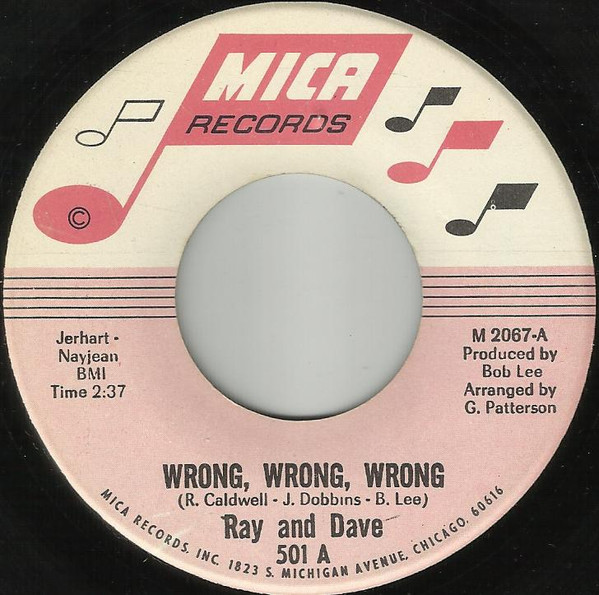
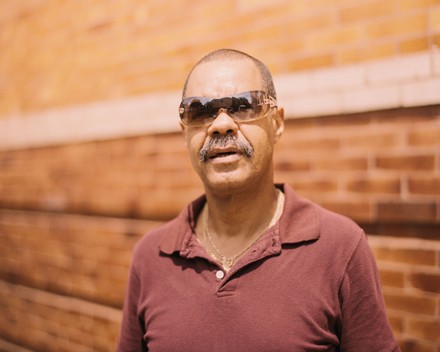
Okay, you are tuned to WHPK 88.5 FM in Chicago. You are now listening to the _Sitting in the Park_ show. Today is a special show because I will be starting off the show with a member of the duo Ray and Dave, who had a local hit in Chicago with a song called “Wrong, Wrong, Wrong.” So, on the phone right now, I have Ray Caldwell, who was Ray of Ray and Dave. Ray, can you hear me?
**Ray Caldwell** 00:30
I can hear you quite well, Bob.
**Bob Abrahamian** 00:32
Okay, great. Well, thanks so much for being on the phone and telling your story. Hopefully, we’ll get a chance to learn the history behind your music. So, first of all, are you originally from Chicago?
**Ray Caldwell** 00:48
Yes. I was born in Chicago at Cook County Hospital.
**Bob Abrahamian** 00:52
Oh, okay. My mom works there now, actually. So, what part of Chicago are you from?
**Ray Caldwell** 01:00
Actually, I know the complete address: 115 East 44th Street in Chicago, on the first floor. That was my humble beginning right there.
And then from there, Saint Elizabeth Grammar School, Henry Horner Elementary, and then DuSable High School.
**Bob Abrahamian** 01:25
Okay, you went to DuSable. Right. So, did you live around 44th Street, in that same area, throughout high school pretty much?
**Ray Caldwell** 01:37
Yes. My mom and dad separated, and I was between the two. My dad stayed there, and my mom stayed there too before they separated, on 44th Street.
Then my mom moved a little farther south, I believe, and I stayed with her. When I was at her house, I had the opportunity to get into my music a little bit more because she pushed, pushed, pushed, pushed, pushed, you know, to make what little talent I had evolve. So those were some of my early beginnings.
**Bob Abrahamian** 02:20
Okay, so where did your mom live, and at what age did she get you into music? How did she get you into music?
**Ray Caldwell** 02:27
Actually, I can’t leave my dad out either. The lady next door to us on 44th Street had a piano, and they just pushed it across the hall to our apartment.
It never got tuned, so whatever keys worked on there—if it was 15 keys out of 88—that’s what we played.
Then my dad saw me struggling with that, and he bought a little organ, a little battery-operated organ. I played on that for a while, and he showed me a couple of songs.
My uncle played too—Uncle Levi—and he showed me a lot of songs. So I came from a well-rounded family of musicians.
Then, when I got with my mom, she truly, truly, truly surprised me. She bought me my first Yamaha.
**Bob Abrahamian** 03:26
You said your uncle actually was a professional musician.
**Ray Caldwell** 03:30
Oh, yes. I mean, he was a really accomplished musician. He would have me playing on one side of the keyboard while he was playing on the other side.
I’d be playing the bass while he was playing the treble, and he’d say, “Do this—dun, dun, dun, dun.” So I’d play those notes and learn them really well.
I developed a really good bass hand. I believe I don’t even have to think about what my bass hand is doing when I play keyboards because of the training he gave me.
Then my sister, while I was going to high school, had a piano because she stayed with our aunt, who was like her mom. I wrote “Wrong, Wrong, Wrong” on her piano.
As I would get out of high school, I would go by there, get on the keyboards—on her piano—and play. That’s how I wrote that song.
And “Six Lonely Days,” I wrote on the piano that my mother purchased for me, the Yamaha.
Jimmy wrote some songs too. If everybody is familiar with Jimmy Dobbins, Jimmy stayed on Drexel, in that area, in one of those mansions. They had a piano, and [unclear]. “What Is Love” evolved from that area.
**Bob Abrahamian** 04:55
Okay. Well, I guess we’ll get to that part of the story. I’m still trying to find out: how old were you when you started playing the piano?
**Ray Caldwell** 05:06
Actually, I believe I was about five years old.
**Bob Abrahamian** 05:10
Okay, so you were that young. And when you were playing the whole time, were you playing by ear pretty much?
**Ray Caldwell** 05:15
I played by ear. There was one instructor at Henry—well, no, actually at Saint Elizabeth—who took some time showing me how to read manuscript.
I was doing pretty well. I was able to read “William Tell,” and then it just got away from me. I didn’t stay on top of it, I’ll be honest with you.
But I can get through a lot of music theory. It wasn’t until later, when I came out to California, that I got into college and took up a little more understanding of music theory.
**Bob Abrahamian** 05:54
And you said your uncle was a professional musician. Who did he play with?
**Ray Caldwell** 05:57
Actually, I’m not sure who he played with because I was kind of young. But I know that he was a very accomplished musician, and everybody would just be taken by his ability to play the piano.
Ragtime—that was something he could really do. You really have to have some ability to play that, you know.
He had a real strong presence on the piano. And the piano was the same raggedy piano, with bangs and keys missing.
But I later learned that it didn’t matter how many keys were out of tune or whatever. You could make it sound good. The piano is a percussion instrument—it’s hit and banged and so forth anyway—so you can get a real rounded sound if you learn how to get around some of those out-of-tune strings.
**Bob Abrahamian** 06:55
And so, by the time you were in high school, were you mainly just a musician, or were you a singer?
**Ray Caldwell** 07:03
Actually, I was more of a musician than I was a singer. I never really had a very good singing voice. I mean, I could sing a little bit in the choir, but it really wasn’t as well mastered as Jimmy’s and Dave’s voices were. You can tell it on the record.
**Bob Abrahamian** 07:25
Okay. And when you were playing piano, what type of music were you playing, and what type of music were you influenced by? Was it jazz? Was it gospel? What types of music were you playing on the piano?
**Ray Caldwell** 07:36
That’s interesting. I didn’t know about genres back then, but I believe it was the singing in the hallways and on the street corners—the doo-wop stuff. I loved that.
Anything that was like a ballad, that type of music, always intrigued me.
I liked what they call the “walks” that you would do on the keyboards, the figured bass chords, the very strong spiritual chords. Those were the chords I liked the most.
So I stayed with them. All of my songs and all my music have been influenced by those types of chord progressions.
**Bob Abrahamian** 08:19
Okay, so is it the type of music that today we call doo-wop that you’re saying you liked?
**Ray Caldwell** 08:27
Loved that, yeah.
**Bob Abrahamian** 08:28
Okay. And then you already mentioned meeting Dave and Jimmy—Jimmy Dobbins. Did you meet them in high school?
**Ray Caldwell** 08:41
Actually, I got an early out of DuSable, in Chicago, six months before I graduated, and I met Jimmy doing that.
If I had stayed in school and graduated—walked across the stage—I would have been at DuSable all that time.
But Jimmy was performing at, I guess, a concert of some sort—the Hi-Jinks, as they called it.
**Bob Abrahamian** 09:11
That was the DuSable talent show, right?
**Ray Caldwell** 09:13
Yeah, those talent shows and so forth that they used to have.
The group he was with was from Mississippi, and they really sang well. I was really impressed by them.
We talked after one of the shows because they were singing a cappella, and I said, “I’d like to put music to you guys’ voices and let’s put something together.”
But I guess two of the members of his group were going overseas or going back home. They didn’t have the finances to stay. Jimmy had family there, so he stayed.
We got together and started working some numbers out.
One day I was playing at my mom’s—she had a beautician shop on Wentworth—and Dave came by and heard the music. That’s where, I believe, I met Dave.
The three of us kind of got together. Jimmy liked Dave, and we were just very low-mannered, very respectful individuals—gentlemen. Really Christian-minded and God-fearing people. We just hit it off.
I don’t know if it was Bob Lee we came in contact with at one of the shows. From Bob Lee—he was working with Al Benson—and then Al Benson and Sonny Thompson had a studio downstairs, and Al Benson had the office upstairs, him and Bob Lee.
They heard us and liked what we were doing.
Sonny Thompson, you know, was an accomplished musician. He really took a hold of us. I think he was the one who told us to go across the street and deal with Maurice of the Radiants, I believe.
Then I guess someone hired George Patterson—that’s Sugar Pie DeSanto’s husband, or whatever—and he came to our first taping.
About a week after we did our first couple of rehearsals, George came back with the scores for “Wrong, Wrong, Wrong,” “Little Miss Perfect,” “What Is Love,” and “Six Lonely Days”—all of our songs.
That was the first time I’d ever seen them on lead sheets. I was totally, totally impressed.
**Bob Abrahamian** 11:41
So, going back to how you met the guys: you were saying that Jimmy Dobbins was in a group that was performing at the Hi-Jinks, like a DuSable High School talent show, and the group was from Mississippi. Do you remember the name of the group?
**Ray Caldwell** 12:00
Not at all. I don’t remember any of those names. If they did have a name, Jimmy would have to tell you.
**Bob Abrahamian** 12:08
And did his group break up, and then he just stayed and performed with you pretty much?
**Ray Caldwell** 12:15
Yes. That’s how that worked.
**Bob Abrahamian** 12:16
But you originally sort of started working with his group initially?
**Ray Caldwell** 12:21
Yes.
**Bob Abrahamian** 12:22
So, were you singing with his group, or were you just the pianist for his group?
**Ray Caldwell** 12:25
I was playing the piano. That was all.
**Bob Abrahamian** 12:28
Did you have any experience singing up to that point?
**Ray Caldwell** 12:32
Very little. Enough to give somebody who could really sing an idea of how I wanted the song to go.
I could give them that much, and they would take it from there. A good vocalist could take over from there and understand where the song was going, or where the music was going.
Then there it is—we’d have a good piece.
**Bob Abrahamian** 12:57
So you were kind of like their songwriter and pianist.
**Ray Caldwell** 13:01
Yes.
**Bob Abrahamian** 13:02
And at live shows, did you play piano for them?
**Ray Caldwell** 13:05
Oh yes, definitely.
**Bob Abrahamian** 13:07
And did they have a band at live shows too, or was it just you on piano with them singing?
**Ray Caldwell** 13:12
Actually, it was just me on the piano for the most part.
Every now and then, if there was another band there, or a drummer who happened to be there, the songs were easy enough to follow. A drummer could pick up behind it and play behind us and add a little beat to what we were doing.
But Jimmy and the group that I first met him with—my God—they really didn’t need any music, not even me playing the piano. They were just that good.
**Bob Abrahamian** 13:44
And was Jimmy from Mississippi also?
**Ray Caldwell** 13:47
Yes.
**Bob Abrahamian** 13:48
And then you said you picked up Dave at your aunt’s beauty shop. Is that right?
**Ray Caldwell** 13:52
No, actually, that was my mom’s beauty shop.
**Bob Abrahamian** 13:56
I’m sorry.
**Ray Caldwell** 13:56
That’s okay.
I was just out in the shop playing my music, loud as usual, and it was a hot summer day. Dave just happened to come by, peep in, and hear the music.
We became acquainted like that. Then I introduced him to Jimmy, and we evolved from there.
Now, if they tell the story a little differently, trust theirs. Their recollection is probably much better than mine.
**Bob Abrahamian** 14:26
I haven’t found them yet, so everyone’s got their own side to the story.
So, Dave—do you remember what his last name was?
**Ray Caldwell** 14:36
Actually, you know, I’ve been wrestling with that one. I believe it’s Brown.
But I hope either Dave or Jim is listening to this interview and they can call in with all of the real facts—who’s who, where’s where, and what’s what—so we can put all the right answers to the questions that you’re asking.
**Bob Abrahamian** 15:02
Okay. So after you found—
First of all, you said Jimmy was living on Drexel. So, on Drexel, was he living in Kenwood pretty much?
**Ray Caldwell** 15:18
Actually, I’m not familiar with what that neighborhood is called now.
But I thought, when we talked before, it was like southwest—southwest, whatever. Was it Park?
**Bob Abrahamian** 15:30
Hyde Park.
**Ray Caldwell** 15:31
Hyde Park, right.
**Bob Abrahamian** 15:32
Okay, yeah.
**Ray Caldwell** 15:32
Because right adjacent to his home—when you looked out Jimmy’s window—you could see Ahmad Jamal playing on the swing with his daughter.
And diagonally, there were mansions on that block. The whole block.
The Honorable Elijah Muhammad’s house was not far from there as well. So it was really a luxurious area of Chicago.
**Bob Abrahamian** 15:58
Okay, so yeah, that’s right around near where this radio station is, actually.
So he was living near there. At the time, were you living near there too?
**Ray Caldwell** 16:11
No, no.
If I was at my dad’s house, it was on 44th, right across from this big Christian Science church, if it’s still there.
Or I was at my mom’s on Wentworth, not too far from the Dan Ryan Freeway. I forget what street—probably around 35th or 37th, somewhere in there.
**Bob Abrahamian** 16:31
And where was Dave staying?
**Ray Caldwell** 16:33
Dave was staying, I believe, a little bit farther going toward downtown, on the same side of the street that I was on.
**Bob Abrahamian** 16:41
Okay, so it was just a lucky coincidence that Dave heard you guys.
By the time you three were together, was Jimmy’s group totally broken up?
**Ray Caldwell** 16:52
Oh yeah. They communicated by phone or what have you.
I believe one of the guys stayed around before he left completely. I believe his name was Mo. He was like the bass of Jimmy’s group.
But Scotty had already left, I presume. I believe it was Mo, Jimmy, and Scotty. It may have been one other guy, but I’m not sure.
You could see, with some of the groups that were evolving, that the lead singer would just become the lead singer.
The other members of the group would say, “Well, he’s got a better voice than we do. We can see that he’s going to evolve and become the singer, or the solo artist, anyway.”
So I guess trying to hold onto Jimmy’s coattails wasn’t something they wanted to do. They went on with their lives, and Jimmy stayed and made a name for himself during the time I was still there, before I got drafted.
**Bob Abrahamian** 18:02
So now the three of you were together. Were you starting to sing at that point, or were you still just playing the piano?
**Ray Caldwell** 18:11
I was still playing the piano.
I mean, I did a little bit, but everybody knew—my nickname now is Doc Love, but they didn’t call me that then. It was just Ray.
They’d say, “Come on, do this. Do this part. Do this part.”
They just kept edging me on to do something. “You wrote the song. You sang it a little bit. Just sing this part. We’ll do this.”
So they sort of pushed me into putting the part on the song that I did. They kind of pushed me into it—twisted my arm, so to speak.
**Bob Abrahamian** 18:43
So, did you start to develop your own harmony that way, through them kind of pushing you to do this three-part harmony type of thing?
**Ray Caldwell** 18:51
A little bit.
Sonny Thompson was not only a really good musician, but a vocal instructor as well. He could hear tones.
Maurice was good too. All these people we were around were really good, and they didn’t browbeat you if you sang off-key or were out of tune.
Because I listen to the song now, some 40 years later, and I was off. I was off. Let’s cut to the chase.
**Bob Abrahamian** 19:29
I think it sounds like a good song to me.
**Ray Caldwell** 19:31
Well, I know I could have hit that note a little bit better, but they only let me do one take. That was it.
“That’s enough. Cool.”
**Bob Abrahamian** 19:41
But you’re saying that your harmony actually developed after you had already signed a record deal.
So, getting back to how you signed the record deal, you said you were doing a show somewhere and Bob Lee saw you or something?
**Ray Caldwell** 19:55
Yes. He actually had probably seen Jim and them perform a couple of times.
Then when I became part of what Jimmy was performing, and how they were performing, I became part of their group as well.
I think Bob came forward because there was a large producer during that time, Kimber Parker and Royal. I don’t know if you remember them. They put on a lot of shows in the Chicago area.
The show they put on, Jimmy performed at that show. And to my understanding, I believe they won, because it was like a talent show.
**Bob Abrahamian** 20:41
Okay.
**Ray Caldwell** 20:42
But Kimber Parker and Royal didn’t do anything with us.
Bob Lee came forward, and he told us all the wonderful things that he could do. Our heads were blown up by that, you know, and we just went with the flow with Bob.
Then Bob turned us on to Al Benson. Come to find out, Al Benson was an old friend of my dad’s.
I told him, “Dad—”
“Oh no, you can’t deal with this guy,” yada yada.
I said, “Oh, Dad, come on now. Let’s do this. I want to become a star.”
“No, you ain’t becoming no star. You ain’t old enough.”
So Dad wasn’t hearing the nonsense because of whatever relationship he and Al had years ago.
Whatever my wishes were got put on the back burner.
So when it came time to sign the contract, I just forged my dad’s signature.
Yeah, my dad signed it.
Wrong mistake. Wrong, wrong, wrong.
**Bob Abrahamian** 21:42
So the label you signed to was Crash and Mica, which were the same label, and they were run by Al Benson. Is that right?
**Ray Caldwell** 21:53
Correct.
**Bob Abrahamian** 21:53
And Bob Lee—was he your manager? Was he your producer?
**Ray Caldwell** 22:03
He was our manager.
**Bob Abrahamian** 22:05
Okay. So your contract was signed with Bob Lee or with Al Benson?
**Ray Caldwell** 22:05
Both.
**Bob Abrahamian** 22:06
Okay. And you forged your dad’s signature to get on with both of them.
**Ray Caldwell** 22:09
Yes.
**Bob Abrahamian** 22:10
Okay. So when you signed with them, did you even have a group name? Or did the three of you just sign as three separate guys together?
**Ray Caldwell** 22:22
Well, you know, Jimmy and I had done the majority of the music. That was understandable.
But I didn’t understand, when George came in and did the arrangements, that everybody had a key part in making the music.
**Bob Abrahamian** 22:39
You said George?
**Ray Caldwell** 22:40
Yeah. I think his name was Patterson. That’s on there.
**Bob Abrahamian** 22:44
Yeah, that’s right.
**Ray Caldwell** 22:45
Okay. I believe the way I was signing on was as Ray, period.
Jimmy was signing on as Jimmy, period.
And Dave was signing on as Dave.
**Bob Abrahamian** 22:59
So you weren’t really a group?
**Ray Caldwell** 23:01
Sort of, sort of. Don’t ask me why. To this day, I couldn’t figure it out.
We didn’t become Ray and Dave until it got ready for release, and they made that up.
Jimmy wanted to be solo, so that’s why it wasn’t a group. It wasn’t Ray, Dave, and Jimmy.
But Ray, Dave, and Jimmy would perform. The couple of times we did perform the songs, we performed them as Ray and Dave, and then Jimmy would just be onstage.
Everybody would say, “Why is he onstage?”
“He must be the background.”
Then at the end of the song, you’d hear him take over the lead, and they’d say, “Oh wow, he’s the lead too.”
**Bob Abrahamian** 23:43
It sounds confusing.
**Ray Caldwell** 23:46
It’s our secret weapon.
**Bob Abrahamian** 23:49
So you just talked about how you ended up recording the stuff. You said Sonny Thompson was involved, and Maurice of the Radiants was involved, right?
Does that mean you recorded it at the Chess studios?
**Ray Caldwell** 24:04
Yes. Yes. Yeah, that’s right. Chess on Michigan Avenue, if it’s still there.
**Bob Abrahamian** 24:08
It’s actually still there.
**Ray Caldwell** 24:10
Oh, man.
**Bob Abrahamian** 24:11
And you said you were actually there practicing for a long time and doing demos and stuff before you cut the final recording.
**Ray Caldwell** 24:19
Actually, we practiced at Al’s. His studio was called Wonderful.
And Sonny Thompson was on the ground floor, or next door, so to speak. Al was upstairs. Sonny was downstairs, but next door downstairs, so to speak.
We would go over to Sonny’s shop, and Sonny had the grand piano. We would be there singing.
When it came time, when George finished the charts for all the musicians, then we went across the street to Maurice’s shop at Chess, I guess.
While we were there, that’s when they said, “Go into the booth. Let’s do a dry run and see how everything comes together.”
We went in there doing a dry run.
We didn’t do it no more after that.
**Bob Abrahamian** 25:17
Okay.
**Ray Caldwell** 25:18
They liked the dry run.
They said, “Let’s keep it. Let’s just keep it.”
“What? Oh man, we don’t do it again?”
“No, that’s it. No need to do it no more. If it ain’t broke, don’t fix it.”
So I didn’t get a chance to warm up or do any of that.
I just said, “Okay, fine.”
Next thing I know, I was being drafted, and I didn’t have a chance to do anything else but try to rush down to Chicago University, because if you’re not in school and the Selective Service wants you, they come get you.
**Bob Abrahamian** 25:50
So Al Benson ended up releasing four sides.
Two on Jimmy Dobbins: one was “Little Miss Perfect,” one was “What Is Love?”
And then two sides as Ray and Dave: one was “Wrong, Wrong, Wrong,” and one was “Six Lonely Days.”
Were all four sides recorded at exactly the same session?
**Ray Caldwell** 26:13
Same session.
**Bob Abrahamian** 26:14
And were both records released at the same time?
**Ray Caldwell** 26:19
You know, I don’t believe I was here when they were released.
I was in the service. I got drafted at that time.
So I don’t know. Someone else would have to tell me when they actually got released.
**Bob Abrahamian** 26:34
Okay. So you wouldn’t even know if they got played locally or not, since you weren’t around.
**Ray Caldwell** 26:45
Well, I know they were played locally.
In fact, my basic training in the military was at Fort Polk, Louisiana, and “Wrong, Wrong, Wrong” beat me to Louisiana.
It was on the jukebox in the NCO Club.
I was there telling everybody, “This is my record. This is my song.”
“Oh yeah, we like that too.”
“That’s my song. Read the name on it.”
Because somebody had scratched it in, because it didn’t come with the label.
They said, “Oh man, that’s 813. That’s ‘Wrong, Wrong, Wrong.’ We know that.”
Anyway, I begged my mama for months to send me something to show that it was my song.
Finally, by the time I was getting ready to come back to Chicago, she sent it to me.
They said, “Oh man, you posted a little stuff here. Well, that ain’t gonna change nothing. We still gonna beat you down.”
**Bob Abrahamian** 27:40
So, on the Jimmy Dobbins record, “Little Miss Perfect,” you and Dave are singing backup. Is that right?
**Ray Caldwell** 27:49
We’re singing background on “Little Miss Perfect.”
But also, if you really listen hard, you can hear a lady’s voice in there.
That was Sugar Pie DeSanto.
I think she’s passed away—
**Bob Abrahamian** 28:01
I think she’s still alive.
**Ray Caldwell** 28:03
Yeah. So she was really pushing, “Oh, do that song. Work.”
She was really pushing hard, you know.
**Bob Abrahamian** 28:10
Okay. But on the flip side, I was listening to it today, and I think there are no backup singers on the “What Is Love?” side.
**Ray Caldwell** 28:23
No, no, no.
**Bob Abrahamian** 28:24
Okay. And then on “Wrong, Wrong, Wrong,” who’s singing the lead part—the “When I first met you”?
**Ray Caldwell** 28:31
That’s me.
It sounds a little dead, a little dull. That’s me.
**Bob Abrahamian** 28:35
But Dave’s not singing the lead. You’re actually singing the lead on that track.
**Ray Caldwell** 28:42
I sing the lead up until the last part, and then Jimmy takes over, when the song really sounds good.
I kept telling him, “Sing the whole song all the way through.”
“No, no, no. We want you to do your part.”
Jimmy didn’t want to be part of Ray and Dave, and Dave was shy.
He had an extremely beautiful voice, but he was really reserved, and he didn’t want to take up that position.
Jimmy, you know, was really outgoing, so he just picked it up and started singing it.
I think it worked out okay.
**Bob Abrahamian** 29:18
It’s a great record.
So on the record, you go, “When I first met you,” and then you go, “Baby,” and then the second voice comes in and says, “Baby.”
Who’s the second voice? Is it Dave?
**Ray Caldwell** 29:29
Dave is the third voice.
I’m the first, Jimmy’s the second, and Dave is the third.
**Bob Abrahamian** 29:34
Okay.
**Ray Caldwell** 29:35
He goes above Jimmy, so you know what kind of range Dave has.
**Bob Abrahamian** 29:38
So you guys actually had nice harmony on it. But you’re saying you didn’t really sing harmony together before that—it just kind of worked out that way?
**Ray Caldwell** 29:47
Oh no, those guys were great.
Their voices just overshadowed whatever bad note I was hitting.
You can tell. A good musician who has a really good ear could tell.
Maybe the public likes it, but an accomplished musician or a good vocal instructor knows that I’m out of breath on the first couple of words.
**Bob Abrahamian** 30:15
Maybe. I mean, I’m not judging your vocal, like how you’re singing or whatever, but you guys still had nice harmony together on the record.
**Ray Caldwell** 30:25
Yeah. You know, the main thing is, Bob, we were all sincere. We were all God-fearing, and it just made for a good mixture.
We were having a good time. We were enjoying it.
I mean, anytime you go to school in a limousine once or twice a week, and you get picked up in a limousine, you expect everybody to be asking for your autograph.
But they weren’t, because I didn’t have limousine clothes.
I had all these shirts and ties and the whole bit. My mom had to hustle three or four welfare checks and put them together just to get me something to get onstage.
**Bob Abrahamian** 31:06
Okay. And you even said that, in the service, people loved the song. Clearly, other people liked the song too, not even just in Chicago.
So you said it was on the jukebox. Where were you stationed?
**Ray Caldwell** 31:22
It was called Fort Polk, Louisiana, down there near Leesville, in that area.
**Bob Abrahamian** 31:29
So the record made it all the way down there.
**Ray Caldwell** 31:31
Yes, it did, and I was surprised.
You know who was out at that time? Smokey Robinson and the Miracles, James Brown and the Famous Flames. A lot of groups were out.
And the report that my mom sent me said that either Jimmy was there with “What Is Love?” or “I Found Love,” whatever, and “Wrong, Wrong, Wrong” was doing number one or number two, or number two and number three.
We were close all the time.
I said, “Golly.”
I got back from the service and said, “Let me collect some royalties.”
“Oh, we don’t have you as a writer.”
I said, “Oh my God, no!”
So everything I signed, all the legal work and stuff that I did, all the forging of my dad’s name, didn’t help.
**Bob Abrahamian** 32:21
Yeah, on the records, you’re listed as the writer of all the sides, actually.
Bob Lee put his name on as the writer too, which I don’t know if he wrote any of it, but you’re listed as the writer on the actual record. Your name’s on it.
**Ray Caldwell** 32:38
Well, yeah.
At my sister Carol’s house, I wrote “Wrong, Wrong, Wrong.”
At my mom’s beauty shop, I did “Six Lonely Days.”
I did “Six Lonely Days” because I knew I had gotten my induction letter to go into the service, so you can imagine that’s what “Six Lonely Days” was about.
And Jimmy is just an exquisite ballad singer. I mean, he could kill a ballad.
He would take a handkerchief and throw it up in the air, and it would come down and fall on his knees, and he would drop to the floor like James Brown and just kill them.
He was really good.
**Bob Abrahamian** 33:13
So he was a great performer.
**Ray Caldwell** 33:15
Performer, yeah. A very good performer.
And Dave, in a sense, was a good performer.
But the time we got a chance to perform at Club DeLisa, I told you Curtis Mayfield’s drummer had gotten into a little altercation with somebody, and he didn’t really want to perform or play live because I guess he had a black eye. You could see it beyond the glasses he had on.
But we went onstage anyway.
And Dave was like, “Oh no, I can’t sing.”
We had everybody. Everybody had drummers playing.
I said, “Man—”
Jimmy was like, “Let’s get up onstage. Let’s sing this song.”
So we had to edge him on too.
Me, I knew they were going to take over and do a good job because they had the voices for it. They really didn’t need any music.
And there wasn’t a keyboard for me to play.
Plus, the song had been arranged beyond what I normally played. I could play the song the way I played it, but it would be different from what the audience was used to hearing on the radio.
**Bob Abrahamian** 34:23
Because they had all those horns all over it.
**Ray Caldwell** 34:25
All the horns and everything in it.
So that’s the reason why, even if they had a keyboard there, I wouldn’t do it.
They had a nice little band, a little orchestra piece there, seven- or eight-piece orchestra.
They played the song because they had the lead sheets, and they played it just like in the studio.
So it was really wonderful. It was a really great experience.
And if I had to do it all over again, I would do it right—but legal.
**Bob Abrahamian** 34:56
So wait, where was the performance again?
**Ray Caldwell** 35:00
At Club—
**Bob Abrahamian** 35:01
DeLisa, okay.
**Ray Caldwell** 35:02
That’s the name of it.
We performed someplace else, I believe, with the—was it the Rich Green or the Scott Brothers, or somebody like that?
**Bob Abrahamian** 35:11
Are you talking about the Green Bunny?
**Ray Caldwell** 35:13
No, some brothers. I believe it’s—
**Bob Abrahamian** 35:15
You played with the Scott Brothers, you’re saying?
**Ray Caldwell** 35:17
Yeah.
They performed at some type of meatpacking place or, you know, a little place somewhere in Chicago, not too far from DuSable.
Them guys were bad.
**Bob Abrahamian** 35:30
Yeah, they’re still around. They play the Blues Fest. They still perform.
**Ray Caldwell** 35:33
Oh yeah, those guys were really good. They got down.
But we still played. Didn’t matter, you know. The show had to go on.
And they were really nice.
My oldest brother passed away. He was Silas Caldwell Jr.
He came, and he was just so happy his brother was up there singing along because he liked the Scott Brothers as well, and that was one of his favorite groups.
So it was just wonderful for him to hear that.
**Bob Abrahamian** 36:04
And was that before you went into the service or after you came back? You did that show?
**Ray Caldwell** 36:08
I did that show when I came back.
Believe it or not, I did the one with the Scott Brothers after I came back.
But I was only back for a minute or two before I went on to California to go to Vietnam.
**Bob Abrahamian** 36:23
And what year did the record come out? I forgot to ask.
**Ray Caldwell** 36:26
I believe it came out in the latter part of ’65, and it was going strong during ’66, for real.
Because when I came back, I got on the L. I was in the front car, and there was a little group singing.
They were singing other songs, and I thought, “They sound nice.”
Then they started singing “Wrong, Wrong, Wrong.”
I wasn’t going to do it. I wasn’t going to walk over there and tell them, “That was me. I’m Ray. The song y’all are singing—that’s me,” because they were singing much better than me.
And everybody on the L was loving it and enjoying it.
That made me feel really good.
So when my stop came up, I said, “You guys really sound good.”
I didn’t tell them it was my song or anything like that. I just got off.
But that was an experience.
**Bob Abrahamian** 37:17
Okay. Well, definitely, then, it kind of proves that it was a local hit.
It’s definitely an awesome record.
Unfortunately, I left it at home, so I can’t play it during the interview. But I definitely have played it on my show, and I’ll try to bring it next week too, because it’s such an excellent song.
So what happened after you got back from the service? Did you continue to do music?
**Ray Caldwell** 37:38
Yes, I did.
I lost track of Jimmy and Dave, and to this day I haven’t been able to find either one of them.
**Bob Abrahamian** 37:48
Did you stay in Chicago?
**Ray Caldwell** 37:50
I only stayed in Chicago for a little bit.
Actually, my first wife had relocated to California.
**Bob Abrahamian** 38:05
Okay.
**Ray Caldwell** 38:05
So basically, I stayed in California.
I just went back there to visit a little bit. I already knew I didn’t have anything coming from the sale of the record, so I didn’t really press the issue.
**Bob Abrahamian** 38:18
So you went to California.
**Ray Caldwell** 38:19
I stayed in California, but I just went back to visit because everybody wanted to see me.
Then my mom and a few of my brothers came out—James, Steve, and Sora—and all of them came out to California.
My sister and my other brother Arthur were already here, and Rufus was already here, so I’ve got a large family.
**Bob Abrahamian** 38:42
Okay.
**Ray Caldwell** 38:43
And my sister Carol, and Elsa Mae, and Alvira—some of the family members stayed in Chicago, but the majority of them came out here to California.
I just stayed out here after all the dust settled, and that’s where I’ve been ever since.
**Bob Abrahamian** 39:03
Okay. Yeah, one thing I’ve got to say before you tell the rest of your story is that Jimmy Dobbins—I know of at least one more record that he cut later.
It was in 1973. He cut a record on Chimneyville Records, which is the same label that King Floyd was on.
So I knew that he at least continued in his musical career for a little bit after “Wrong, Wrong, Wrong” and “What Is Love?” At least ten years later, he was still active.
But I have no idea what the rest of the story is.
Hopefully, we can find him and get his side of the story too.
But now I’m interested in hearing what you did musically after you went to California.
**Ray Caldwell** 39:46
Well, I know for your listeners, they can go on MySpace and hear some of the stuff that I’ve done.
It’s all instrumental. There are some songs that I’ve done that have some vocals to them.
I wrote a song called “Serious,” and some local talent here sang the song and sounded real good.
A young lady by the name of Rashima Bellamy, and then another lady, Rosie Gaines, who went with Prince for a little while. She sang it and had her version of it.
And another gentleman helped me. His name was Wilton Rabb.
Wilton Rabb did his arrangement of the song, and he was also one of the members of a group with Graham Central Station, when Larry Graham did “One in a Million.”
**Bob Abrahamian** 40:48
Okay.
**Ray Caldwell** 40:49
Yeah.
And then Eric Daniels added some parts to the song as well.
You know Eric is the musical director for Mariah Carey.
These guys are still around. They’re like my little kids and so forth.
Whatever they needed from me—“Doc, I need this. I need that.”—I would go and get it for them.
I would do whatever I could just to keep them in the studio, keep them playing, keep them doing what they’re talented to do.
So their evolution has touched many lives and is still going. They’re still going strong today.
In fact, I just spoke with Wilton today, and he’s doing something with Larry Graham. They’re going to be back out there in a minute or two, so you’ll be hearing some of his work.
And Rashima Bellamy, she’s got some stuff coming out pretty soon, and you’ll be hearing about her.
She’s singing the other parts on Matt [unclear]. I don’t know if you know these artists in your area, but I forgot the name of the song.
“Wide Open.” I don’t know why I couldn’t remember that song.
Yeah, she did that. That’s the female voice on that song. That’s her.
**Bob Abrahamian** 42:09
And this is all stuff that you’ve just done recently? You’re talking about now?
**Ray Caldwell** 42:13
Actually, these are individuals who’ve done things that I have written.
I’m cross-referencing what they’ve done because maybe some of your listeners may know them from other venues, other than singing stuff that I did.
Because that song never got on the air. It never got recorded to go on the air, let’s put it that way.
But those individuals—the quality of their voices—if you’ve heard them sing on their own records, then you would notice the quality of the song, how they sang the songs that I wrote.
**Bob Abrahamian** 42:49
But I’m saying, the stuff that you’re talking about that’s on your MySpace now, is that stuff you did recently?
**Ray Caldwell** 42:54
Yes, yes.
The stuff that’s on MySpace, I did recently.
And I’m going to try to upload some more stuff.
Also, on my YouTube page, Doc Love’s channel, I’m producing a show called _Heaven on Earth_.
I’m going to start featuring a couple of Bay Area artists on that show.
It’s a new way of having some of the top Bay Area musicians come together and put their talent together for some of the younger musicians who are getting slaughtered by the music industry, because it’s a very unforgiving industry.
I don’t want the same thing to happen to them that happened to me.
So if we can get them free passage through all of that maze of crap, then it would be easier on them.
Then they’ll have more time to concentrate on their art, as opposed to having to figure out what to look out for and how not to get ripped off.
So they can write freely and develop and create freely without any fanfare.
**Bob Abrahamian** 43:57
Have you done any music in the ’70s or ’80s or ’90s, or have you just gotten back into the music game now?
**Ray Caldwell** 44:08
No, I continued to play.
I mean, whatever chance I got, I continued to play.
I have literally over 4,000 songs.
**Bob Abrahamian** 44:18
Okay.
**Ray Caldwell** 44:19
Literally over 4,000 songs.
I mean, I could start playing my songs today and you wouldn’t finish hearing them for over a month.
**Bob Abrahamian** 44:29
Okay. So were you just writing songs, or did you ever actually produce or release any material, or did anyone record any of your material in the ’70s, ’80s, or ’90s?
**Ray Caldwell** 44:40
No. No way.
I shed it after the “Wrong, Wrong, Wrong” era because I felt that I needed to prepare myself.
So I went to law school, just because—
**Bob Abrahamian** 44:57
It was such a bad experience, not getting—
**Ray Caldwell** 45:01
I couldn’t finish law school because you had to have so much money and so forth.
Then I started doing real estate to pay for my law school, and I was getting further and further away from what my initial goals were.
**Bob Abrahamian** 45:13
Okay.
**Ray Caldwell** 45:14
So now I’m writing more, now that I’m disabled—100 percent from the military, thank God.
**Bob Abrahamian** 45:23
But you’re back to your goal of music again.
**Ray Caldwell** 45:26
And I feel really comfortable doing that. It’s a wonderful thing.
**Bob Abrahamian** 45:30
Well, I’m glad that you’re able to finally make music again, because the music you did release was excellent.
I look forward to hearing what you’re able to finally put out again.
So how can people find your MySpace?
**Ray Caldwell** 45:44
It’s Ray—
**Ray Caldwell** 45:47
DocLove, Yahoo.com—or, you know, you can look it up that way, I guess.
And on YouTube, it’s Doc Love’s—D-O-C L-O-V-E-S—channel.
**Bob Abrahamian** 45:59
Okay.
**Ray Caldwell** 46:00
They can hear the Jimmy song as well as the “Wrong, Wrong, Wrong” song.
A gentleman by the name—I can’t say his name on the air—but anyway, they’ll see it.
Courtesy of him, I was able to take a copy of a link from him and put it on my site.
But there are some other sites that have the same record on them, and it’s a little bit better quality.
Anyway, I didn’t know that. I’m not as computer-literate as I should be.
But there are some books that have been written that our names are mentioned in—Jimmy and—
**Bob Abrahamian** 46:41
You’re mentioned in Robert Pruter’s book, _Chicago Soul_.
**Ray Caldwell** 46:46
Right.
**Bob Abrahamian** 46:47
But he didn’t know anything about you guys or the story behind your record.
So now your story will be out and on the internet, and everyone will be able to listen to you tell your story.
**Ray Caldwell** 46:57
Oh, wonderful, Bob. You’re wonderful.
You know I told you how much we love you, right?
**Bob Abrahamian** 47:03
I mean, it’s you.
I really appreciate you, the actual artist who made such an excellent record.
And I really appreciate you being on my show and telling your story, because without you making the music, there would be no music.
Again, people like your record.
Like you said, you heard people back in the day singing your record on the train, and it was a different group. It wasn’t even you guys singing your record.
**Ray Caldwell** 47:32
And tell me, you know, in the UK, I know the euros—they’re selling for $100.
**Bob Abrahamian** 47:40
Yeah, your record sells for like $100 now. So people really liked your record.
**Ray Caldwell** 47:47
Well, I wish them the best.
All the bootleggers, you guys do your thing. I ain’t after you.
I ain’t hating on this end.
I just appreciate life, and I appreciate God’s gift for giving me the talent to be able to do what I do.
But most of all, I’m humble, and I appreciate things that most people often take for granted.
I just can’t do that.
You know, we have to stay focused.
Where would we be without W-H—W-H—
**Bob Abrahamian** 48:21
P.
**Ray Caldwell** 48:21
K. P-K.
Where would we be without that?
**Bob Abrahamian** 48:26
Okay. Well, thanks so much for coming on my show.
Do you have any last words for the listening audience?
**Ray Caldwell** 48:33
I just want to let them know that I’m a really nice guy.
I love the word “love” a lot, and so my nickname is Doc Love.
So if you look me up, look me up under Doc Love.
That’s all my friends. I’ve been that name for 40 years.
And “Love you like a big love”—that’s what I always say.
If you hear me, and you hear my music out there, you’re welcome on the internet.
Pick that music up, copy it, put some words to it, and make yourself millions of dollars.
I don’t sell anything.
**Bob Abrahamian** 49:07
Okay.
**Ray Caldwell** 49:08
Everything belongs to God. That’s it.
So that’s why I ain’t mad at them. I ain’t looking for royalties.
My dad’s rich. He’s got it all. He’s got all the planets.
**Bob Abrahamian** 49:21
That’s a good philosophy to have.
**Ray Caldwell** 49:24
Yeah.
So anyway, Bob, before I go, I just want to tell you once again: thank you, thank you, thank you.
And the other gentleman who introduced me to you on the internet, his name was Pete.
**Bob Abrahamian** 49:34
Yeah, I’ve got to say thanks to Pete Smith in the UK for hooking me up with you.
**Ray Caldwell** 49:40
Oh, Pete was in the UK? Oh my God!
**Bob Abrahamian** 49:42
Yeah, so actually, this was an international interview.
**Ray Caldwell** 49:47
Oh my goodness!
Oh, Pete! Hey man, we love you like a big love, Pete.
Hey man, you’re just a wonderful person.
And I just saw [unclear] my phone on his podcast, and I just wrote some emails and said thank you.
I had no idea, you know, we were in rotation.
**Bob Abrahamian** 50:08
Okay. Well, thanks again.
Can you stay on the line for a second so I can get your address?
Thanks again, and stay on the line, and I’ll talk to you in a second.
**Ray Caldwell** 50:22
Okay. Thank you.