**Bob Abrahamian** 00:00
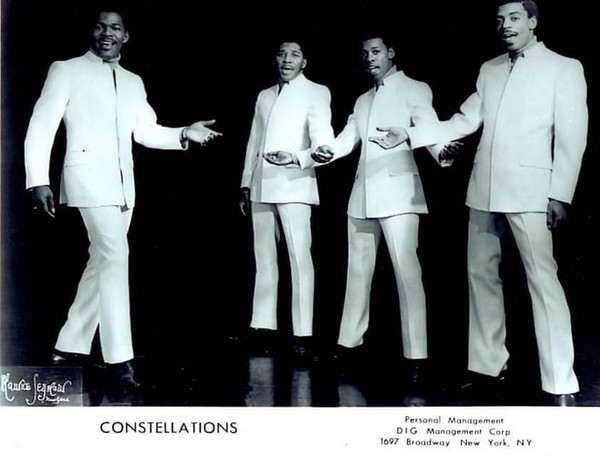
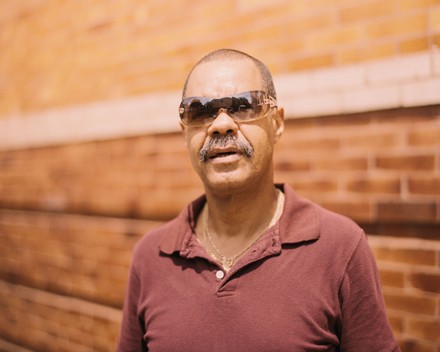
Okay, you're tuned to WHPK 88.5 FM in Chicago. You are now listening to the _Sitting in the Park_ show. My name is Bob, and today we have a special show because I have in the studio with me members of the group the Constellations, who will be talking about their story. One of the members went on to do many other things after the Constellations. Hopefully, we'll be talking about that too. And the other guy here went on to become a photographer, so we'll be talking about everything that everyone did.
So first of all, can you guys introduce yourselves? Who's here right now?
**Bernard Reed** 00:39
Bernard Reed.
**Bob Abrahamian** 00:41
Okay.
**Harold Skipley** 00:41
Harold Skipley.
**Bob Abrahamian** 00:43
Okay. So first of all, what part of Chicago are you guys from?
**Bernard Reed** 00:48
West Side.
**Bob Abrahamian** 00:49
Okay.
**Harold Skipley** 00:50
Originally, the West Side.
**Bob Abrahamian** 00:51
Okay. So the group we're talking about, the Constellations — you were all a Marshall High School group. Is that right?
**Bernard Reed** 01:00
Yes, but it started off at Manley.
**Bob Abrahamian** 01:07
Okay.
**Bernard Reed** 01:08
Well, during the years of Manley School. It actually started before.
**Bob Abrahamian** 01:12
So, can you talk about how you got started singing and how the group formed?
**Bernard Reed** 01:17
Okay, the group formed from a group of guys in the same neighborhood.
**Bob Abrahamian** 01:23
Where specifically did you live?
**Bernard Reed** 01:26
Francisco and Monroe.
**Bob Abrahamian** 01:27
Okay, so most of the guys lived around that part—
**Bernard Reed** 01:30
Between Monroe and Wilcox.
**Bob Abrahamian** 01:33
Okay.
**Bernard Reed** 01:34
And Lake Street, because Bobby Mason lived on Francisco and Lake.
**Bob Abrahamian** 01:40
Okay.
**Bernard Reed** 01:41
Which was only about three or four blocks north of where we were on Monroe Street.
**Bob Abrahamian** 01:49
So, did you guys start singing even in grade school? You were singing before high school.
**Bernard Reed**
Yeah.
**Bob Abrahamian**
So how did you guys get started singing?
**Bernard Reed** 01:58
Well, the concept of the Constellations came from me, and I got interested in singing — the singing-group style — from listening to the other doo-wop groups in the neighborhood. At that time, you could walk from one block to another block, and eventually you'd hear some guys harmonizing. And me being about 13 at that time, that caught my ear.
**Bob Abrahamian** 02:32
So about what years were that? Around the late '50s sometime? Do you remember some of the groups in your neighborhood that inspired you?
**Bernard Reed** 02:43
Well, there weren't any big-name groups at the time. The biggest group — I thought they had the best harmony and the most experience — was a group that was a cousin to one of my best friends. His name was Johnny McCracken, and the group that he had, I can't think of their name.
And I remember, as a few years went past, that I sat in for their bass singer at a performance at the Sherman House in downtown Chicago.
**Bob Abrahamian** 03:28
And you said — you told me a while back — you remembered hearing the Sheppards around your neighborhood too.
**Bernard Reed** 03:33
Oh, the Sheppards.
**Bob Abrahamian** 03:34
Yeah.
**Bernard Reed** 03:35
Yeah. Well, I would see Kermit Chandler at the time, who was the Sheppards' guitarist.
**Bob Abrahamian** 03:41
Yeah.
**Bernard Reed** 03:41
And to me, that was the first look at what Jimi Hendrix was to come and evolve from.
**Bob Abrahamian** 03:51
Yeah. I always hear how talented he was. So you guys started singing — what grade would you say you were in when you started singing?
**Bernard Reed** 03:59
I'd say the Constellations—
**Bob Abrahamian** 04:01
Well, you already said you were 13, I guess.
**Bernard Reed** 04:02
Well, we got in full effect — because we were together about five years — and within that five-year period, I would say around seventh, eighth grade and first year of high school. All of that was on the West Side at Manley High School.
But after school was when we would really get together. After school every day, we'd meet up at each other's houses and harmonize and harmonize until we tried to make our harmony as perfect as possible.
During that period of time, we entered a talent show that Al Benson, the Chicago disc jockey, [put on]. I can't remember the call letters of that station at that time, but Al Benson was one of the top Black radio disc jockeys. He was giving a talent show at the Regal Theater at that time, which was on 47th and South Parkway.
**Bob Abrahamian** 05:13
Do you remember what year that was, the talent show?
**Bernard Reed** 05:15
That could have been 1961.
**Bob Abrahamian** 05:23
Okay.
**Bernard Reed** 05:24
And on that show, we entered and we did well. We did very good. But the winner of that competition turned out to be a female singer named — oh my God, I had to talk with my man—
**Bob Abrahamian** 05:47
Mitty Collier.
**Bernard Reed** 05:49
Wow. Her voice was so amazing over our little young voices, but it was a thrill just to be there on the Regal stage.
**Bob Abrahamian** 06:00
And that was even before you were in high school? You were at Manley at that time?
**Bernard Reed**
Yes.
**Bob Abrahamian**
So were you called the Constellations back then?
**Bernard Reed** 06:07
Yes. Yes. Maybe I picked the name up in school in one of the science studies. And then again, it represented a group of stars that forms a picture or pattern, and it just sounded like a good name for a group.
**Bob Abrahamian** 06:26
Yeah, that is a good name for a group. So you formed the group sometime in the late '50s, and you were like in seventh or eighth grade. Is that right?
Had you sung before? You had just grown up watching people sing in the street, pretty much?
**Bernard Reed**
Yeah, yeah.
**Bernard Reed** 06:47
The neighborhood groups doo-wopping. And of course, the girls — they loved that.
**Bob Abrahamian** 06:53
Okay.
**Bernard Reed** 06:53
Standing around listening to the guys sing. And pretty girls just sort of sent me on another trip. I didn't have one to say anything to, so I started writing little poems and things, and then tried to put some melody to the poems. And we created a couple of songs.
**Bob Abrahamian** 07:14
So you were actually writing songs even before you recorded anything. You're saying you were writing songs. So what was the original lineup of the group?
**Bernard Reed** 07:21
Okay, at that time there was Bobby Mason. Bobby sang baritone. Lawrence Davis, he sang second tenor. And his sister, Diane Davis, sang first tenor. And Garland Green was singing lead.
**Bob Abrahamian** 07:45
But not the "Jealous Kind of Fella" Garland Green?
**Bernard Reed** 07:49
No, I hadn't met him yet. But Garland Green, who went on later to change his name to Garland Dickerson. Garland sang lead. It was a nice, pretty falsetto-tenor type—
**Bob Abrahamian** 08:03
And you sang—
**Bernard Reed** 08:04
Bass. And I sang bass.
**Bob Abrahamian** 08:05
Okay. And you were telling me that you actually went to the studio at some point and recorded something.
**Bernard Reed** 08:11
Oh yes. With that group, we also had another guy who wouldn't stop hanging around with us, but he was another friend. His name was Donald Washington, and Donald's voice was on a few of the recordings too.
**Bob Abrahamian** 08:28
Okay.
**Bernard Reed** 08:28
I found a recording studio in the phone book called Web Recording, which was downtown on Wacker Drive. Near where — where would that be? It was right off the river there. Well, LaSalle or somewhere on Wacker back in the day.
We went in there, and I think it cost us 25 dollars for the little time that we had to go, and we put about five songs on this demo.
And at that time I had met Zach — now, this was — let me see, I didn't meet Zach until Marshall.
**Bob Abrahamian** 09:14
So that was a demo you cut while you were still in grade school, and you just got 25 bucks together and went to a recording studio and paid for it?
**Bernard Reed**
Yes, yes.
**Bob Abrahamian**
So was there music on the demo?
**Bernard Reed** 09:27
No. It was all a cappella.
**Bob Abrahamian** 09:29
So it was a bunch of kids singing a cappella, pretty much.
**Bernard Reed** 09:31
Yeah, man, but it was so nice.
**Bob Abrahamian** 09:33
And you actually — you didn't just record it. They pressed up an acetate, like a demo?
**Bernard Reed** 09:39
Well, yeah. That's what it was. You'd go in there and they'd cut it on a disc.
**Bob Abrahamian** 09:46
Yeah.
**Bernard Reed** 09:46
If you dropped it, it was all over with — a broken plate.
**Bob Abrahamian** 09:50
And you're still looking for your demo disc? You think somebody has it?
**Bernard Reed** 09:54
Yeah. My personal one got lost in the mix along the way.
**Bob Abrahamian** 09:59
It'd be cool if somebody has it, if that music turns up somehow.
**Bernard Reed** 10:04
Yeah. If you find it out there, you're holding a platinum.
**Bob Abrahamian** 10:09
So on the disc it'll say "Constellations." So if anyone out there has it—
**Bernard Reed** 10:16
And it had an original song on there too, "Bonnie," which Bobby wrote — "Bonnie, I Love You."
**Bob Abrahamian** 10:25
So the other songs you did were covers of other people?
**Bernard Reed** 10:30
"Blue Lantern," the Imperials, Gene Chandler. We did "Duke of Earl," "Traveling Stranger," [unclear], the Imperials. We did a Vibrations song.
**Bob Abrahamian** 10:49
So then—
**Bernard Reed** 10:50
"[unclear] of the Bells."
**Bob Abrahamian** 10:52
And then you ended up at Marshall eventually?
**Bernard Reed** 10:56
Yeah, all the members except Garland. He went to Crane.
**Bob Abrahamian** 10:59
Okay. So at Marshall, I know there were a lot of groups at the time, and then there was the talent show, right? The Jamboree?
**Bernard Reed** 11:08
The Jamboree. They had an annual Jamboree every semester. Anyone with talent — usually singers or someone playing an instrument — wanted to be on that show.
**Bob Abrahamian** 11:20
Okay.
**Bernard Reed** 11:21
That’s where you could really show off, man, because everybody would come to the auditorium and pack it. They could get out of class to see this.
**Bob Abrahamian** 11:32
So we have another guy here, Skip. How did you get involved with the group?
**Harold Skipley** 11:39
Being in the neighborhood, and also I was at Marshall. I was a member of the boys’ chorus — male chorus — and I knew Bernard, and they needed a tenor. And Alonzo Armstrong lived down the street from me, so I turned them on to Alonzo Armstrong.
**Bernard Reed** 12:05
And I knew Alonzo from school. We were in classes together also, but I didn’t know of his singing ability. Alonzo and Skip lived down the street from each other.
**Harold Skipley** 12:18
We were neighbors, yeah.
**Bernard Reed** 12:19
And I met Skip at Manley. He was always something — a little guy who wanted to get into something. He’d always run up and punch me or something like that, you know: “Hey, look at me.” But I was glad to see Skip, and as he said, he brought Alonzo around.
**Bob Abrahamian** 12:48
So the group lineup changed a little bit when you—
**Bernard Reed** 12:52
Alonzo took Diane’s place as first tenor.
**Bob Abrahamian** 12:54
Okay. And then you had a guy Zach join the group?
**Bernard Reed** 12:59
Yes, that’s where I met Zach.
**Bob Abrahamian** 13:00
What was Zach’s name?
**Bernard Reed** 13:01
Zachary Saunders.
**Bob Abrahamian** 13:02
Okay.
**Bernard Reed** 13:03
Zach would be singing and walking through the halls all the time, and we’d notice each other. Then we started meeting up in the lunchroom and sitting at the same table, because we would always be doo-wopping. Whoever was at that lunchroom table, we would all be doo-wopping.
**Bob Abrahamian** 13:21
Okay, so you guys eventually ended up cutting a record while you were at Marshall.
**Bernard Reed** 13:30
Is that where we cut the Ralph Bass? Yeah, I guess it came out—
**Bob Abrahamian** 13:36
It came out in ’64. So were you in high school at that time?
**Bernard Reed** 13:39
I left Marshall in ’63.
**Bob Abrahamian** 13:41
Okay.
**Harold Skipley** 13:43
I was still in school. I was the youngest of the group, and actually, I was the choreographer. I did all the group routines that we did on stage.
**Bob Abrahamian** 13:56
And did you actually perform with the group on stage too?
**Harold Skipley** 13:58
I was all—
**Bernard Reed** 14:00
Yeah. We’d bring Skip out on stage on our shoulders and throw him up in the air, and he’d come down in the splits. Then he’d get up and do a flip and come down in another split, and the girls would scream all over Skip.
**Harold Skipley** 14:12
I was also the sound-effect man. Even songs had different sound effects. We did a song that the Vibrations did — not the Vibrations, the Contours, I think — “The Bird.” You know, it had a bird, so I’d do the sound effects on stage.
**Bob Abrahamian** 14:35
Okay.
**Bernard Reed** 14:35
“Five to the Ten.” Oh yeah, yeah, yeah.
**Bob Abrahamian** 14:39
Okay. Well, I’m going to play your first record, “Tear It Up, Baby,” and then we can get to how the record was recorded and talk about that. So this is the Constellations with, I guess, not their first recording, but their first released record, since they already talked about how they cut a demo when they were still in grade school. This song is called “Tear It Up, Baby.”
**[record playing]** 15:30
[lyrics unclear]
**Bob Abrahamian** 17:03
Okay, that was the Constellations with their very first record, called “Tear It Up, Baby.” If you’re just tuning in, I have members of the Constellations here right now, talking about the history of their group.
So where we left off was that you guys were at Marshall High School. At Marshall, you mainly just did talent shows? Was that the main type of thing you did?
**Bernard Reed** 17:32
Yeah, basically talent shows. Every once in a while, someone would have a special affair — like the parents or somebody having a party — and we’d be asked to come out and sing a couple songs or something like that, and get a couple of dollars for that.
**Bob Abrahamian** 17:55
And also, you met—
**Bernard Reed** 18:00
I used to go to the YMCA. You sang out there, and then found out they were having something to do with talent.
**Bob Abrahamian** 18:08
That was the Teens with Talent show?
**Bernard Reed** 18:10
That’s how Teens with Talent began, under the direction of Al Johnson and Johnny Nixon — two older guys who took time with the youth.
**Bob Abrahamian** 18:27
So it was a talent show they were putting on at the Sears YMCA?
**Bernard Reed** 18:31
Sears YMCA on Arthington and Kedzie.
**Bob Abrahamian** 18:34
Okay. Were you there when they were starting up the show? I know the group the Conquistadors were part of it.
**Bernard Reed** 18:41
Conquistadors, yeah, man.
**Bob Abrahamian** 18:45
So were they there at the same time?
**Bernard Reed** 18:47
Yeah.
**Bob Abrahamian** 18:48
Do you remember around what year they started the talent show?
**Bernard Reed** 18:51
Wow, we were still in high school, so that’s been around 1961, ’62.
**Bob Abrahamian** 18:59
And you just got involved because you were singing at the YMCA already?
**Bernard Reed** 19:09
Well, we just went and auditioned, just went to show our face. We loved to go anywhere and sing. We just went over there and got to singing, and next thing I know, we were part of Teens with Talent.
**Bob Abrahamian** 19:22
Okay.
**Bernard Reed** 19:22
And then again, Al Johnson and Johnny Nixon began to take special time with us. They would come in the neighborhood to one of our rehearsals or something, and we used to go out to Johnny Nixon’s house and rehearse.
As it turned out, Johnny and Al broke association. I didn’t know why, but later on I came to find out that Johnny Nixon had other plans for us, the Constellations, aside from being part of Teens with Talent. He was ready to take us and record us and put us right on Front Street.
**Bob Abrahamian** 20:05
So you stayed with Al Johnson in the Teens with Talent show?
**Bernard Reed** 20:10
Yeah. And through that, there was an organization that had Al Johnson have us perform at the Studebaker Theater. The show at the Studebaker Theater ran a whole week. It was a private company, and they financed everything for us to perform for a whole week at the Studebaker Theater, right there on Michigan Avenue, right next to the Auditorium Theatre.
**Bob Abrahamian** 20:44
And that was when you were in high school?
**Bernard Reed** 20:45
Yes.
**Bob Abrahamian** 20:46
Okay. Do you remember singing—
**Bernard Reed** 20:47
Oh wow. I’m laughing because so many things happened at that time. _Ebony_ had our picture in their magazine that was taken on that stage, and a few of us had scars on our faces.
**Bob Abrahamian** 21:04
So you’re in an _Ebony_ magazine from around that time? Do you remember what year?
**Bernard Reed** 21:09
That should be 1962 or ’63.
**Bob Abrahamian** 21:12
Because I have a _Jet_ magazine that’s got the Conquistadors performing on some Teens with Talent show on the West Side, and you can see the L tracks. But yours must have been earlier than that, if it was while you were still in high school.
**Bernard Reed** 21:29
Yeah, it was _Ebony_. It had to have been like ’62 or ’63.
**Bob Abrahamian** 21:35
Okay, and you said you had scars on your faces?
**Bernard Reed** 21:38
Yeah, because the night before that picture was taken, we went out to Al Johnson’s neighborhood to perform at a center. It was on 47th or 43rd and Cicero — I forgot the name of those homes over there — and it was the community center in the middle of those little projects.
We were singing, and next thing I know, a fight broke out. Next thing I know, there was nobody in the place but us and the police. We were kind of ragged, and a few of us had scars and blood.
**Bob Abrahamian** 22:27
So they printed a picture of you guys all beat up in _Ebony_?
**Bernard Reed** 22:34
Oh man. But we still performed, man. We were doing “Shake a Tail Feather.” I remember that. The show must go on. Bobby had a black eye, man. That’s why I was laughing. It just brought so many crazy memories back out at the same time.
But yeah, Al Johnson took us to that limit.
**Bob Abrahamian** 22:52
So that was one of the big shows he put you on, at the Studebaker Theater. And then someone was telling me that you guys did a show that was actually broadcast on TV.
**Bernard Reed** 23:03
Yes. WTTW, Channel 11. That’s when Channel 11 was being transmitted from the Museum of Science and Industry.
**Bob Abrahamian** 23:13
Okay, I didn’t know that.
**Bernard Reed** 23:14
Yeah. It started out as an exhibit of how a television station operates and how it’s transmitted to people’s homes.
**Bob Abrahamian** 23:23
I never knew that. That’s interesting. When was that talent show? Do you remember where it was? Was it at a theater?
**Harold Skipley** 23:32
It was in the museum.
**Bernard Reed** 23:34
In the TV station, which was in the museum.
**Bob Abrahamian** 23:37
So you actually recorded the program. Was it prerecorded? Was it live?
**Bernard Reed** 23:46
No, it was live.
**Bob Abrahamian** 23:47
So you did a live show in the Museum of Science and Industry that was broadcast live on WTTW. Do you remember who was on the show with you?
**Bernard Reed** 23:51
Of course, the Versalets, and the [unclear] was still Jimmy Hudson.
**Bob Abrahamian** 24:01
One of the Versalets mentioned Fontella Bass. Do you know if she was—
**Bernard Reed** 24:04
Fontella may have been on that show, now that I think of it, but I don’t remember our association with Fontella.
**Bob Abrahamian** 24:11
So what was your connection to—
**Bernard Reed** 24:13
Because Minnie Riperton was involved with some of the things too, with us at Marshall.
**Bob Abrahamian** 24:18
Yeah, she joined the Gems, right?
**Bernard Reed** 24:20
Which was a Marshall group.
**Bob Abrahamian** 24:22
So what was your association with the Versalets?
**Bernard Reed** 24:26
Well, one of the guys named Bobby Mason — he was a boyfriend of Viola Floyd at that time. He knew Viola could sing, so he got Viola to get a few of her friends together: Theresa Lee, which was Theresa Sweeney — everybody changed their names at one time — Catherine Davis, Vera [unclear], and Helen Greenfield.
**Bob Abrahamian** 25:03
So you just said Bobby Mason was in—
**Bernard Reed** 25:06
Bobby Mason.
**Bob Abrahamian** 25:07
He was a member of the Constellations? What was he?
**Bernard Reed** 25:12
He was the baritone singer of the first group of Constellations.
**Bob Abrahamian** 25:17
Okay. And then I heard he became the manager of the—
**Bernard Reed** 25:24
He coached them to become serious about what they were doing. They used to like to stand around and listen to us sing, so he gave them whatever—
**Harold Skipley** 25:36
They were like our sister group.
**Bob Abrahamian** 25:39
Okay.
**Harold Skipley** 25:40
Like the Vandellas and Supremes, the Constellations had the Versalets.
**Bernard Reed** 25:46
The name “Versalets” came from a singing group on record. They had a record called — oh God — the Versatiles. I’m trying to think of the name. “Lundy Dundee” was the name of the song.
**Bob Abrahamian** 26:18
Okay.
**Bernard Reed** 26:20
That was the hit song. But the flip side of it was one that the Constellations liked. We used to sing “Lundy Dundee” quite a bit. People thought we had recorded that. Anyway, the name of that group was the Versatiles, and somehow Bobby came up with the Versalets.
**Bob Abrahamian** 26:40
Okay. And you said the Gems were also in school with you at the same time. Did you have any affiliation with them?
**Bernard Reed** 26:49
None other than just seeing them. In fact, they were a couple of years younger than me.
**Bob Abrahamian** 26:56
Okay. And did you have a band too? When you did shows, how did the music go?
**Harold Skipley** 27:05
They had a big band. Well, not a big band, but—
**Bob Abrahamian** 27:09
You guys had a band that was part of the Constellations?
**Bernard Reed** 27:13
Yes, we had a four-piece rhythm section. We had Gary Jackson on guitar and Elmo Nunn on bass. Elmo Nunn was playing bass, but he didn’t have a bass. He had a nice L-5 Gibson, and he just played the bass strings.
I got into playing bass after a while, so I bought a bass, and that’s the bass Elmo was playing. In fact, my very first Fender bass is on that taping of WTTW.
**Bob Abrahamian** 27:49
Oh, that’s cool.
**Bernard Reed** 27:50
So Elmo’s playing that behind us. The piano player we had was Frank McCoy.
**Bob Abrahamian** 27:58
Okay.
**Harold Skipley** 27:59
And Kenny Hollis on drums.
**Bernard Reed** 28:01
Kenny Hollis was playing drums, but our first drummer was Quentin Joseph.
**Bob Abrahamian** 28:06
Okay, the famous Quinn Joseph, who was part of your band later, the Pieces of Peace.
**Bernard Reed** 28:12
Yes. Well, not Pieces of Peace, but the Jaylin Sound. That was before the Pieces of Peace. But Quinn went on to be still famous as part of Philly International today.
**Bob Abrahamian** 28:23
Okay. Well, let me play — we still haven’t gotten to the recording of your record. Let me play the other side of the record, and then we can talk about how you got a recording deal and what the story was.
So this is the B-side of “Tear It Up, Baby,” and this one you can hear Bernard a lot more prominently because there’s a much bigger bass part on it. This is called “Doo Doo Da Dum.”
**[record playing]** 28:49
[lyrics unclear]
**Bob Abrahamian** 30:52
Okay, that was the Constellations with the B-side of their first record, called “Doo Doo Da Dum.” It’s funny — Skip hasn’t heard the songs since the ’60s, and he’s still singing along. He knows all the words.
So we were talking about all the stuff you had done at Marshall, and that record actually came out, I think, in ’64, soon after you left Marshall. What’s the story? How did you get a recording deal, who produced it, and how did that all come together?
**Bernard Reed** 31:23
As I said, somewhere along the line we had a manager. I’m trying to remember — James Davis. But I’m really speaking of Rose Miller.
**Harold Skipley** 31:37
Oh, okay.
**Bernard Reed** 31:38
And she was the contact to Ralph Bass. Now, we walked down Record Row looking for a deal with all the record companies that were on that street. We finally knocked on the door of Roulette Records, and Ralph Bass was sitting behind that desk as producer for Roulette Records.
**Bob Abrahamian** 32:02
I know he was working at Chess too at that time.
**Bernard Reed** 32:05
Yes.
**Bob Abrahamian** 32:05
But you actually met him at Roulette Records?
**Bernard Reed** 32:07
At Roulette Records.
**Bob Abrahamian** 32:08
Okay. I know he had produced Henry Ford and the Gifts, and that came out on Roulette Records. So you just knocked on the door and found him, pretty much?
**Bernard Reed** 32:20
Yeah. We went in and auditioned. We stood in front of him and sang, and he liked what we sounded like. I think he may have put Miss Miller with us.
**Bob Abrahamian** 32:32
So you found him, and he put you with the manager?
**Bernard Reed** 32:35
Manager.
**Bob Abrahamian** 32:35
Do you know where the Roulette offices were located? They were on Michigan, right?
**Bernard Reed** 32:42
They were on Michigan, around the 2400 or 2500 block.
**Bob Abrahamian** 32:46
Okay. And do you know if he was working at two studios at the same time, Chess and Roulette?
**Bernard Reed** 32:54
Ralph seemed like he was the king of all the record companies, because he just seemed like he was everywhere. I don’t know how he did it, but yes, I know he produced things at Chess and, as I say, Roulette. And our record came out on Smash — Smash, a division of Mercury.
**Bob Abrahamian** 33:14
Was Reynard Miner involved at all with your record?
**Bernard Reed** 33:19
Well, Reynard was with us in high school and the Jamborees. Reynard was a good piano player. Of course, he was blind, but musically, he was very intuitive to what was going on, and it helped everyone. Everybody wanted to sing, and you felt even better if you had a little music playing behind you.
Reynard was backing up the Gems at the time at Marshall. Reynard was on piano, Gary Jackson — who was our guitarist — was playing guitar with Reynard, and Willie Williams was another blind fellow who played drums.
**Bob Abrahamian** 34:03
Okay.
**Bernard Reed** 34:03
And who played bass with him? Maybe Joe Rodriguez.
**Bob Abrahamian** 34:11
So are those the people that played on your record?
**Bernard Reed** 34:14
Oh no.
**Bob Abrahamian** 34:16
You were just talking about Reynard’s band that was playing at Marshall.
**Bernard Reed** 34:18
At Marshall.
**Bob Abrahamian** 34:19
So your record came out on Smash Records, like you said, a division of Mercury. Do you know how that happened? Was it just through Ralph Bass that it got on Smash?
**Bernard Reed** 34:29
Yeah, with his direction.
**Bob Abrahamian** 34:32
Okay.
**Bernard Reed** 34:32
And in fact, he found that song “Doo Doo Da Dum” and “Tear It Up, Baby.” Those weren’t our songs. Those were songs that he found that he thought we could do.
**Bob Abrahamian** 34:44
Did the record get any play on the radio or any promotion?
**Bernard Reed** 34:48
I may have heard it one time.
**Bob Abrahamian** 34:50
Okay.
**Harold Skipley** 34:51
Yeah, I think it got more play out west — the West Coast — than it did locally.
**Bob Abrahamian** 34:57
I think they pushed the wrong side, just because I like the B-side better on that record.
**Bernard Reed** 35:03
I always liked the B-side. Well, I know Ralph was for that “Tear It Up, Baby.” He liked our energy. We did have good energy. The voices — you could tell the strength and the power.
**Bob Abrahamian** 35:20
Can you say again exactly what the lineup was, who’s singing on that record?
**Bernard Reed** 35:25
On that record, it should be Zach singing lead — Zachary Saunders on lead. Alonzo Armstrong was first tenor. Francis Bibbs was singing second tenor. Frank Walker was singing baritone. Zach was singing lead, and I’m on bass.
**Bob Abrahamian** 35:54
Okay, so there are five guys singing on the record. So what happened to the group after that? Did you just do more shows, or what was the story?
**Bernard Reed** 36:02
Okay, after that — what happened? We continued to go on, and what did we do?
**Harold Skipley** 36:13
Local venues, different colleges.
**Bernard Reed** 36:19
Oh yeah, University of Chicago.
**Harold Skipley** 36:22
University of Chicago, yes.
**Bernard Reed** 36:24
I remember that. That was the first thing I ever heard about a toga party. It was a toga party. We were singing, and people were in sheets, man, and they had little wreaths around their heads.
**Harold Skipley** 36:37
Right here at the University of Chicago. So we affiliated with Larry Steele—
**Bob Abrahamian** 36:43
Okay.
**Bernard Reed** 36:44
—Smart Affairs. And I started leaning more into playing the bass.
**Bob Abrahamian** 36:48
Okay, but the group definitely went on, right? Because Zach went to New York and did a bunch of stuff.
**Bernard Reed** 36:59
Yeah. Well, through Larry Steele's Smart Affairs, they became—
**Bob Abrahamian** 37:04
So what was Larry Steele's Smart Affairs? What was that?
**Bernard Reed** 37:07
He produced shows. It was a big production that traveled — all those shows. I can't remember the name now, but the shows he produced were cabaret shows.
**Bob Abrahamian** 37:33
Okay.
**Bernard Reed** 37:34
And they traveled places like Puerto Rico and—
**Bob Abrahamian** 37:38
So they were like Las Vegas-style shows?
**Bernard Reed** 37:41
Exactly.
**Bernard Reed** 37:43
The Constellations became members of that organization, and it was kind of publicity, being with the bigger-name acts of that kind.
**Bob Abrahamian** 37:58
Yeah. People have told me how professional Zach was — like he was a kind of Vegas-style performer. So did you do any of those shows, or had you left by then?
**Bernard Reed** 38:11
I had left the Constellations and started pursuing playing bass more, behind another singing group.
**Bob Abrahamian** 38:22
So you became an Artistics bass player, pretty much. One thing I wanted to ask is, I have a photo — it's too bad they're not here to represent themselves — of the final version of the group. It's the Constellations when they were on Dionne Warwick's record label, probably around 1970, something like that.
You guys told me that the people in the photo were Zach Sanders, Bobby Earl Williams, and Frank Floyd. Correct? Did you know those guys at all?
**Bernard Reed** 38:53
Well, when I left the Constellations, Bobby Williams had become a member.
**Bob Abrahamian** 39:01
Okay.
**Bernard Reed** 39:01
But I had lost interest in singing.
**Bob Abrahamian** 39:05
Okay.
**Bernard Reed** 39:06
I was doing some singing. Bobby took his guy, Frank—
**Bob Abrahamian** 39:10
Did Bobby sing bass?
**Harold Skipley** 39:11
Bobby sang bass.
**Bob Abrahamian** 39:12
Okay. And did you know when Frank joined?
**Harold Skipley** 39:15
Frank joined after A.J. Tribble left, when they made the move to New York.
**Bob Abrahamian** 39:22
Okay. Do you know why they moved to New York?
**Harold Skipley** 39:26
That's where Zach, I guess, got a play with the New York Symphony Choir. He was doing some other things in New York. I guess he got recorded or made a better living in New York.
**Bob Abrahamian** 39:43
Okay.
**Harold Skipley** 39:44
And he wanted to keep the Constellations going, so he made Frank and Bobby members, and they got with Dionne.
**Bob Abrahamian** 39:56
Okay.
**Harold Skipley** 39:56
And kept the Constellations going.
**Bob Abrahamian** 39:59
Yeah. I know they cut two records. One thing that's interesting is — maybe this is a play that you were talking about — but one of the records said it was from _Hair_, actually, that they cut. I think it was one of the things they cut in New York. So I don't know if they were involved with the production of _Hair_ over there. It probably is.
But I'm going to play one of the records that I think they cut in New York, which, I don't know, you may have never heard either. Then we can talk a little bit more. This track is called "I Don't Know About You."
**[record playing]** 40:30
[lyrics unclear]
**Bob Abrahamian** 42:58
Okay, that was the Constellations with one of the records they cut, I think, when they were in New York, called "I Don't Know About You."
Pretty much, the members who are in the studio now weren't involved with those. The group had sort of left and gone to New York with three guys, and the only original member was Zach Sanders. That record was cut on, I think, a New York label, but then they also later signed with Dionne Warwick's label. I heard that they had gone and done stuff with Dionne.
But Bernard is here, and he has done a lot of musical things since the Constellations, so I was wondering if we could talk about some of those things. One thing is, you became more of a musician than a singer. You actually became — we just mentioned — you left the group to become the bass player for the Artistics originally.
**Bernard Reed** 43:57
Yes. That was the first professional move that I had made, other than the Constellations.
**Bob Abrahamian** 44:05
So how did you get involved with playing the bass in the first place?
**Bernard Reed** 44:10
In the first place, I was singing bass with the Constellations. Then one day in class at Manley, in choral class, my music teacher, Miss March — I said something smart in class to get a laugh out of the class, and she made me stand up. Then she told me to go see someone in another room and talk to that person.
I thought I was getting ready to get suspended from school. I went to the room, and a person started talking to me. He was telling me they were getting ready to start a school band. They had these instruments there and wanted to start a school band, and evidently he thought I was sent to him because I had some kind of musical potential.
He asked me what instrument I played. I said, "No, maybe I can play some drums." I thought I could play some drums. I thought I had some rhythm.
He gave me some drumsticks and a drum pad. He beat out a rhythm and asked me to play the same thing. Then he said, "Well, you know, we've got plenty of drummers. But you look like I think I have an instrument just right for you. See, you have broad shoulders and you've got thick lips."
So I looked at him like, "Where are you coming from now?"
Then he opened up this cabinet, and there was this big, shiny brass, big old circle thing. It looked like a snake — a fat brass snake — all circled up. He picked it up, tore the paper off of it, then opened up another cabinet, and there was this big bell that fit on top of the circle. That was the horn part.
He told me, "This is called a sousaphone."
**Bob Abrahamian** 46:20
Okay.
**Bernard Reed** 46:21
Which happens to be a tuba—
**Bob Abrahamian** 46:23
Modified so you could walk with it.
**Bernard Reed** 46:25
So you could walk in marching parades with it. He put it on my shoulders. As he said, I had broad shoulders; I could hold it up. And the mouthpiece was very big, so you've got to have some lips to fill it up.
I said, "Yeah, I'll play it." It just looked good — shiny, and pearl fingering knobs. I said, "Oh yeah, man."
So he gave me a book, told me to study the book — a beginner's book — and I started reading notes out of the book. He showed me how to play those notes on the horn and start memorizing what valves to push down.
So that was my first interesting step into the next step in the world of music: how to read it.
**Bob Abrahamian** 47:17
So how long did you play the tuba?
**Bernard Reed** 47:20
All through high school.
**Bob Abrahamian** 47:21
Okay.
**Bernard Reed** 47:22
And I started playing it in about my eighth year of school — grammar school.
**Bob Abrahamian** 47:29
And you were telling me a story before that Manley had nice instruments because they had just integrated or something like that.
**Bernard Reed** 47:36
Yes. When we went to Manley in 1957—
**Bob Abrahamian** 47:40
Okay.
**Bernard Reed** 47:41
The neighborhood that Manley School was in at that time — Manley was an all-boys high school.
**Bob Abrahamian** 47:48
Okay.
**Bernard Reed** 47:48
But the neighborhood schools in that surrounding area were becoming overcrowded, and I guess the baby boomers, which I am part of today, were really booming. The neighborhoods were changing over quickly, ethnically.
Once we reached seventh-grade grammar school, all the children in that area were sent to this one intermediate school, which was Manley. They dropped it from its high-school status, and it became a junior high, which only catered to seventh, eighth, and first year of high school.
**Bob Abrahamian** 48:32
Okay, so you entered the school just at the time that they switched it, pretty much.
**Bernard Reed**
Yes.
**Bob Abrahamian**
So they had all these instruments from the high school, and they wanted to form a band with them.
**Bernard Reed**
Yes.
**Bob Abrahamian**
And you said you learned to read music through playing the sousaphone.
**Bernard Reed** 48:46
Sousaphone — the bass clef. Music for it is written in the bass clef. So I played all through high school.
When I went to Marshall, I already had the experience of playing in the school band at Manley, so I went directly into concert band at Marshall. They had no sousaphones there; they were all tubas.
**Bob Abrahamian** 49:15
Okay.
**Bernard Reed** 49:15
But the same fingering, you know. The instrument is just made differently.
**Bob Abrahamian** 49:20
You had to hold it differently.
**Bernard Reed** 49:21
Yes.
**Bob Abrahamian** 49:22
So how did you pick up the bass?
**Bernard Reed** 49:24
As time was going on, getting into my third year of high school, I was playing this tuba. I don't know what I thought about. I knew I was going to be involved with music, but I didn't think I would be a tuba player.
I didn't know of any bands — I didn't know anything about New Orleans jazz or nothing like that — but I didn't think I would be part of the Chicago Symphony.
The bass was still there. Listening to the bass music being played behind even the doo-wop records, it carried a certain melody that I liked.
**Bob Abrahamian** 50:12
So you made the connection with the bass and the tuba. You liked that kind of background.
**Bernard Reed** 50:16
Yes. That's what I would listen to every time I heard a record.
**Bob Abrahamian** 50:20
Okay. And then, from what I recall, Elmo Nunn got you to pick up the bass also. He was teaching you for a while.
**Bernard Reed** 50:29
Yes, because I knew Elmo could play guitar, and so I asked Elmo to play guitar with the Constellations. Gary was with us, so Gary and Elmo worked it out to where Elmo would play the bass parts on the guitar and Gary would stick to playing the lead and rhythm parts.
Elmo lived right across the street from Marillac House, which I used to frequent quite a bit. Marillac House — ooh, wow — grew up there. Elmo lived directly across the street, and we would always hear his guitar playing because he played with spiritual groups.
He had a Gibson, and his Gibson amp had a beautiful tremolo and reverb sound. That sound was coming out of his house. Ooh. I said, "Oh, Elmo, I didn't know you played guitar."
Me and Elmo were in kindergarten together.
So we got to talking, and I had bought a bass from a guy named Joe Rodriguez, who I met at Manley.
**Bob Abrahamian** 51:24
Okay.
**Bernard Reed** 51:25
We had a singing group at Manley called the Magistrates. I sang bass with them. That was Joe Rodriguez, his brother Carmen, a fellow named Robert Radke, and me. The four of us were called the Magistrates.
Joe had a Danelectro bass, a copper-top bass guitar, and I asked him if he wanted to sell it. He sold it to me.
**Bob Abrahamian** 52:06
Okay.
**Bernard Reed** 52:06
So I tried to find out what I could about it, and I went to Elmo. Elmo showed me how to play one run on it, and boom, I just—
**Bob Abrahamian** 52:16
So you got this bass even before you were at Marshall, pretty much.
**Bernard Reed** 52:19
Yes.
**Bob Abrahamian** 52:20
But you didn't actually play bass with the Constellations. You just played by yourself, pretty much.
**Bernard Reed** 52:25
Yes.
**Bob Abrahamian** 52:26
Okay.
**Bernard Reed** 52:26
Until I was able to know a few things about it.
**Bob Abrahamian** 52:31
And is that why you wanted to focus on the bass? That's why you went with the Artistics, to play with them?
**Bernard Reed** 52:36
Well, I went to visit my brother that one particular Sunday. When I walked in there, he was playing guitar also.
**Bob Abrahamian** 52:47
What's your brother's name?
**Bernard Reed** 52:48
Danny Reed.
**Bob Abrahamian** 52:49
Okay.
**Bernard Reed** 52:50
Danny had an Airline guitar. That was a Montgomery Ward special at the time. And Silvertone guitars, which are classic guitars today, but that was a Sears Roebuck guitar.
Anyway, he was playing, backing up the Artistics.
**Bob Abrahamian** 53:10
So your brother was already playing with the Artistics.
**Bernard Reed** 53:12
Man, my brother left high school to go on the road at 16, backing up Major Lance.
**Bob Abrahamian** 53:19
Okay.
**Bernard Reed** 53:20
Major Lance had a record called "The Monkey—"
**Bob Abrahamian** 53:23
"Monkey Time."
**Bernard Reed** 53:24
"Monkey Time."
**Bob Abrahamian** 53:24
Yeah.
**Bernard Reed** 53:25
And my brother — so that's how my brother — that was the Carl Davis hookup.
**Bob Abrahamian** 53:30
So your brother got you involved with the Artistics and Carl Davis also.
**Bernard Reed** 53:34
Yeah. Got me involved. He opened the door for me — took me to the door.
**Bob Abrahamian** 53:37
So did you go touring with the Artistics? When they played live, you were there. There's a photo of the Artistics where you're actually sitting in the middle with your bass.
**Bernard Reed** 53:48
Oh yeah. Well, that was in full production then because we were all wearing the same uniform, the same clothing. The Artistics had a hit record then, and I played on that record, so the bigwigs at Brunswick just thought that's the way it should be.
**Bob Abrahamian** 54:11
So you played on Artistics records?
**Bernard Reed** 54:12
Oh yeah. "Patty Cake" was on there too. That was my favorite, "Patty Cake."
**Bob Abrahamian** 54:18
That's the one where they talk like girls at the beginning?
**Bernard Reed** 54:22
Yeah, yeah. "Patty Cake, Patty Cake." Oh wow.
But I loved the music. Johnny Pate's arranging — that was the greatest inspiration to me. To walk in that studio when we were the Constellations and see Johnny Pate, the arranger, behind the glass wall there in the studio with the other musicians: Phil Upchurch on bass, Reggie Boyd on guitar, and Al Duncan on drums, and Johnny Pate directing those guys and the horn players.
I didn't know them then. As time went on, I got to be part of that whole congregation. But that sound that was coming from the other side of that glass was the greatest inspiration.
**Bob Abrahamian** 55:08
So you were partly inspired by Phil Upchurch because he was on the bass?
**Bernard Reed** 55:12
Exactly.
**Bob Abrahamian**
Okay.
**Bernard Reed**
I bought the same bass he was playing and the same amp he was playing out of.
**Bob Abrahamian** 55:20
So Carl took you guys from Okeh Records to Brunswick, and you ended up actually playing on the Brunswick records.
**Bernard Reed**
Oh yes.
**Bob Abrahamian** 55:27
You said you played on their — are you talking about "I'm Gonna Miss You"?
**Bernard Reed** 55:31
"I'm Gonna Miss You." That was my first big recording.
**Bob Abrahamian** 55:34
Okay. Do you remember the first thing that you were actually on, that you recorded on bass?
**Bernard Reed** 55:40
Something by the Mandels.
**Bob Abrahamian** 55:42
Oh, really? You're on a Mandels record? Which record?
**Bernard Reed** 55:45
I can't think of the name of the record, but it probably had been their first record.
**Harold Skipley** 55:50
"Tom Tom"?
**Bob Abrahamian** 55:51
It wasn't "Now," was it? No? Okay. That's interesting, though. I didn't know you played on any of the Mandels records.
**Bernard Reed** 56:00
Yeah. Because I knew Vernon Hammond.
**Bob Abrahamian** 56:02
Yeah.
**Bernard Reed** 56:03
He lived right down the street from me.
**Bob Abrahamian** 56:05
Okay.
**Bernard Reed** 56:06
After he moved out of the neighborhood, the next time I saw him was with the Mandels. I don't know how I ended up on that session.
**Bob Abrahamian** 56:16
Okay, but you were never really a member of the band for the Mandels.
**Bernard Reed**
No.
**Bob Abrahamian**
Okay. So you ended up playing on a lot of other Brunswick records too, right?
**Bernard Reed** 56:25
Oh yeah.
**Bob Abrahamian** 56:26
So you became part of the session group. You were on staff at Brunswick.
**Bernard Reed** 56:31
Yeah. At first, Carl Davis didn't think my bass playing was acceptable, or would be acceptable, so he didn't present me on any of the recordings.
But we were in the workshop writing all the material every day and putting the music behind the songs. So on this one particular song, "I'm Gonna Miss You," when New York heard the demo that we did, they decided they wanted that same rhythm section on all the records.
**Bob Abrahamian** 57:02
Okay, so the group of guys became the guys at Brunswick.
**Bernard Reed** 57:08
Yeah, the Brunswick rhythm section.
**Harold Skipley** 57:11
And—
**Bernard Reed** 57:11
Jackie Wilson — then they started using us on his recordings. They didn't ask us if we could play it or not; they just put us there.
The arrangers brought the music, and my training from learning how to read in high school really carried me on.
**Bob Abrahamian** 57:26
So what are some of the big Jackie Wilson records you played on?
**Bernard Reed** 57:29
Big records? Well, I would have been on "Higher and Higher," because that's my bass line.
**Bob Abrahamian**
Okay.
**Bernard Reed**
That's on the demo, but I happened to be on the road with the Artistics the day they recorded that song.
**Bob Abrahamian**
Okay.
**Bernard Reed** 57:42
So they used Louis Satterfield, but he's playing my bass line.
**Bob Abrahamian** 57:45
Okay.
**Bernard Reed** 57:46
Which was written on paper by Sonny Sanders, the arranger. But it was what I did on the demo.
**Bob Abrahamian** 57:58
And you actually got a name for your group too. Carl came up with a name originally?
**Bernard Reed** 58:03
Yeah. We were called the Jalynne Sound. That was the name of the publishing company that was cataloging all of the material.
All the songwriters came in with their ideas, and Carl would put them with us in the back room, and we'd put music to their—
**Bob Abrahamian** 58:18
And he actually released a record on you, on his Dakar label, as the Jalynne Sound, right?
**Bernard Reed** 58:24
Yes. After we met Jerry Wilson and Michael Davis, who went on to change his name to Ron Lee — today, trumpet player, was with Earth, Wind & Fire and Phil Collins, the Phoenix Horns.
**Bob Abrahamian** 58:40
Okay. So on that Jalynne Sound record, he's playing on there, and that's pretty much the session guys at Brunswick at the time.
**Bernard Reed** 58:51
Yeah, that was the house band. And we recorded a song called "Cowboys to Girls."
**Bob Abrahamian** 58:58
Okay.
**Bernard Reed** 58:58
And the flip side was called "Anything You Want to Do."
**Bob Abrahamian** 59:02
Yeah. Did that get any play in Chicago, that record?
**Bernard Reed** 59:06
It didn't get much play in Chicago, but it became pretty big down in Texas.
**Bob Abrahamian** 59:10
Okay.
**Bernard Reed** 59:11
I think one of the reasons was because Gene Chandler took a tour called the Soul Spectacular Tour. It was all the people on the Brunswick label, including Jackie Wilson. Well, Jackie met up with us on a few shows, but it was a 31-nighter tour.
We all got on a bus, and we just went through mid-America and through the South, cut over east, and came back up the East Coast to Chicago.
**Bob Abrahamian** 59:42
Yeah. One thing that's interesting about the Texas thing is that I think the record has a kind of "Tighten Up" sound on it, so it kind of went well with the Archie Bell thing.
**Bernard Reed** 59:55
That was the theme song that we played. I was sick of that song. We played it so—
**Bernard Reed** 1:00:01
"Tighten Up." Oh man. And "The Horse" — it was a song called "The Horse."
**Bob Abrahamian** 1:00:07
Yeah, Cliff Nobles. So you had to play that record a lot too.
**Bernard Reed**
Oh yeah.
**Bob Abrahamian** 1:00:12
The theme song for the show. And you were the backup band for everybody on the show.
**Bernard Reed**
Yeah.
**Bob Abrahamian** 1:00:17
So I think that's what Texas really picked up on. Once called Houston, Texas, while we had—
**Bernard Reed** 1:00:22
Man, they just filled up a giant stadium.
**Bob Abrahamian** 1:00:26
So you were pretty much not only doing session work, you were also touring a lot.
**Bernard Reed**
Yes.
**Bob Abrahamian** 1:00:34
And you ended up playing at Brunswick Records with most of the artists on most of the artists' records there — like Barbara Acklin, Gene Chandler was around there at that time, Jackie Wilson, the Chi-Lites along the way, and the Artistics.
One thing I wanted to ask you about is one of the biggest instrumental hits that Brunswick ever put out. They took a Barbara Acklin song, stripped off her lyrics, and released it as "Soulful Strut."
**Bernard Reed**
Yes.
**Bob Abrahamian** 1:00:59
And they released it as by Young-Holt, but it's actually you guys playing on it. So what happened when that came out?
**Bernard Reed** 1:01:10
Well, there was supposed to be a Barbara Acklin recording session scheduled that night at Universal Studio. You know, the big orchestra. Most of the Brunswick sessions used a full orchestra-type backing.
It was a song we had rehearsed and worked out in the back room at Brunswick, and the song was called "Am I the Same Girl?"
**Bob Abrahamian**
Yeah.
**Bernard Reed** 1:01:33
Barbara did not show up for the session that night.
**Bob Abrahamian**
Okay.
**Bernard Reed** 1:01:38
So we cut the band track, and Floyd Morris, the piano player — Carl asked him to play Barbara's vocal melody line on the piano, which he did with one hand.
Then they took that track and sent it to New York to get the okay. New York liked it so well that they said, "Release it just like it is, and put Young-Holt's name on it," because Young-Holt were a bit cold at the time.
They were on Brunswick also, but they had a hit called "Wack Wack."
**Bob Abrahamian** 1:02:27
Yeah.
**Bernard Reed** 1:02:27
And so, after that — in the record business, man — they said, "Just put their name on it. Put it out like it is."
**Bob Abrahamian** 1:02:37
So were you frustrated that you guys were the musicians and it became this big hit?
**Bernard Reed** 1:02:40
Yeah, because I remember one time we were on the road playing behind Jackie Wilson at the Apollo Theater, and we got locked out of our rooms because Jackie got sick in the middle of the weekend on draw day. He wasn't there to draw money for us to give to the hotel, so they put plugs in our doors.
I had to go to the hotel where Jackie was staying and pick up an envelope. As I was walking down Broadway — Times Square, Seventh Avenue and Broadway — I tripped off the curb, and at the same time, over the loudspeakers, "Soulful Strut" was blasting.
**Bob Abrahamian** 1:03:32
Blasting.
**Bernard Reed** 1:03:33
Here I am, locked out of my hotel in a city 800 miles away from home, empty pockets, empty stomach, and everybody's just prancing to my bass line.
**Bob Abrahamian** 1:03:53
I'm sorry about that. Funny — good story. It's a good story for later, though.
So eventually you broke ties with Brunswick Records. Is that right?
**Bernard Reed** 1:04:05
Yeah, yeah. Because I had been with Carl from the Okeh days, and through quite a bit of recording. Position-wise, I was looking to get a production spot so I could do some—
**Bob Abrahamian** 1:04:23
You wanted to produce other acts.
**Bernard Reed** 1:04:24
Yeah. I wanted to do some of my own ideas. I had it to offer. I had the knowledge to offer. But I was always getting passed over.
It looked like I was being overlooked to fill these spots. An A&R spot became open, and someone was voted in to fill that spot whom I didn't know. I'd never met him. After I did meet him, we became good friends — we're still best of friends today — but I didn't know him then.
I said, "Well, who is he? You picked him over me?"
I felt like that. Then the next spot opened and went to Eugene Record. Although Eugene was a very talented person, it wasn't a thing of envy or jealousy. I just felt like I was continually being passed over.
**Bob Abrahamian** 1:05:21
Okay. So what happened? You just went to another studio? What's the story?
**Bernard Reed** 1:05:28
This particular day, Carl Davis blew up. He came back in the back room and wanted to fire our horn players, Jerry Wilson and Michael Davis. He said, "We don't need the horns. We don't need you guys no more. You're all salary."
**Bob Abrahamian** 1:05:45
Wasn't that the Brunswick sound? That was the whole—
**Bernard Reed** 1:05:49
We were the ones putting all this together, giving it its first glimpse of a song. In the back room, we were putting all this stuff together, and then the arranger wrote around what we were doing.
That's what the arrangers' jobs were to do — not just take what we did and throw it away. They wrote around what we did—
**Bob Abrahamian** 1:06:11
To—
**Bernard Reed** 1:06:11
Enhance it, or make a change where a change was needed, or whatever.
So I told Carl, "Why are you throwing away the whole idea that we're trying to put together here?"
And I said another thing: "I'm not getting what I think I should have. Every opening comes in, someone else fills it, and I'm not getting the spot. My money situation is staying the same."
**Bob Abrahamian** 1:06:42
Okay.
**Bernard Reed** 1:06:42
He said something, and I said, "Look, I don't know where you're coming from, but I'm out of here."
So I walked out behind Jerry and Michael. John Bishop had come to play guitar. He walked out following me, because my brother had already walked out before any of us and went to Curtom Records.
**Bob Abrahamian** 1:07:10
Okay.
**Bernard Reed** 1:07:10
He had gotten fed up with that whole scene too, so he left and went to Curtom. John Bishop filled in for my brother on guitar at Brunswick, so John walked out.
Then the four of us — well, actually, it was five of us — walked down. Jerry said, "Well, you know, Syl Johnson is right down the street, and he's looking for a band. He needs a band to back him up."
So we walked down the street.
We were also playing with Gene Chandler. Gene Chandler helped us get out of New York when we were stranded there, and that was his way of getting us to be his backup band. Gene always carried his own band, but at that particular time we needed help, and he gave us that help.
But it was like blackmail.
**Bob Abrahamian** 1:08:10
So you left Brunswick, and you went to Syl Johnson. Did you go to Twilight Records?
**Bernard Reed** 1:08:15
We went to Twilight Records at that time.
**Bob Abrahamian**
Okay.
**Bernard Reed** 1:08:19
And we started recording behind Syl. Syl gave us full play of the studio, and he had the same kind of workshop thing. We were there at ten o'clock every morning. Sometimes we didn't leave until ten or twelve at night.
**Bob Abrahamian** 1:08:34
Okay. So you ended up playing on most of Syl Johnson's records that he cut at Twilight, and a lot of the other artists that were on there. And you actually cut a single.
So how did you get your group name? You were called the Pieces of Peace then.
**Bernard Reed**
Yes, yes.
**Bob Abrahamian** 1:08:47
How did you get the name Pieces of Peace?
**Bernard Reed** 1:08:51
Okay, we were playing with Gene Chandler at that particular time when the name Pieces of Peace came into effect. We had a drummer named Heavy that we picked up on one of those Soul Spectacular tours through the South. Heavy was from Nashville, Tennessee.
At the end of the tour, we got Heavy to follow us to Chicago, and that's how Quinton Joseph really felt pushed out. He sort of just stepped back, and Heavy kind of filled in as far as the Jalynne Sound was concerned.
Then Quinn concentrated more with Barbara Acklin and Eugene Record, and he was still at Brunswick for the recordings.
But with Heavy as our drummer, we decided to get our own name and drop the name Jalynne Sound.
**Bob Abrahamian** 1:09:47
So you were still calling yourself the Jalynne Sound even after you left Carl Davis.
**Bernard Reed**
Yes.
**Bob Abrahamian** 1:09:52
You had his publishing company in your name.
**Bernard Reed**
Yeah.
**Bob Abrahamian** 1:09:55
So how did you come up with Pieces of Peace?
**Bernard Reed** 1:09:59
I don't know. It just came to me. A play on the name "pieces."
**Bob Abrahamian** 1:10:08
So did you come up with the name?
**Bernard Reed**
Yes.
**Bob Abrahamian**
Okay. And you actually cut a record on Twilight in addition to being credited on other records. The record's called "Pass It On."
**Bernard Reed** 1:10:17
That's right.
**Bob Abrahamian** 1:10:18
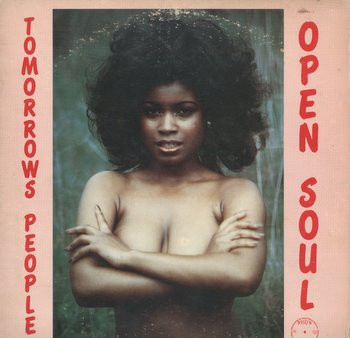
One thing that's interesting is, a lot of the material that you cut as the Pieces of Peace is just now being reissued and rereleased. There was a compilation, I think, of Twilight material that recently came out, and your record is on that.
**Bernard Reed** 1:10:38
Yes. "Pass It On," Parts One and Two.
**Bob Abrahamian** 1:10:40
And another thing that you did was, apparently you had a whole album recorded that was just released. Could you talk about what the story with that was? That was after the Twilight stuff that the album was recorded?
**Bernard Reed** 1:10:55
Yes, it was. Well, it was right up to the end of all of it, including the Pieces of Peace at that time — 1972.
There was another band in town called the Pharaohs, which was one of the top bands in Chicago.
**Bob Abrahamian** 1:11:15
Okay.
**Bernard Reed** 1:11:16
They respected our band, Pieces of Peace, and we had great admiration and respect for them. They sort of took us under their wing.
As it so happened, we were offered an engagement to go to Southeast Asia and play there for six months. So we had a big meeting about it, and we decided we were going to take that because we felt, as the Jalynne Sound and the Pieces of Peace, we had done just about everything a band here in Chicago could do — including backing up big artists and playing on their records also.
**Bob Abrahamian** 1:12:06
Was that Asia thing like a USO tour, or what was it?
**Bernard Reed** 1:12:11
No. It was just a booking that came from New York City.
**Bob Abrahamian** 1:12:14
So it was a club—
**Bernard Reed** 1:12:15
An agency. Well, it turned out to be hotel discotheques.
**Bob Abrahamian** 1:12:22
Okay.
**Bernard Reed** 1:12:22
For three months. The first three months were in Singapore. The next two weeks were in Kuala Lumpur, Malaysia. Then the next two months were in Jakarta, Indonesia, which was a nightclub.
The end of our six-month period came up, and the band decided to split up at the same time because, after the first three months, our drummer got sick and had to come back home to Chicago.
Our contract was broken, but the agent there gave us a chance: if we could find a drummer, he'd extend the contract and continue to finish it.
So we recruited a drummer. He was an Asian Filipino drummer.
**Bob Abrahamian** 1:13:20
So the album you recorded, you recorded it before you went to Asia?
**Bernard Reed** 1:13:23
Before we left for that six-month tour. The Pharaohs came to us and said, "Listen, you guys need to leave town and go overseas with something in your hand — something to leave with them to sell — and that should be your own album."
**Bob Abrahamian** 1:13:44
Okay.
**Bernard Reed** 1:13:44
So they took us into the studio. They bought the studio time, and we went in and recorded a bunch of original stuff we had.
**Bob Abrahamian** 1:13:55
Okay. And it just ended up never being released?
**Bernard Reed** 1:13:58
Never being released or taken out of the studio while we were away for the six-month period of time. It was left there to be mixed and go through the next stages of becoming a release.
**Bob Abrahamian** 1:14:15
And what was the album called? Was it just a Pieces of Peace self-titled album?
So the record finally got — someone discovered the tapes. And you actually had original cover art even, that looked similar in style to the Pharaohs' album, with the same artist, right?
**Bernard Reed** 1:14:36
Yes. It was one of the in-house artists that did the artwork.
**Bob Abrahamian** 1:14:41
And so just now it got released, so people can look out for that on CD.
You actually still continued to be involved with music after that, right? Like you played on—
**Bernard Reed** 1:14:55
I went back to Brunswick. I went back. I had nowhere else to go.
When I came back, the first job I had was backing up a local singer whom I had worked with. His name was Bobby Hutton.
**Bob Abrahamian**
Okay.
**Bernard Reed** 1:15:08
It just so happened that the same day I got back, Bobby called. "Hey, I'm here." He had a session for me to do on ABC-Paramount. He cut a whole album on ABC.
Other than that, where else was I going to go? So I went back to Brunswick, and I stayed there for a couple of years.
**Bob Abrahamian** 1:15:33
But you've played on a lot of other Chicago records since then as a session musician.
**Bernard Reed** 1:15:39
Oh yes.
**Bob Abrahamian** 1:15:39
But with different bands, not always the same players.
**Bernard Reed** 1:15:44
No. I was just a session bass player.
**Bob Abrahamian** 1:15:48
And you're still involved with music today, is that right?
**Bernard Reed** 1:15:50
That's correct. Yes.
**Bob Abrahamian** 1:15:52
So what are you doing today?
**Bernard Reed** 1:15:53
Well, today I have a few shows coming up. They're all with different people — the blues scene, the blues world, and also some rock.
I'm also working with the Black Ensemble Theater, which puts on plays. Right now, we're working on the Teddy Pendergrass story.
**Bob Abrahamian**
Where's the play at?
**Bernard Reed** 1:16:20
The play will start sometime in February, hopefully around Valentine's Day, and we're in rehearsals. We're getting the music down tight.
Tom Tom Washington is the arranger.
**Bob Abrahamian**
Okay.
**Bernard Reed** 1:16:35
He's written up all the music for Teddy Pendergrass's hit songs. We rehearse those twice a week with the band, and the cast is at the theater rehearsing.
**Bob Abrahamian** 1:16:51
Okay. And where is the theater?
**Bernard Reed** 1:16:53
The theater is at 4520 North Beacon.
**Bob Abrahamian**
Okay.
**Bernard Reed** 1:17:00
Which happens to be about two blocks west of Broadway — something like that. No, it's about four blocks west of Broadway and two blocks east of Ashland. I think that's Ashland or Clark Street.
**Bob Abrahamian** 1:17:17
Okay. So you're going to be playing live during the music, so people should look out for that.
**Bernard Reed** 1:17:26
Oh yeah, I'll be in the band too.
**Bob Abrahamian** 1:17:28
And Skip, you've been involved with some stuff since the Constellations, right?
**Harold Skipley** 1:17:32
Yeah. I had the pleasure of photographing Malachi Thompson's last CD before he passed — the CD cover. I'm also a jazz photographer. I shoot a lot for the Jazz Institute of Chicago.
**Bob Abrahamian** 1:17:52
Okay.
**Bernard Reed** 1:17:52
Let me — I hate to interrupt you, Skip, but please tell about your incident where you broke your leg with the Constellations.
**Harold Skipley** 1:18:02
Yes. With the Constellations. We were at the Charade Club, a club that had just opened in Detroit.
**Bernard Reed** 1:18:11
He was on stage dancing with—
**Harold Skipley** 1:18:14
Larry Steele's Smart Affairs. I was in the midst of a somersault, landing in a split.
Well, as I said, the Charade Club had just opened, and they had built up a platform for the dancers with Smart Affairs. One of the planks that they nailed down had a rise to it, and my heel got caught as I came out of the somersault into a split, and I broke my ankle.
**Bob Abrahamian** 1:18:50
That's terrible.
**Harold Skipley** 1:18:51
On stage. So Joe Louis happened to be in the audience — the boxer — and Sammy Davis Jr. He came backstage and said what a good showman I was because I went back into the routine after I got up from breaking my ankle.
**Bob Abrahamian** 1:19:08
Joe did, or Sammy?
**Harold Skipley** 1:19:10
Sammy did.
**Bob Abrahamian** 1:19:10
No, that's pretty excellent. If Sammy Davis Jr. called you a good showman—
**Bernard Reed** 1:19:20
With a broken ankle.
**Harold Skipley** 1:19:21
Yeah. Big ankle too.
**Bob Abrahamian** 1:19:25
So that's when you left the group, after you got hurt?
**Harold Skipley** 1:19:28
Yeah, that's correct. I went back to school. As it was, I was the youngest member in the group.
But I affiliated myself with music by turning into a disc jockey. I was Deacon Skip. I started with Reverend Wood, a brother that has been a good friend of mine for years. He was a local rhythm-and-blues disc jockey.
**Bob Abrahamian** 1:19:56
Okay.
**Harold Skipley** 1:19:56
I would fill in for him sometimes, and I filled in well enough to get my own spot. So they called him Reverend Wood and called me Deacon Skip.
**Bob Abrahamian** 1:20:08
Okay.
**Harold Skipley** 1:20:09
We played at a nightclub called Jan's Easy Living on Pulaski and Lake Street. From there, we went to the Casablanca, which was a popular club on the West Side—
**Bob Abrahamian** 1:20:23
On—
**Harold Skipley** 1:20:24
16th Street. From there, I affiliated myself with photography and jazz, more or less. So I do a lot of jazz photography now.
**Bob Abrahamian** 1:20:36
Okay. And have your photos been published in places?
**Harold Skipley** 1:20:40
Yeah. Like I said, I did Malachi Thompson's last—
**Bob Abrahamian** 1:20:44
Oh, on a CD. Okay.
**Harold Skipley** 1:20:45
Magazines. I have a few Johnson Publications pictures.
**Bob Abrahamian** 1:20:56
Okay.
**Harold Skipley** 1:21:00
The county — oh yeah, well, the Recorder of Deeds. I was with the county. I shot a lot of political stuff.
**Bob Abrahamian** 1:21:10
Okay, that's interesting.
**Harold Skipley** 1:21:12
Yeah.
**Bob Abrahamian** 1:21:12
So thanks so much, guys, first of all, for coming down and telling your story.
**Harold Skipley** 1:21:17
My pleasure.
**Bob Abrahamian** 1:21:18
You guys had an interesting story, definitely completely threaded through Chicago soul music history from the '60s till today. You're both still involved with music, so I appreciate you guys coming down.
**Bernard Reed**
Thank you, Bob. I appreciate you having us.
**Bob Abrahamian**
Yeah, and thanks again.